
Commissions faqs
-
Timeline varies by scale and complexity. Smaller commissions typically take 8–12 weeks from signed proposal to delivery. Large-scale architectural installations can take 6–12 months. We establish a clear timeline in the proposal phase so you always know where we are in the process.
-
The cost of custom ceramics and installations vary greatly on scale and level of complexity. Once the project approved, a 50% deposit is required to hold your place in the schedule and begin. The balance is due upon completion before shipping or installation. Reach out to start the conversation kala@kalastein.com
-
That's exactly what commissions are for. Most designs are developed as modular systems that can be scaled up or down to suit the specific dimensions of your space. If you have something in mind, reach out — even a rough description of your wall and your aesthetic is enough to start.
-
Yes to both, with additional costs not included in the base commission price. For architectural-scale installations, I work with my licensed contractor collaborator who advises on structure and frequently installs the work. Studio pickup in Sonoma is also available by appointment.
-
Two-dimensional mockups give a strong sense of composition and color direction, but ceramic material has a depth, texture, and luminosity that renderings can only approximate. Material testing and sample tiles are part of the process for this reason — so you can see and touch the actual glaze and clay before full production begins.
-
Yes. Shipping and installation are handled with the same care as the making. For large-scale and architectural works, structural considerations are addressed throughout design and fabrication — in consultation with a licensed contractor who advises on engineering and, in many cases, installs alongside me.
-
Absolutely. A significant portion of my commissions come through interior designers, art advisors, and architects. I'm familiar with trade timelines and approval processes and happy to provide material samples, drawings, and documentation as needed for your project workflow. Reach out directly to discuss trade inquiries.
-
Yes — studio visits in Sonoma are by appointment. It's a wonderful way to see work in progress, handle material samples, and have a conversation in person. Email kala@kalastein.com to schedule.
Process FAQS
-
Ideas begin with research — understanding the site, the purpose of the work, and how it will be experienced by the people who move through it. I look at pattern, repetition, geometry, and the natural environment. From there I develop concepts through drawings, digital models, and small-scale physical prototypes before any clay is involved.
-
I use 3D modeling and CAD software to explore structure and proportion before moving to clay — this lets me test how components will fit together at scale before committing materials. From the digital model I create physical molds, run material tests, and adjust form and surface through small prototypes. The translation from screen to clay is never exact, and that gap is where the work becomes interesting.
-
Collaboration starts with a discovery conversation — understanding the space, the light, the architecture, and the client's aesthetic and conceptual interests. I then develop a proposal with concept drawings, material samples, and a budget and timeline. Throughout fabrication, I share progress documentation and samples so there are no surprises at installation.
-
Site visits are ideal — being in a space tells you things that drawings and photographs can't. I pay attention to how light moves through the space at different times of day, the texture and color of surrounding materials, the scale of human movement through the space, and any structural constraints that affect where and how work can be installed. For remote projects, I work closely with detailed documentation and photographs.
-
Timeline depends on scale and complexity. Smaller commissions — a single wall piece or modest tile installation — typically take 8–12 weeks from signed proposal to delivery. Large-scale architectural installations can take 6–12 months. We establish a clear timeline in the proposal phase and build in milestones for approvals and material samples throughout.
-
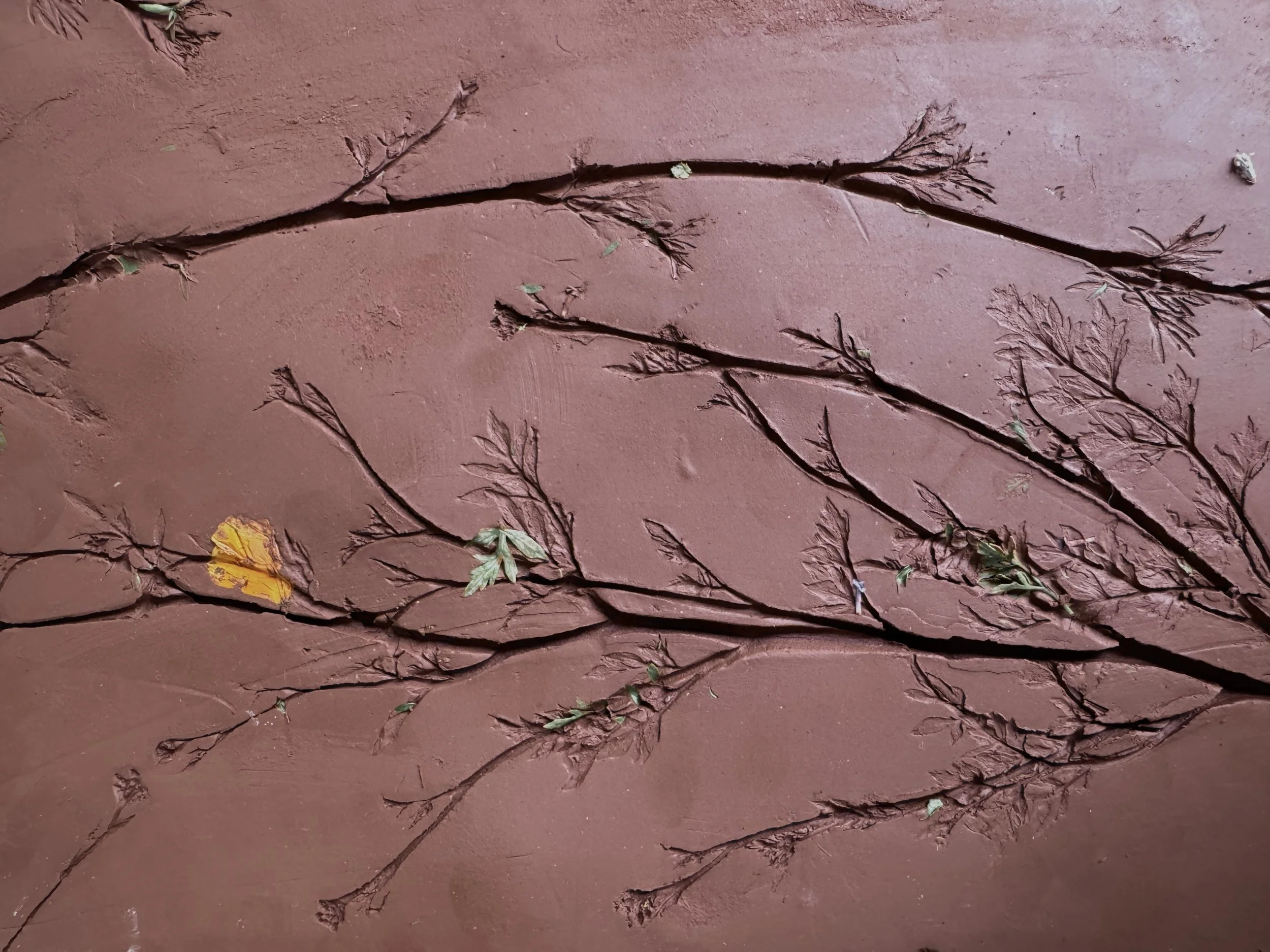
Every piece carries the mark of making — the slight variation in surface, the depth of glaze, the evidence of the hand. Commercial tile is manufactured to uniform tolerance; hand-made ceramic is not. That variation is the point. Each tile in an installation is unique, and the whole is something that could not be produced any other way. It's the difference between a print and a painting.
-
Ceramic is one of the most archival materials that exists — it survives millennia in the ground. I think about the work in those terms. Every decision I make about clay body, glaze chemistry, and structural installation is made with the intention that the piece will outlast the building it's in. Integrity in execution isn't a nice-to-have — it's the foundation of everything I make.