
PROCESS
material innovation
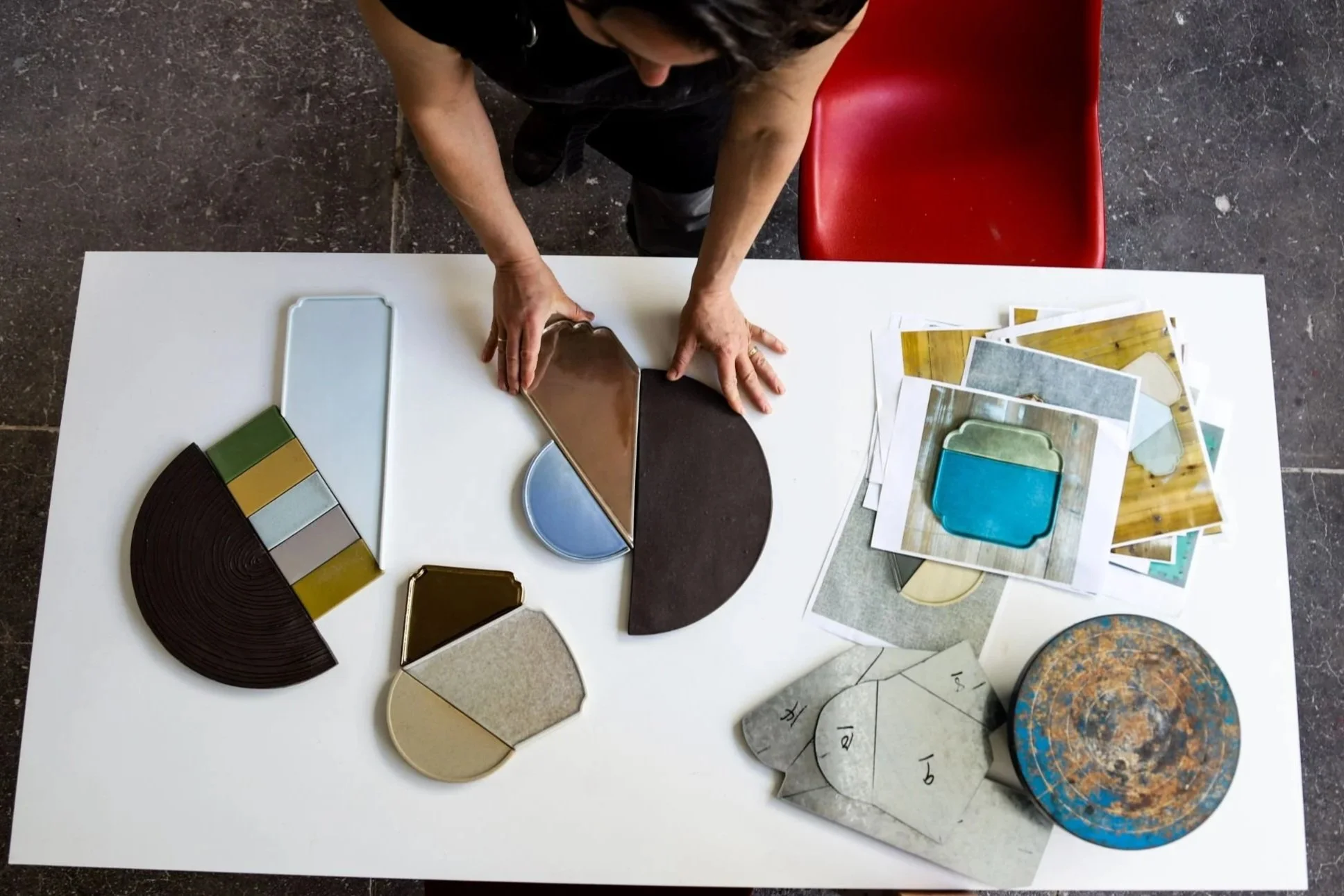
Every project begins with research: understanding the site, the purpose of the work, and how it will be experienced. Ideas develop through sketches, material testing, and physical prototypes before a single finished piece is made.
Kala’s work is informed and inspired by the natural world, integrating conservation and sustainable efforts whenever possible.
Creative Methodology
-
01 Research & Concept
I draw from scientific imagery, satellite data, environmental records, and direct observation of the natural world. Concepts develop through drawings and physical prototypes. I look at seasonal change, historic weather patterns, and ancient artifacts alongside contemporary Scandinavian design.
-
02 Design & Development
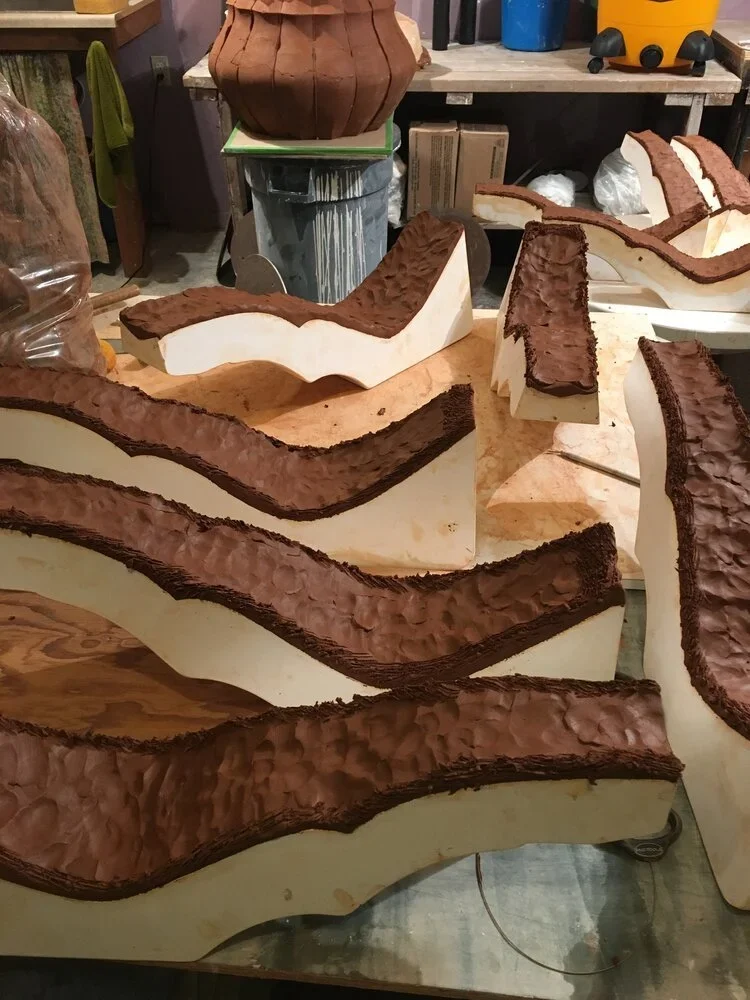
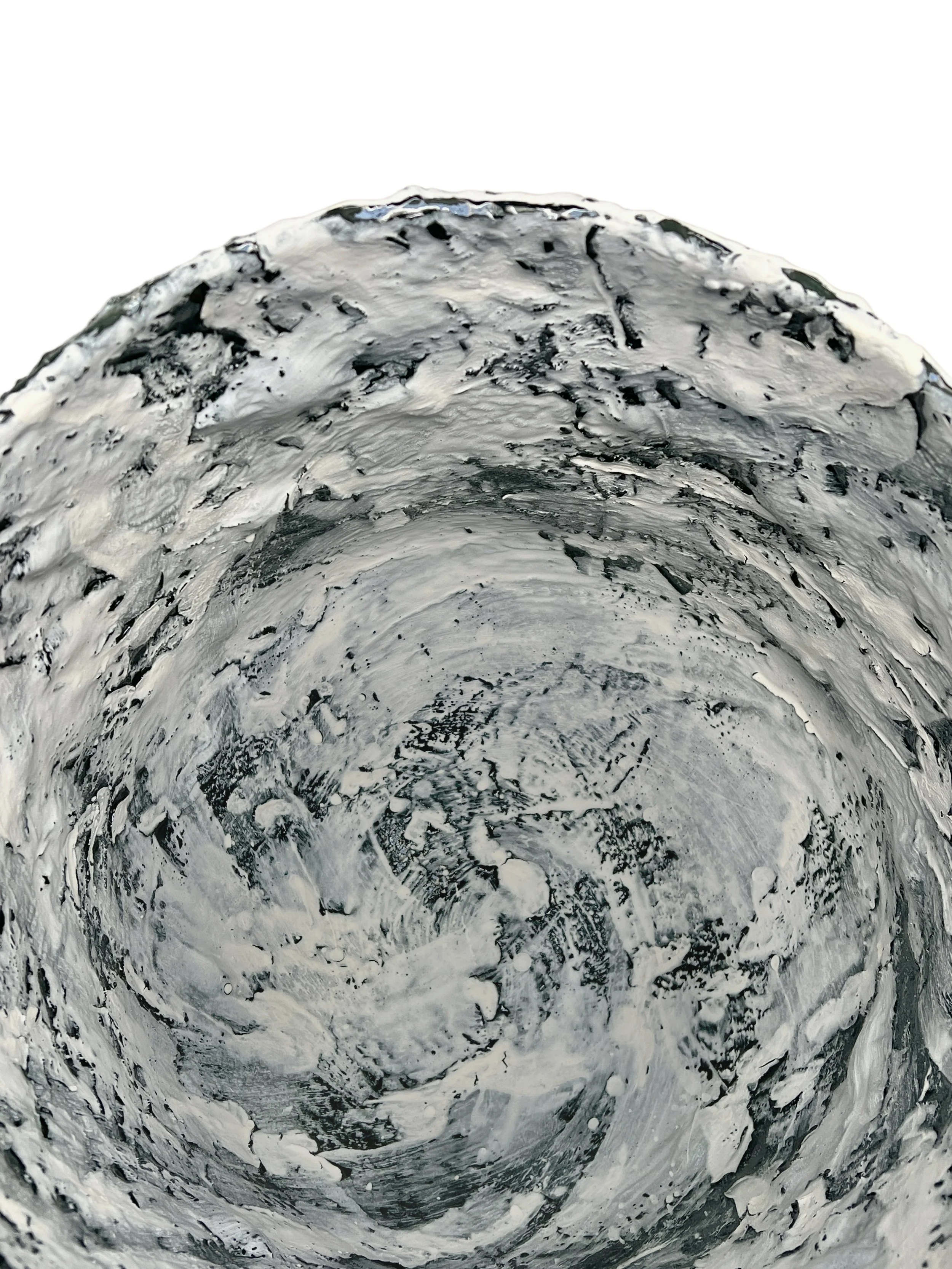
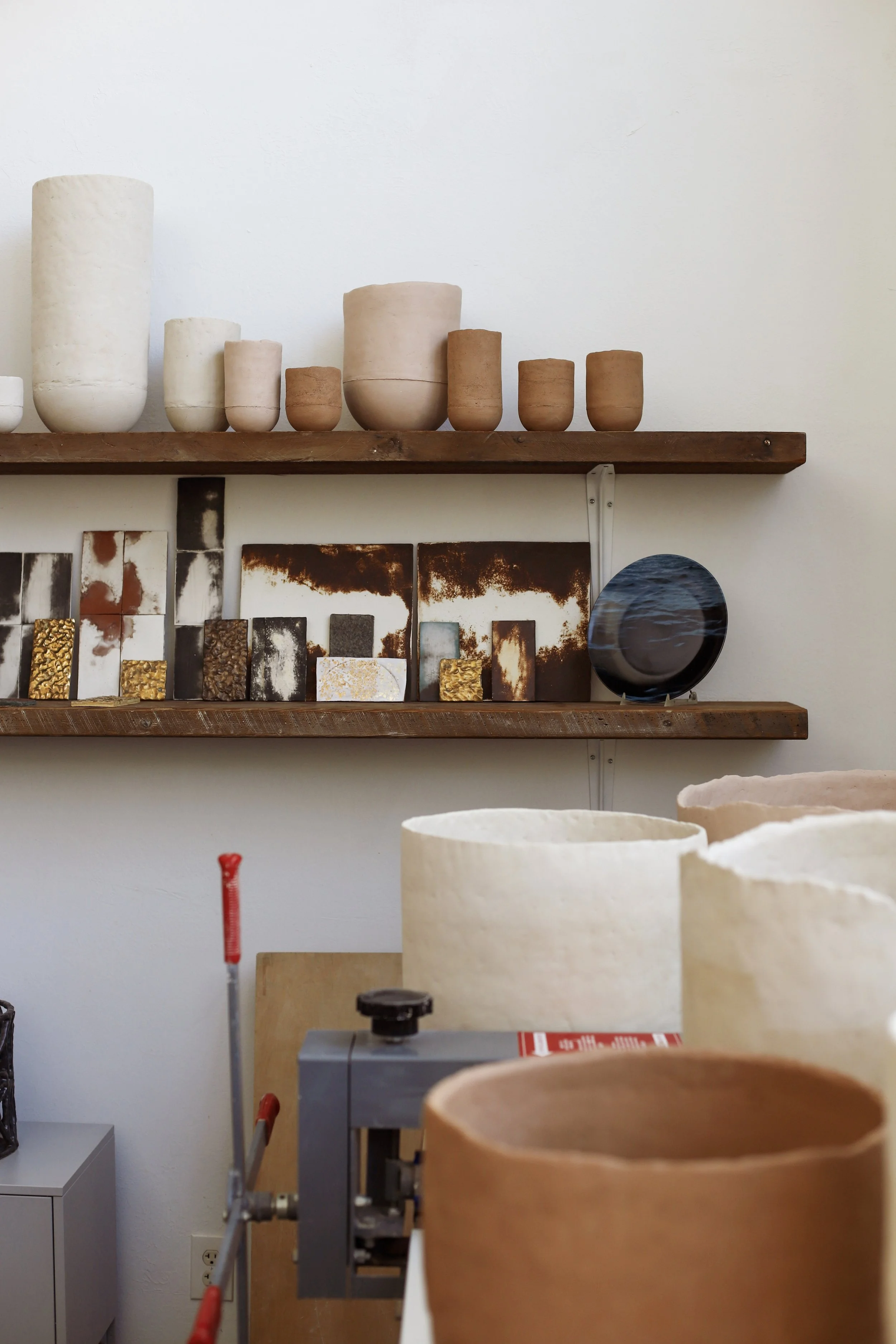
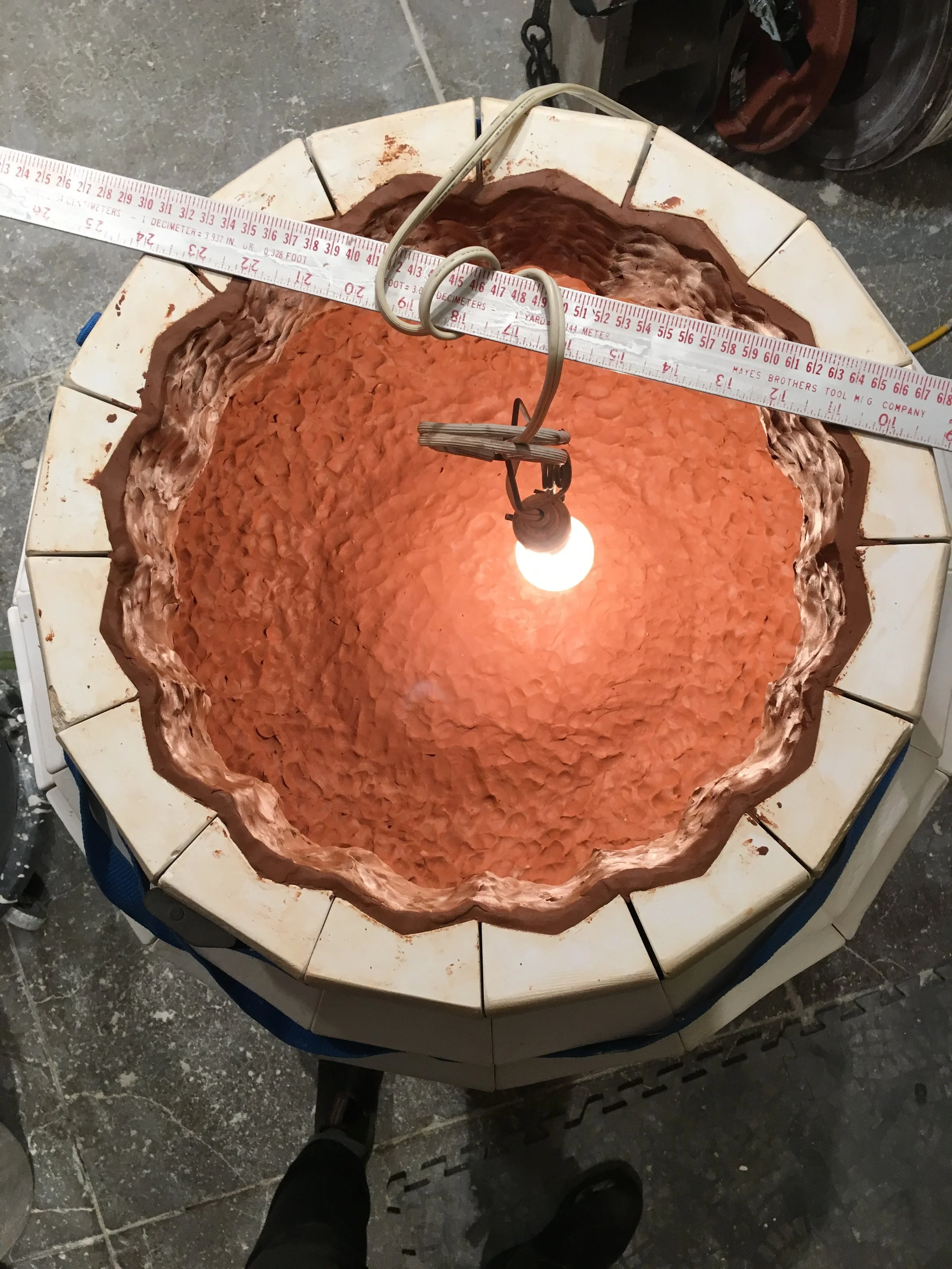
I begin with sketches, then material testing. For larger scale work, clay maquettes follow, working through proportion, texture, and form before committing to full fabrication. Clay body selection comes first: the best fit for scale, workability, and color. Texture is the first layer of surface design; glaze, surface color, and finish treatments follow from there.
-
03 Sustainablity
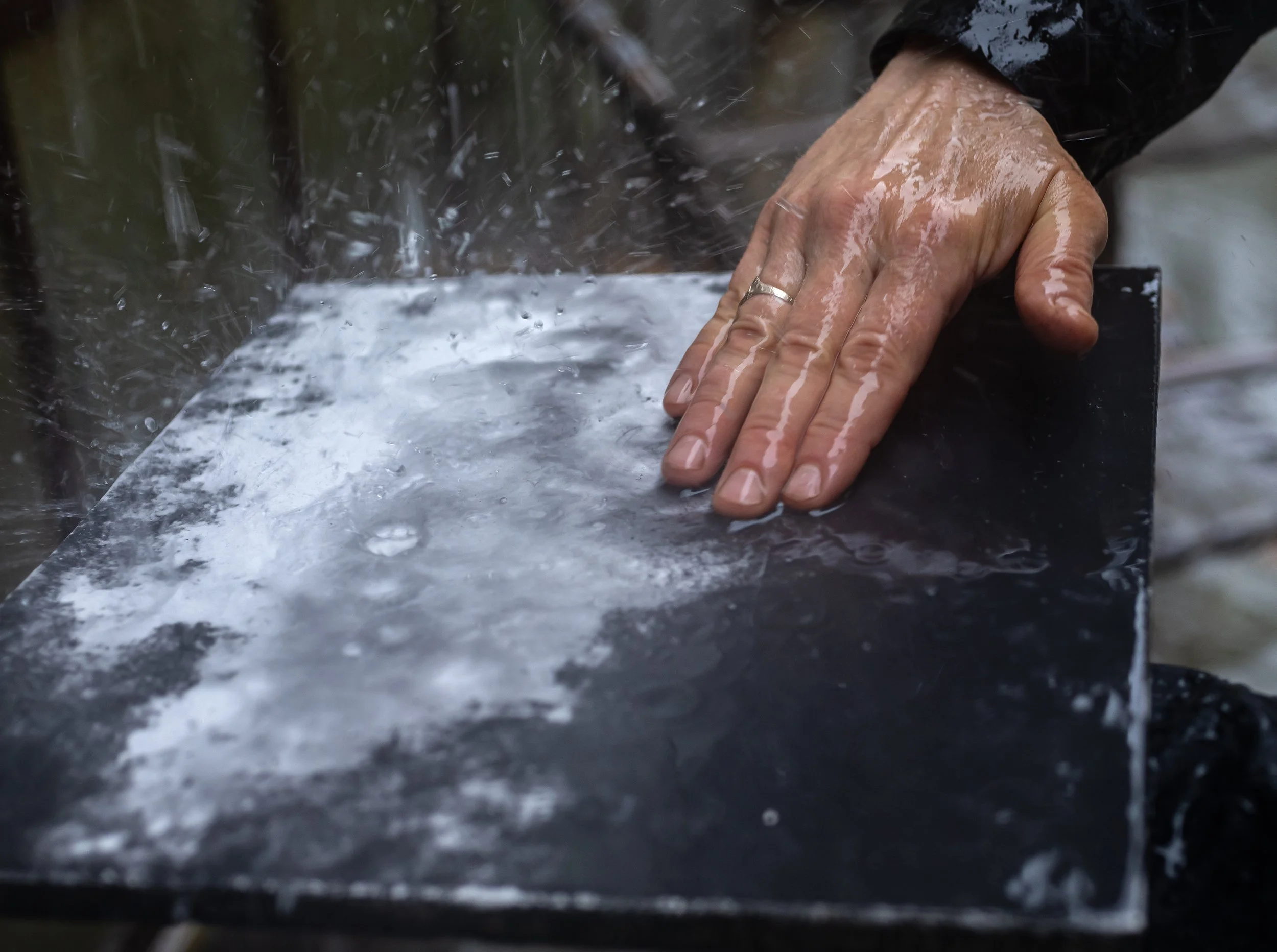
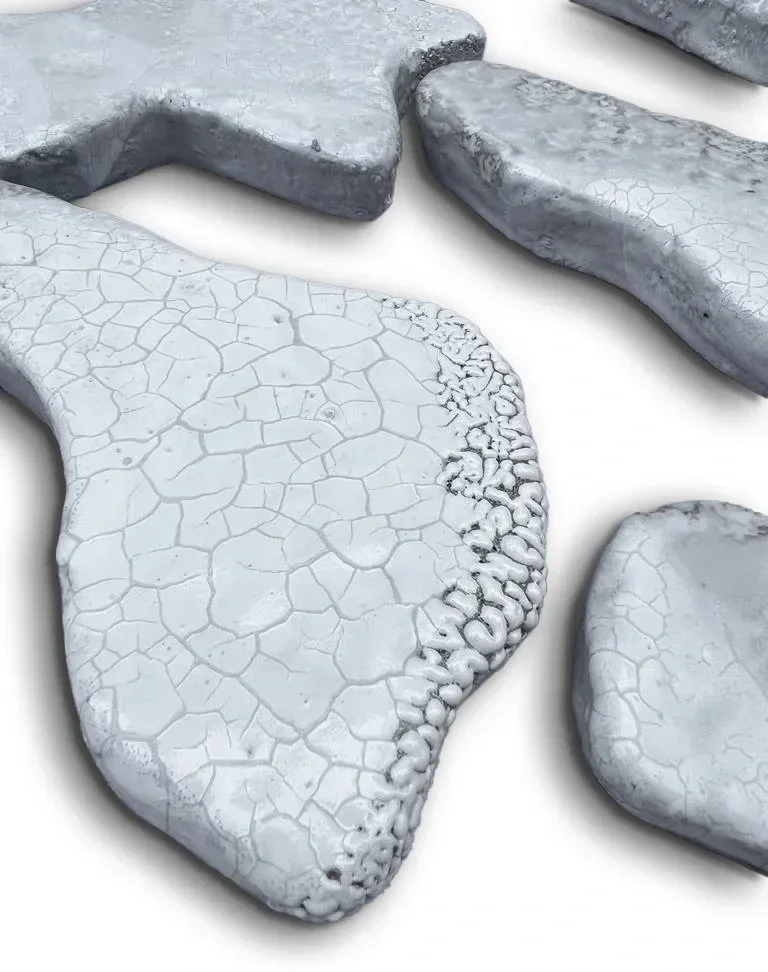
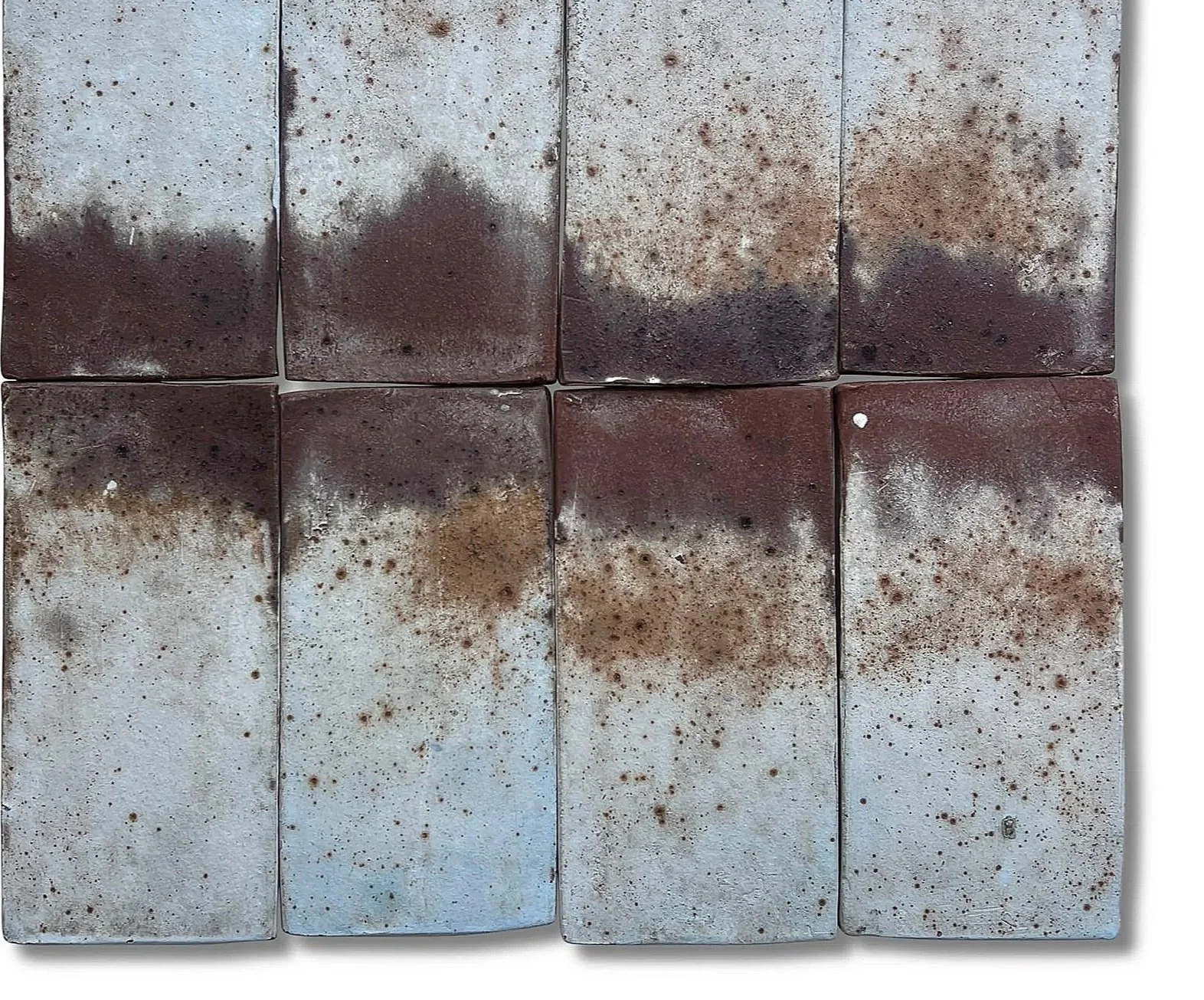
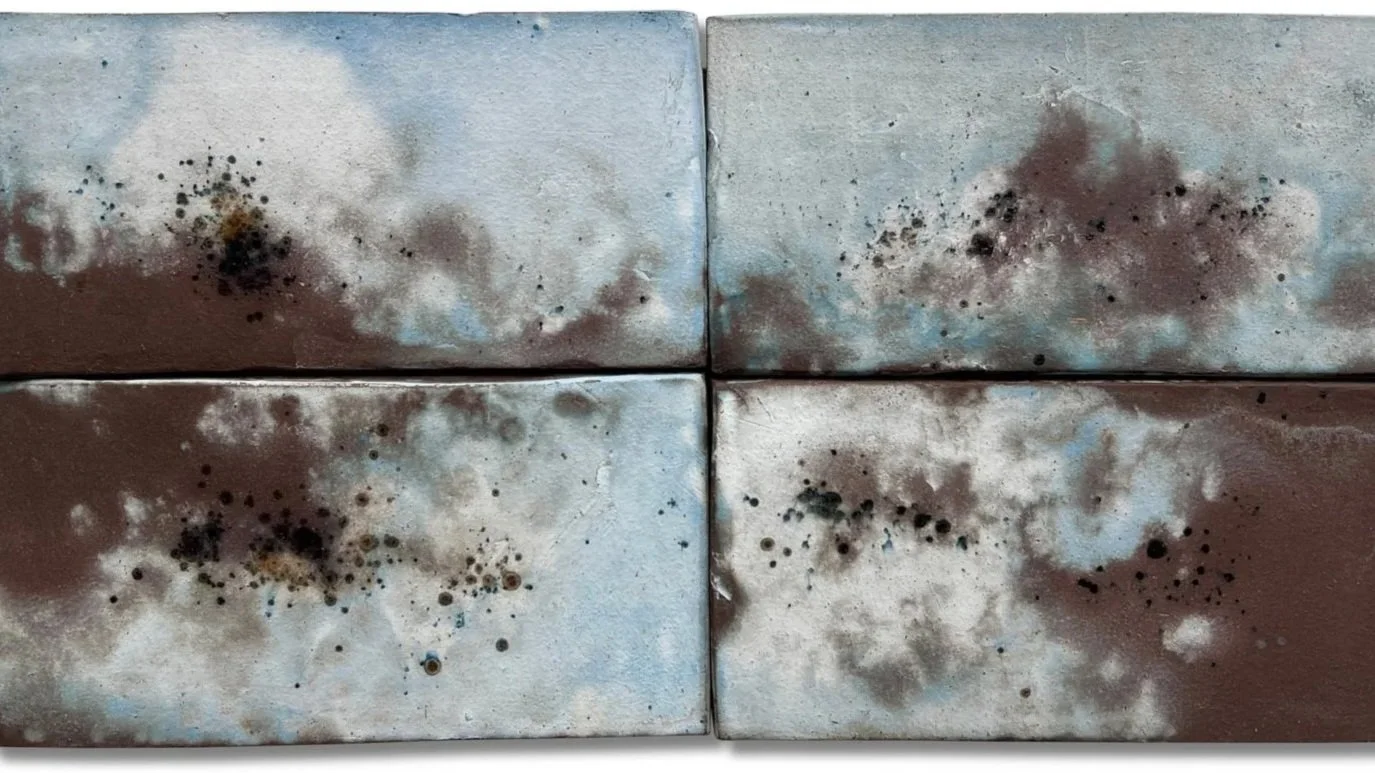
Glaze waste is recycled into limited-edition glazes. Firing schedules are designed for energy efficiency and where appropriate, pieces are once-fired. The Ghost Rain series uses rainwater runoff directly in the glazing process. Regenerative organic materials are incorporated and post industrial tile waste is used in the Botanical Burnout series.
-
04 Fabrication
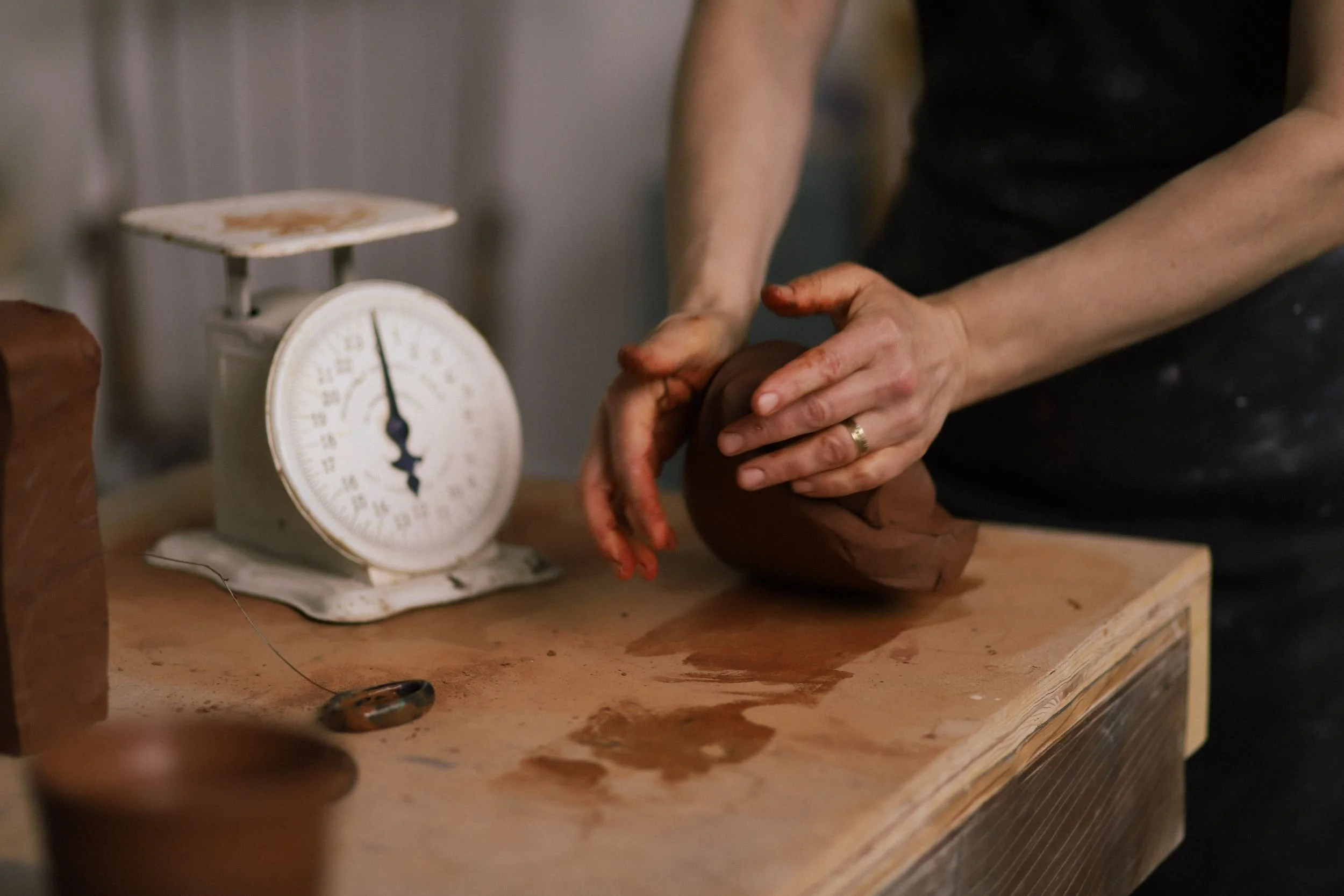
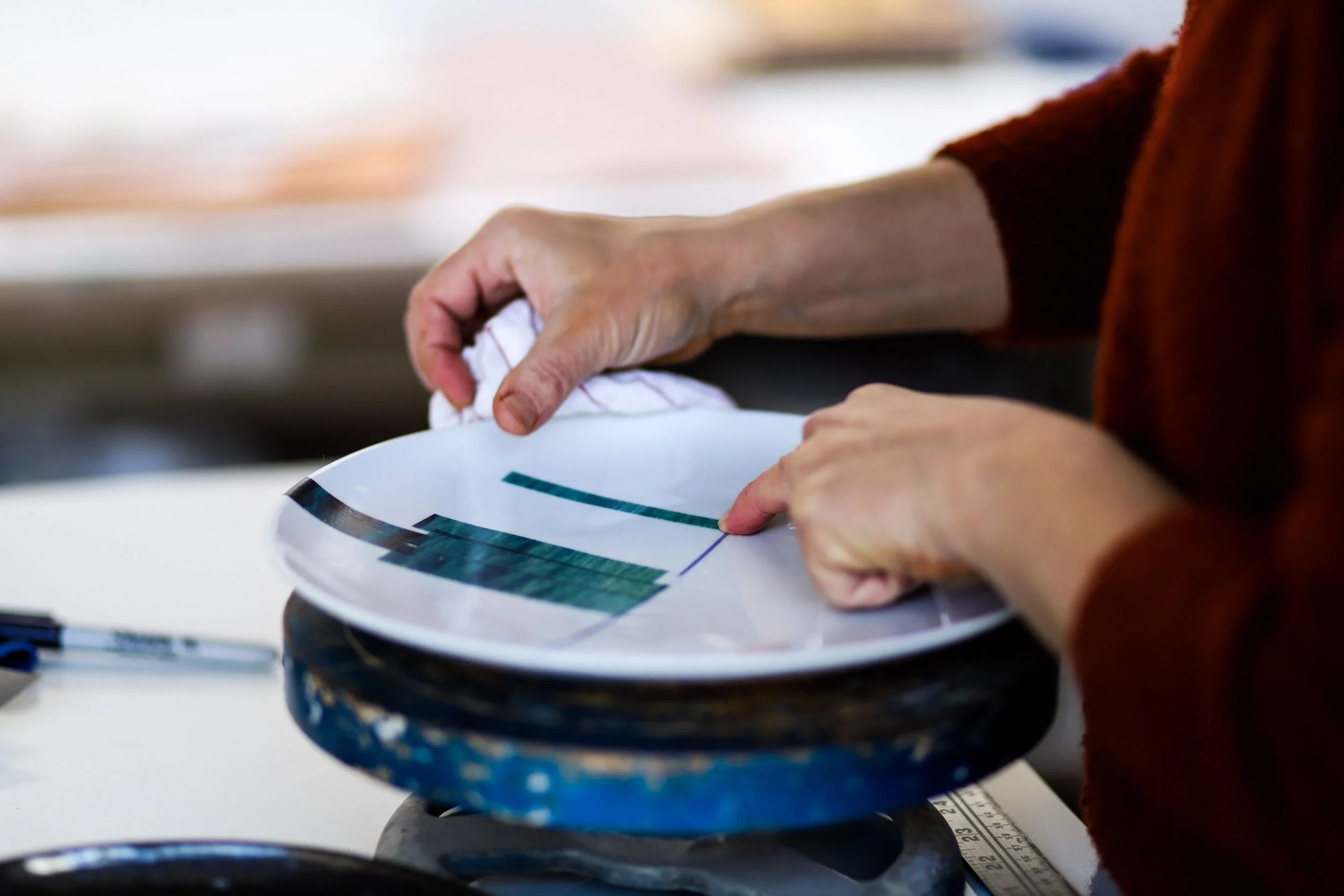
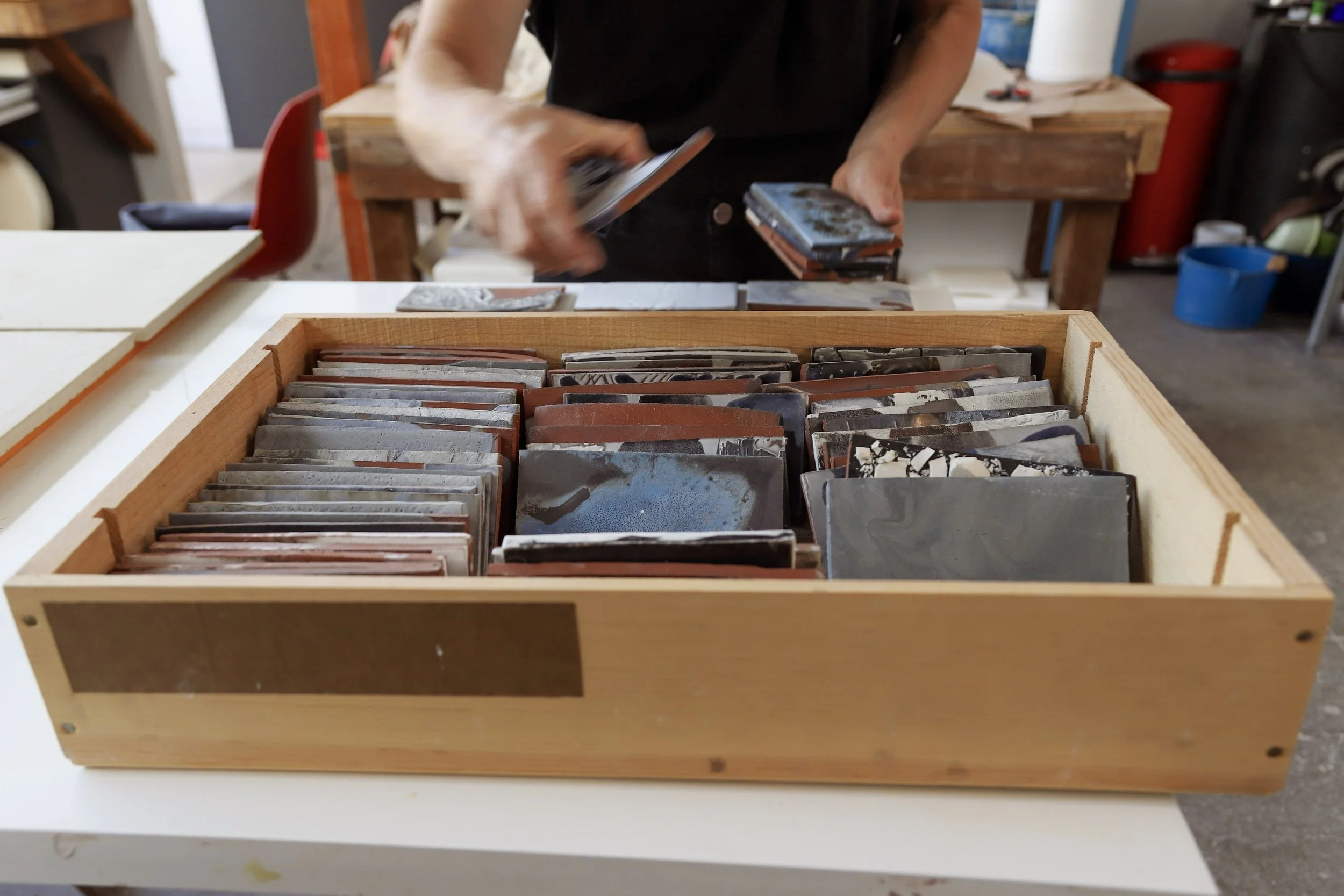
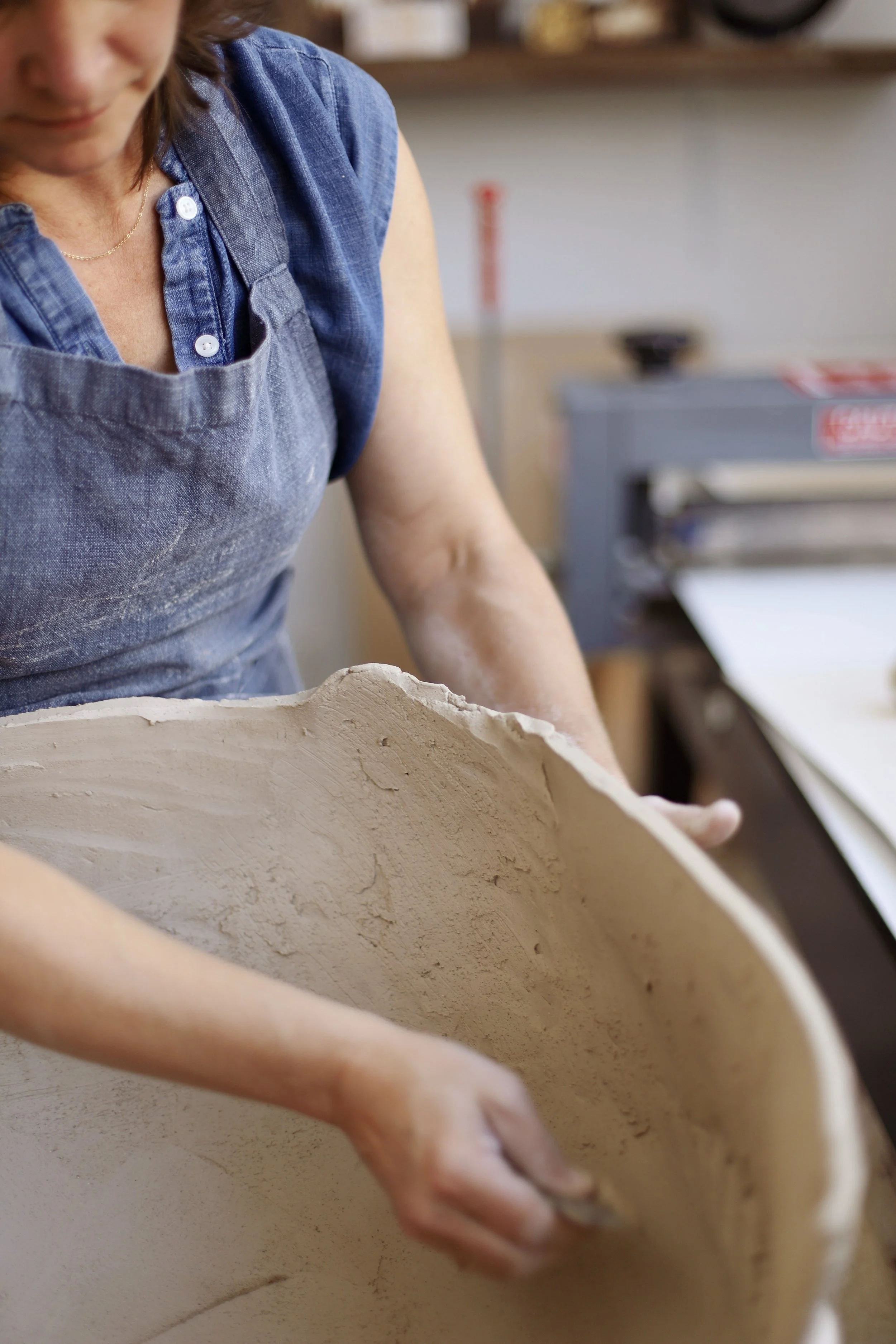
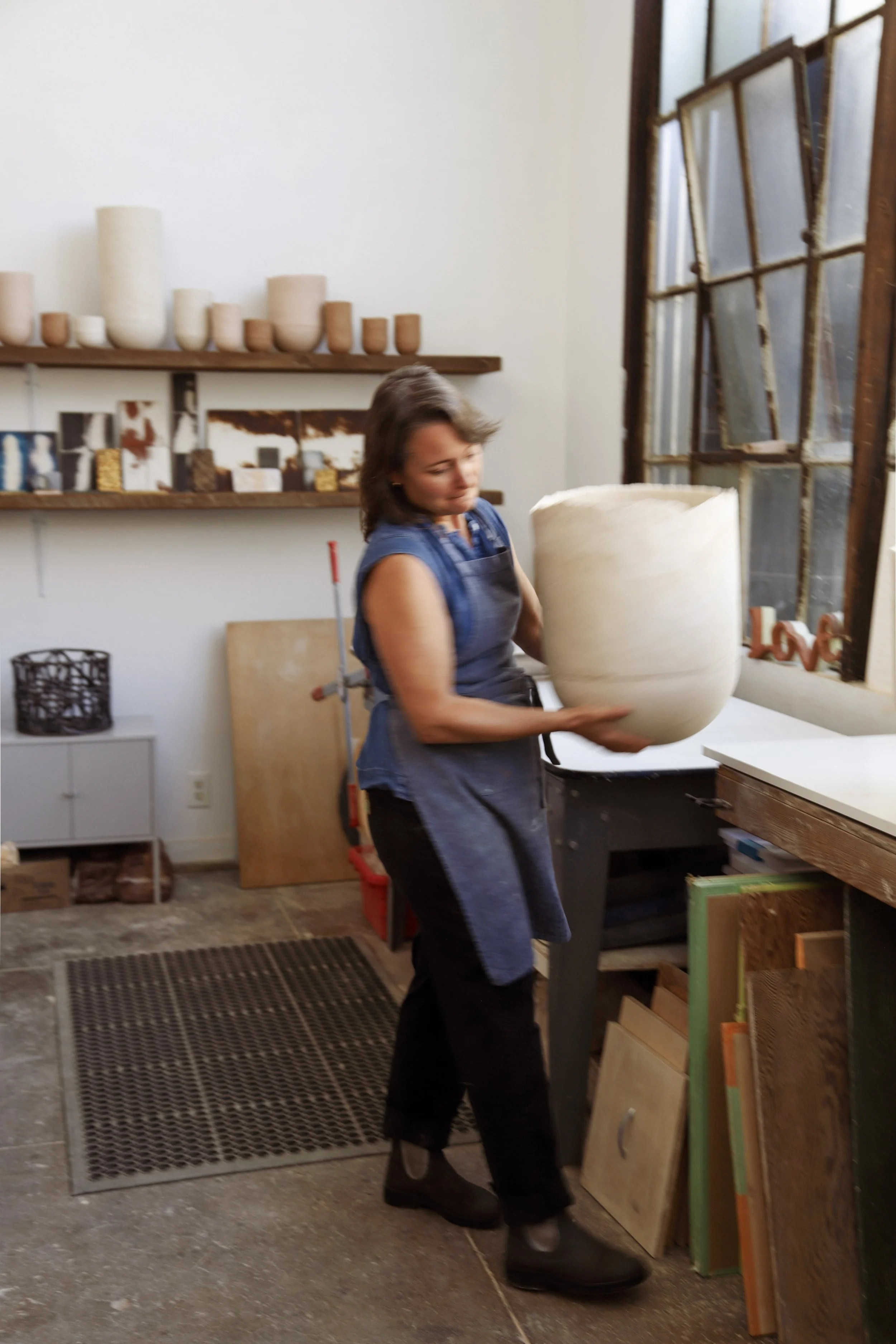
Every piece is hand-formed individually in the studio, built, coiled, pressed, or thrown depending on the demands of the work. Pieces are finished by hand to preserve the variation and touch that make ceramics distinct from any commercial alternative. I pull from archived clay and glaze samples accumulated over two decades of studio practice.
-
05 Glazing & Firing
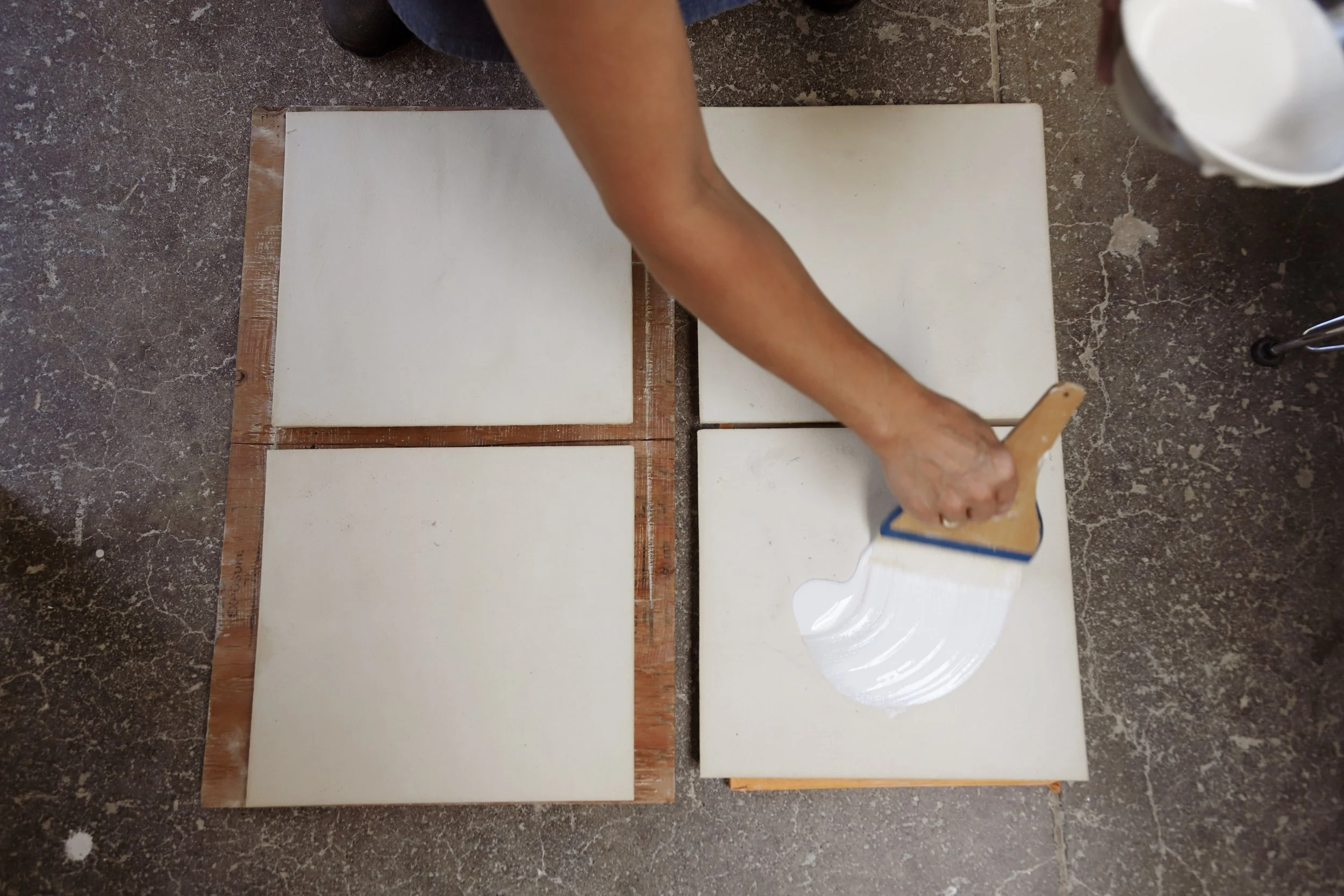
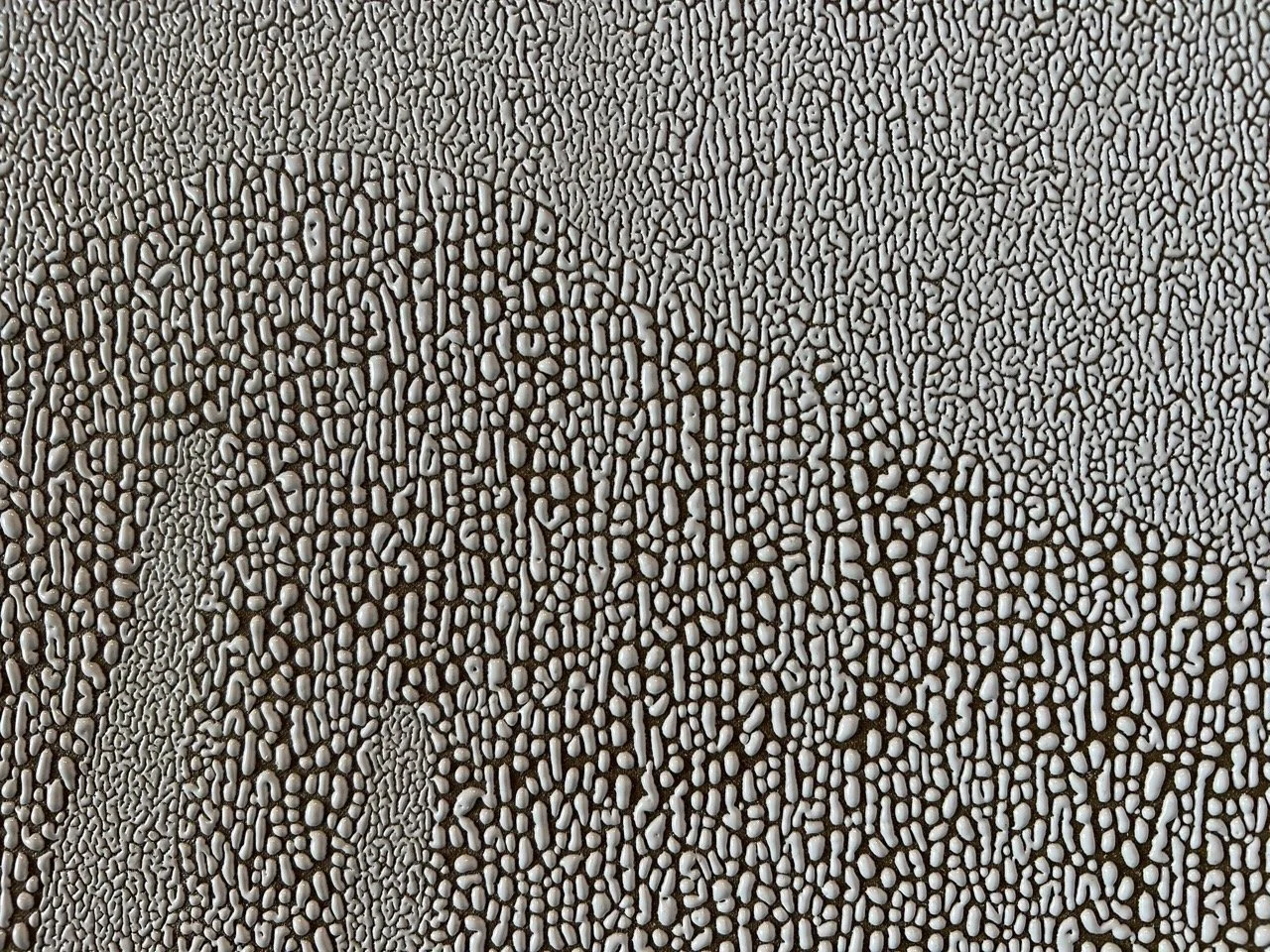
Glaze chemistry is developed specifically for each project and tested until the surface responds exactly as intended. All glaze waste is recycled into limited-edition glazes used across my work. The natural color of the clay, in combination with glaze application, gives each surface its character.
-
06 Installation
I collaborate with architects, designers, and institutions to ensure each work fully responds to its environment, whether in a public building, garden, or gallery space. Every aspect of production and project management is handled in-house with the same level of care as the research and development phases. Site-specificity is considered from the first conversation, not added at the end. Scale, light, and architecture shape every decision made in the studio.
The studios
The Studio · Sonoma
Located at 148 East Napa Street in downtown Sonoma, California. A working fabrication studio and showroom open by appointment.
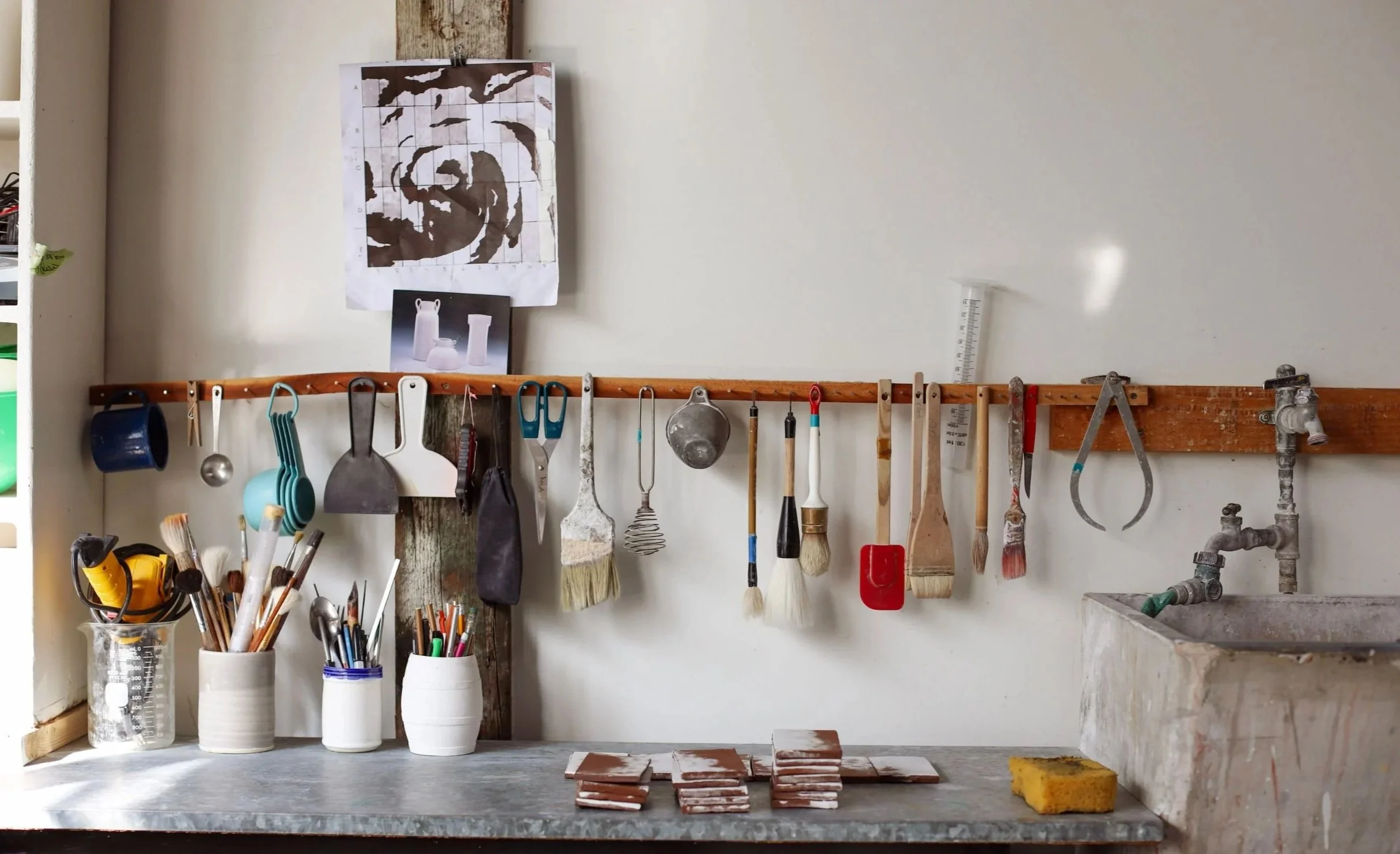
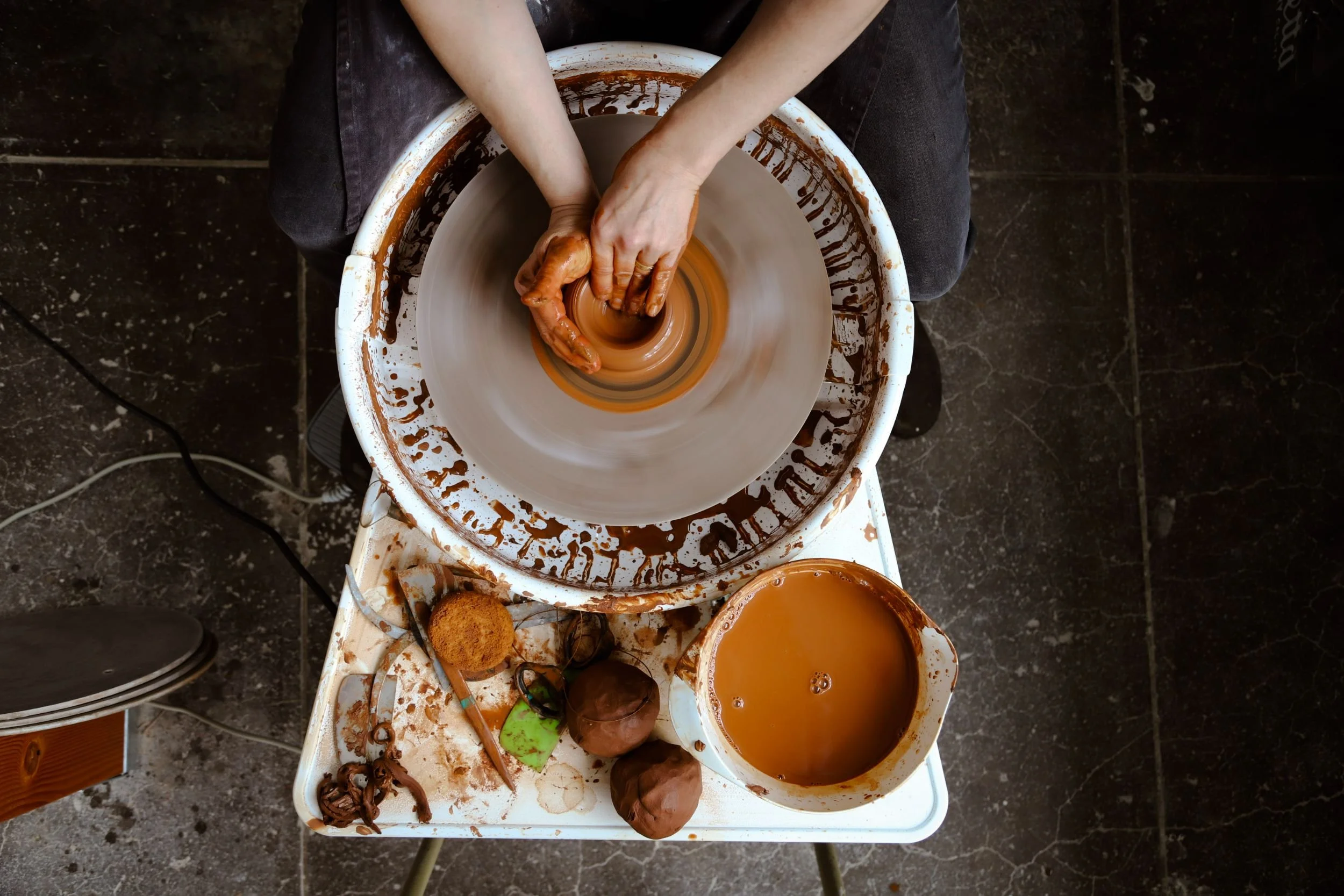
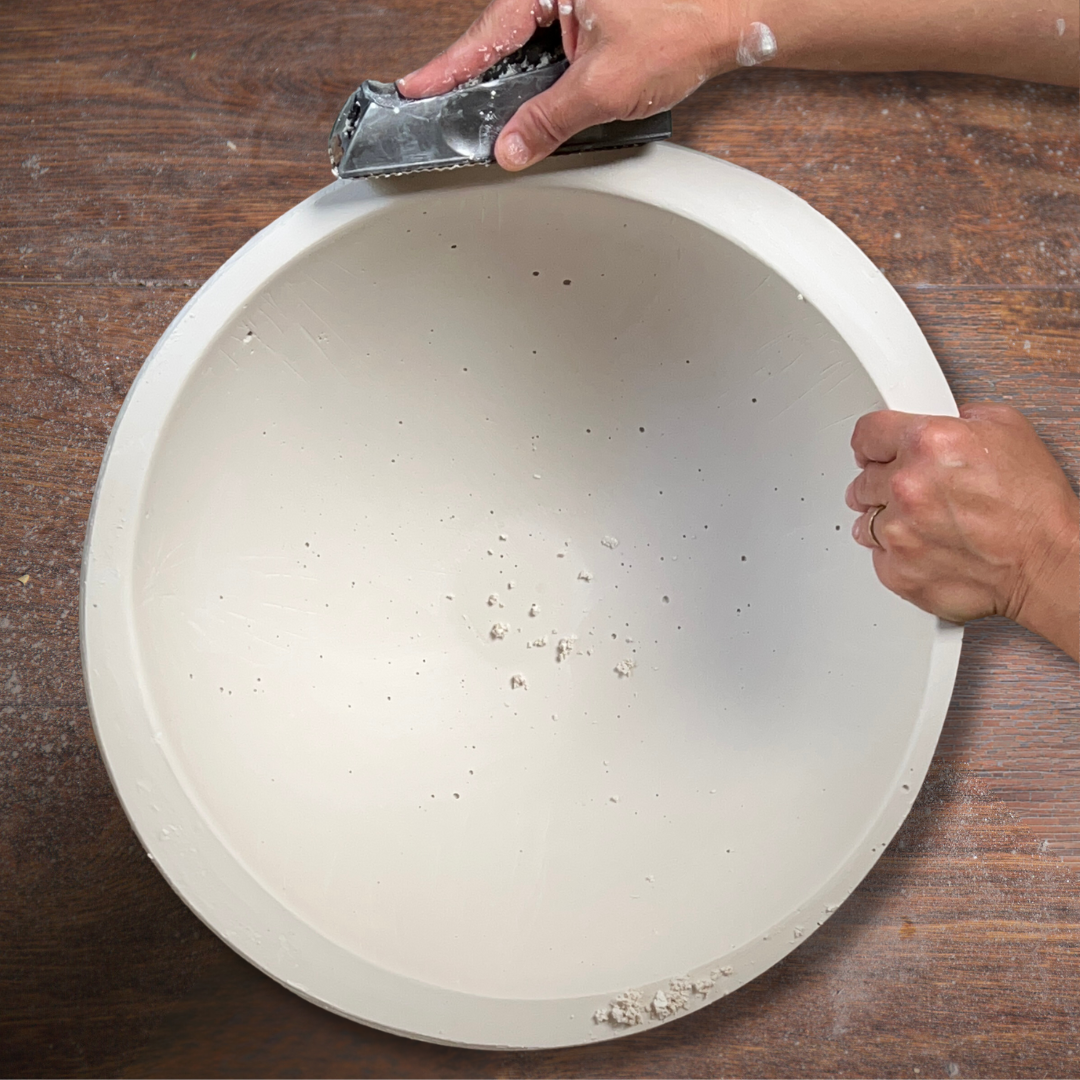
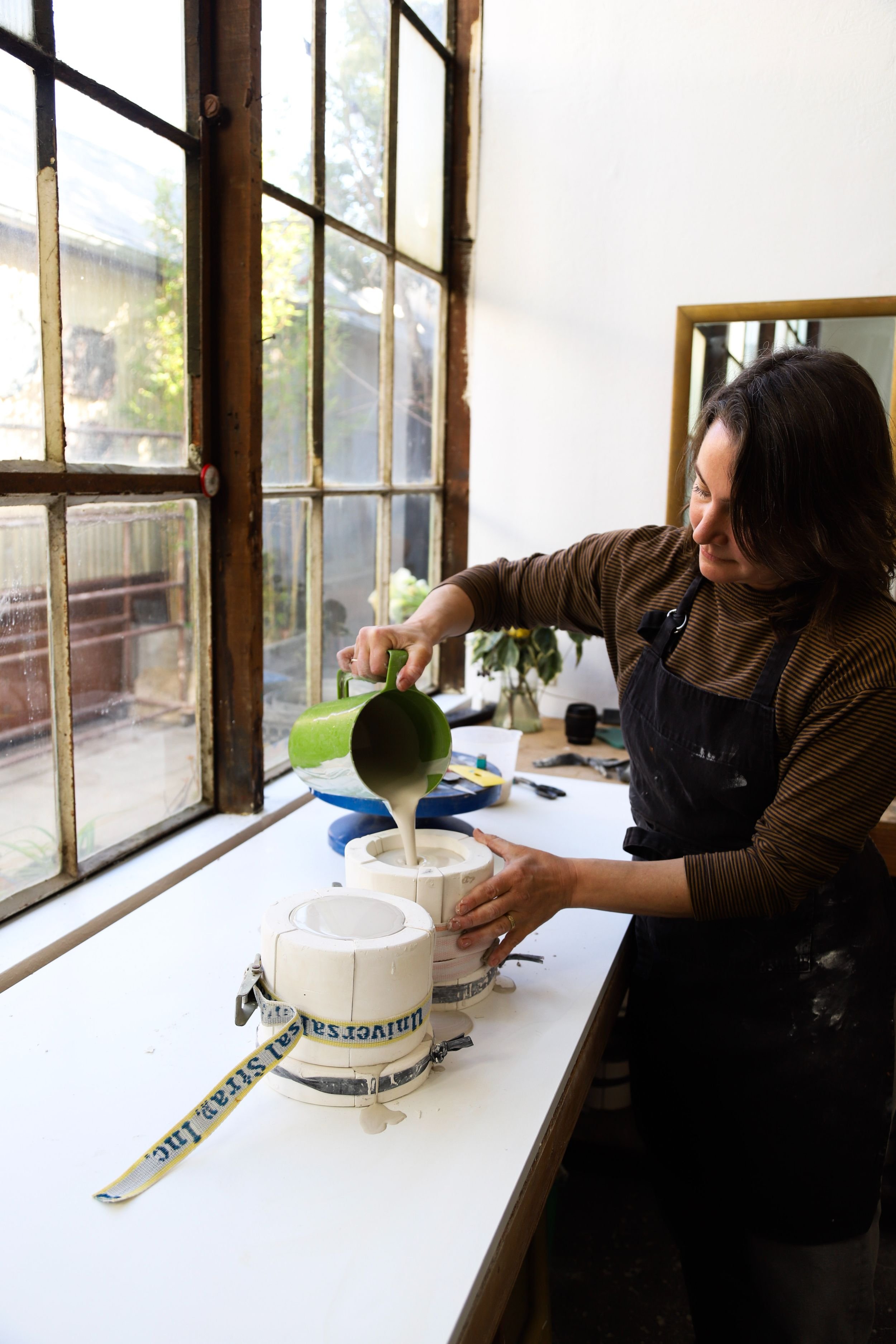
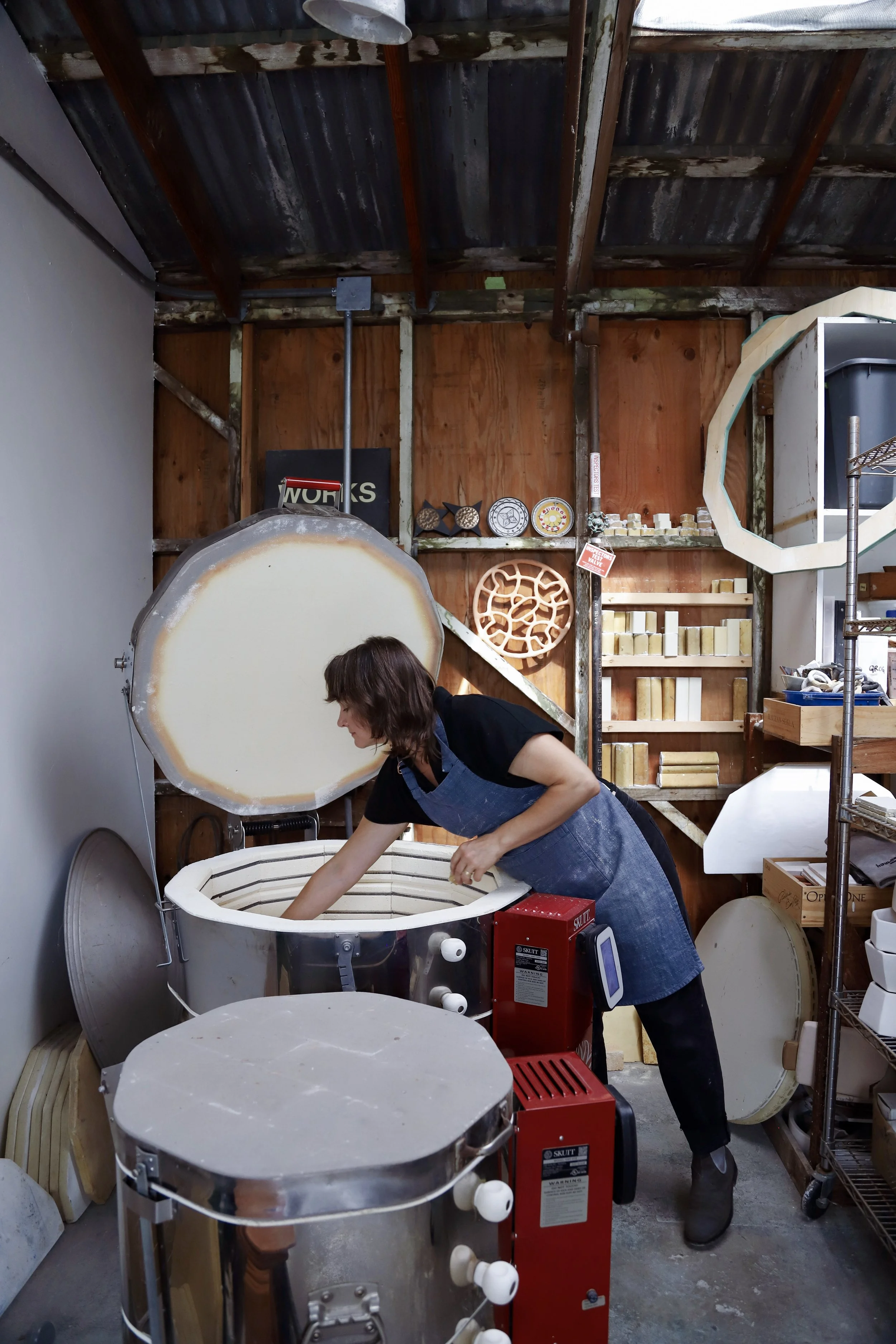
The studio is fully equipped with a gas kiln, computerized electric kilns, wheel, slab roller, glaze and plaster lab, and everything needed to support every stage of a commission from prototype to large-scale production and installation.
The Studio · NEW YORK
Located in the Finger Lakes region of New York. A working fabrication studio on the farm where Kala grew up living close to the land and where she developed her love for the natural world.
The NY studio is in the meadow view barn that Kala’s father built and is furnished as a ceramics studio and wood shop.
Materials & Mediums
Custom Glazes
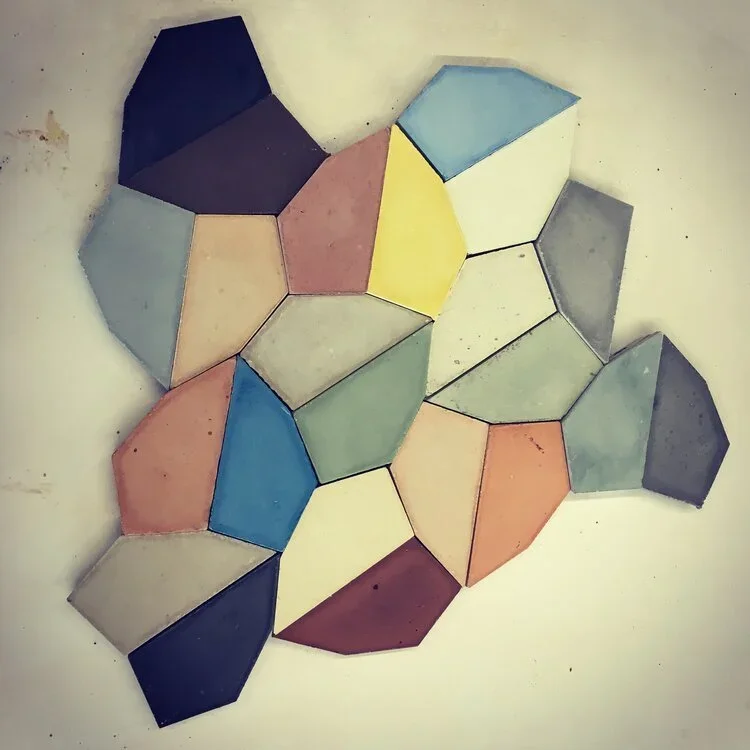
Developed in-house through extensive testing. Glaze chemistry is affected by clay body, kiln atmosphere, and firing temperature, so every project involves dedicated sample development. All glaze waste is recycled back into production for a sustainable, closed loop program. Kala works with clients for color development, and integration of meaningful materials such as local clays for surfacing.
Earthenware, Stoneware, & Porcelain
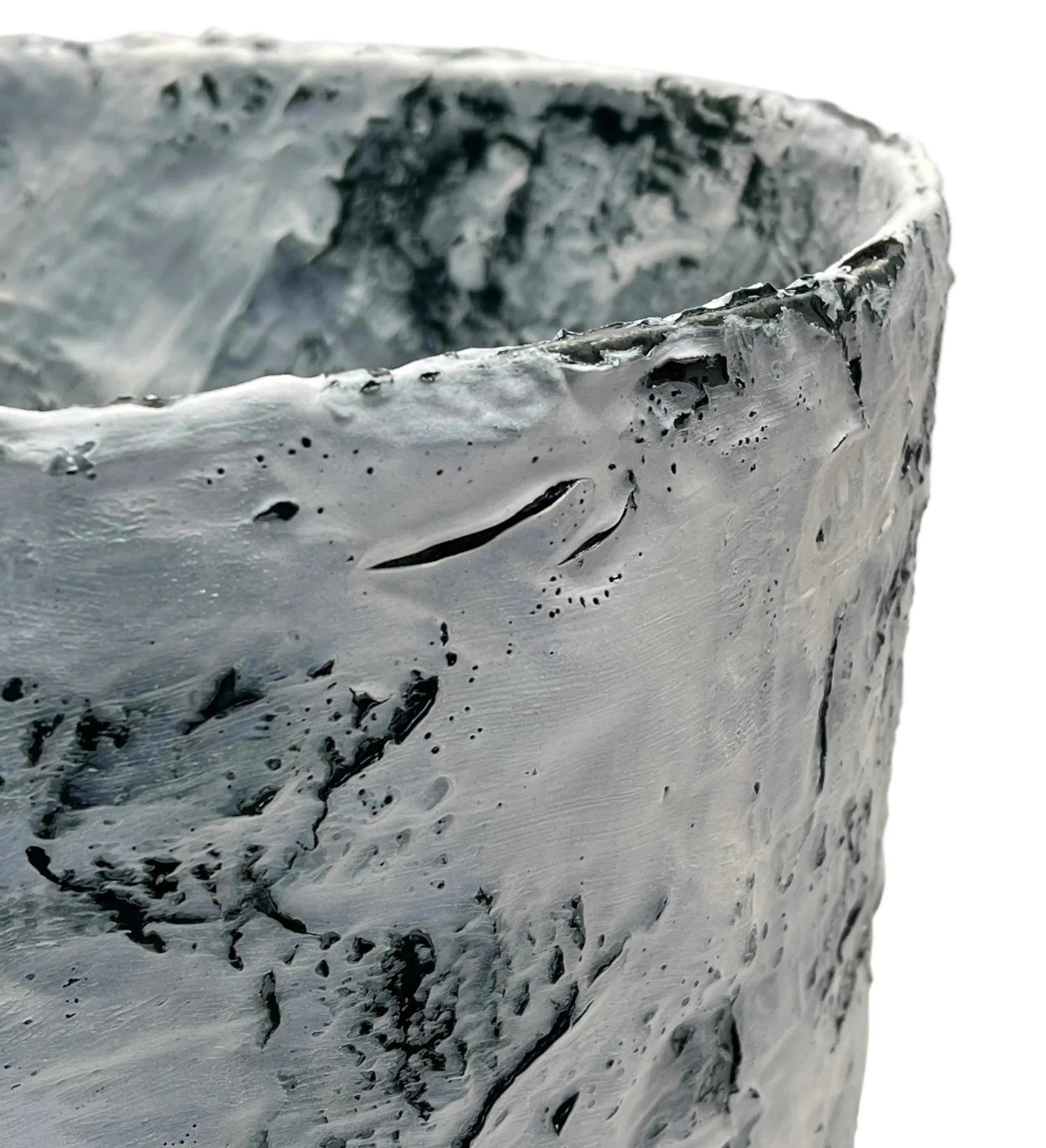
Clays are chosen for their durability, workability and character of color. Fired clay is archival, color-fast, waterproof, and endlessly expressive. The first material choice when making a new work- clay will define the character of the final product. Groggy, rough clays are used for large scale forms, while smoother clays like porcelain are used to capture details of botanical printing.
Rain Water
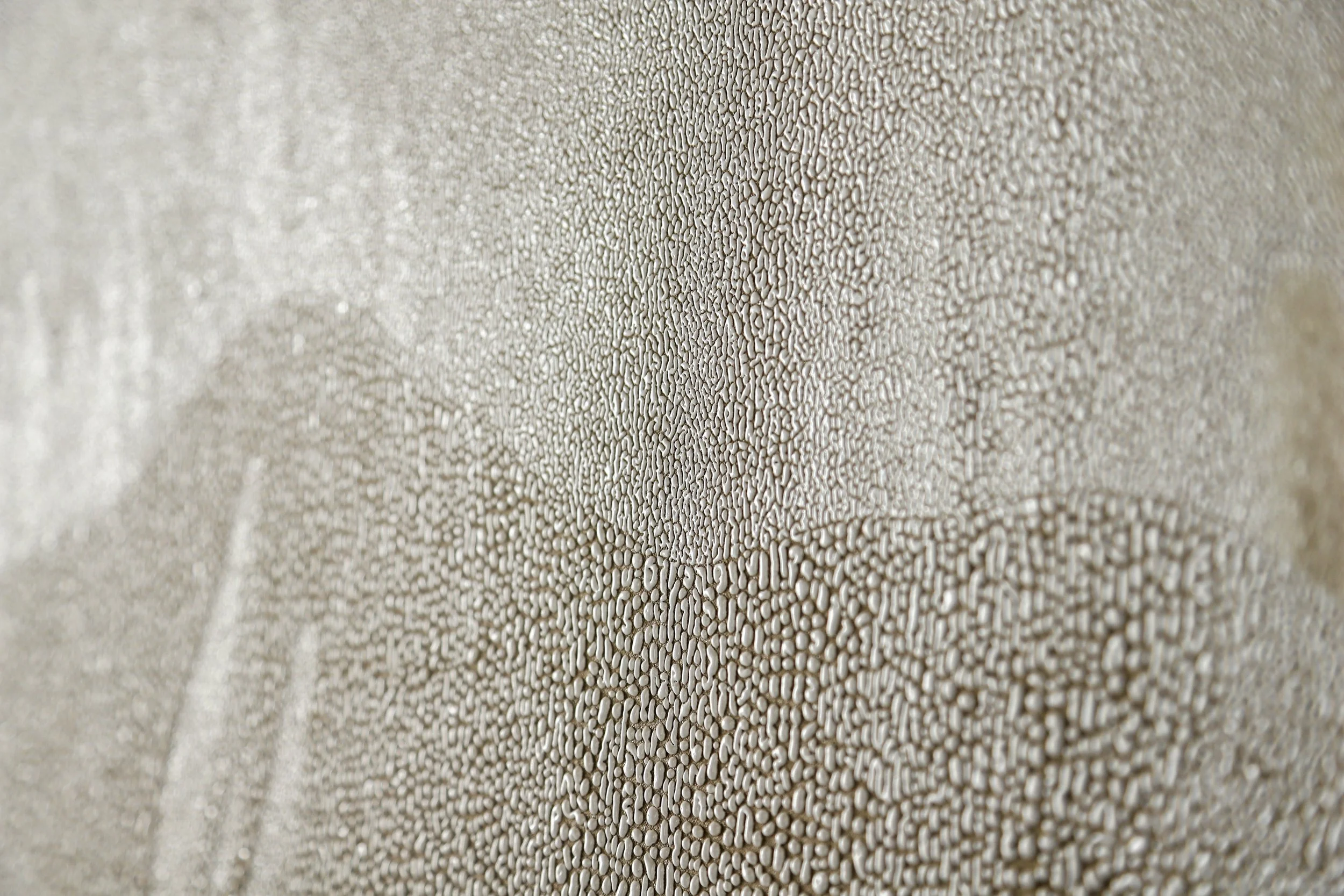
By integrating rainwater run off into my ceramic practice I transform a vital natural resource into an expressive medium. In the Ghost Rain series, this sustainable practice honors the environment, grounding each piece in the literal atmosphere of its origin and fostering a deep connection with nature.
Metal, Wood & Plaster
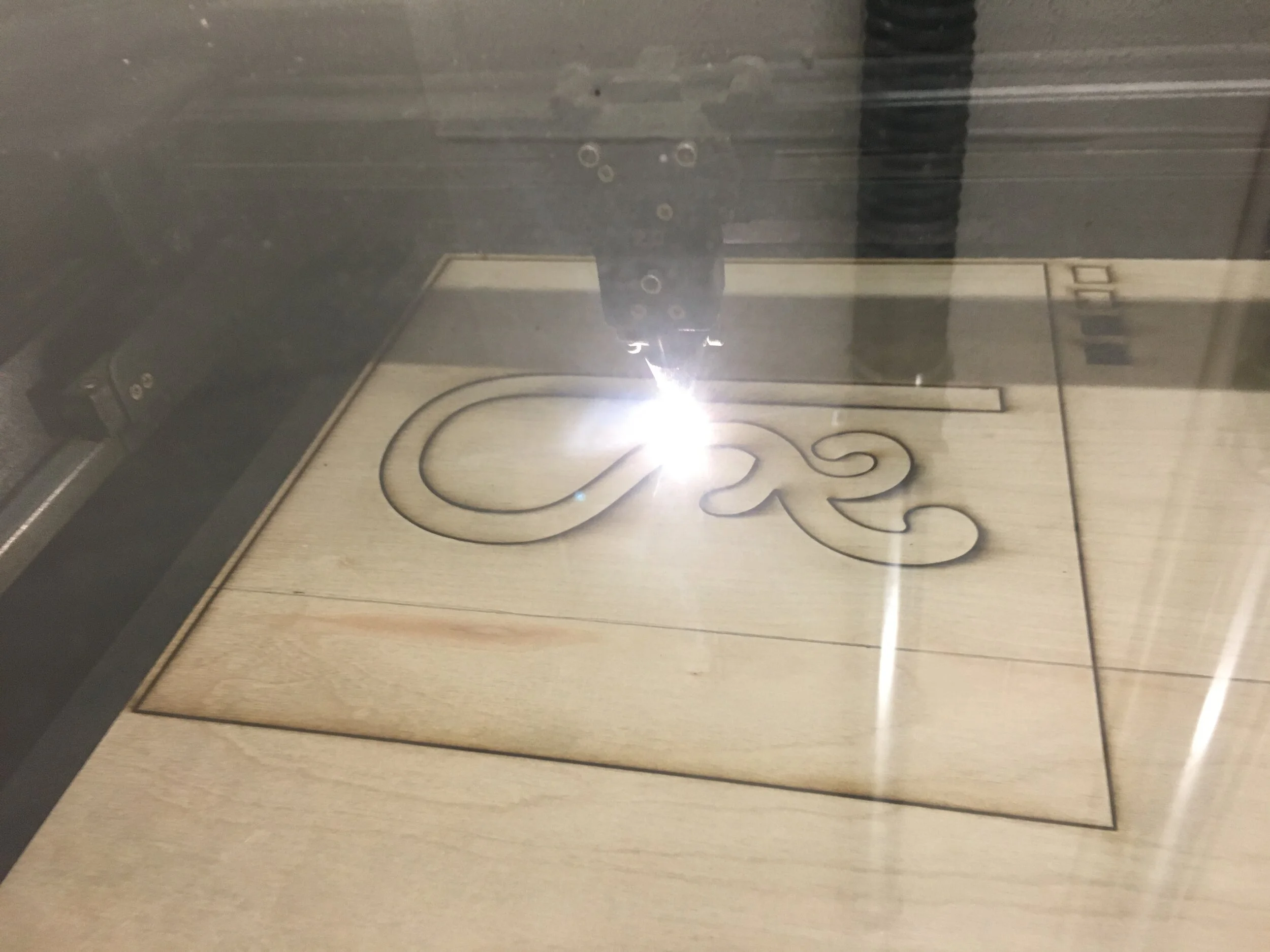
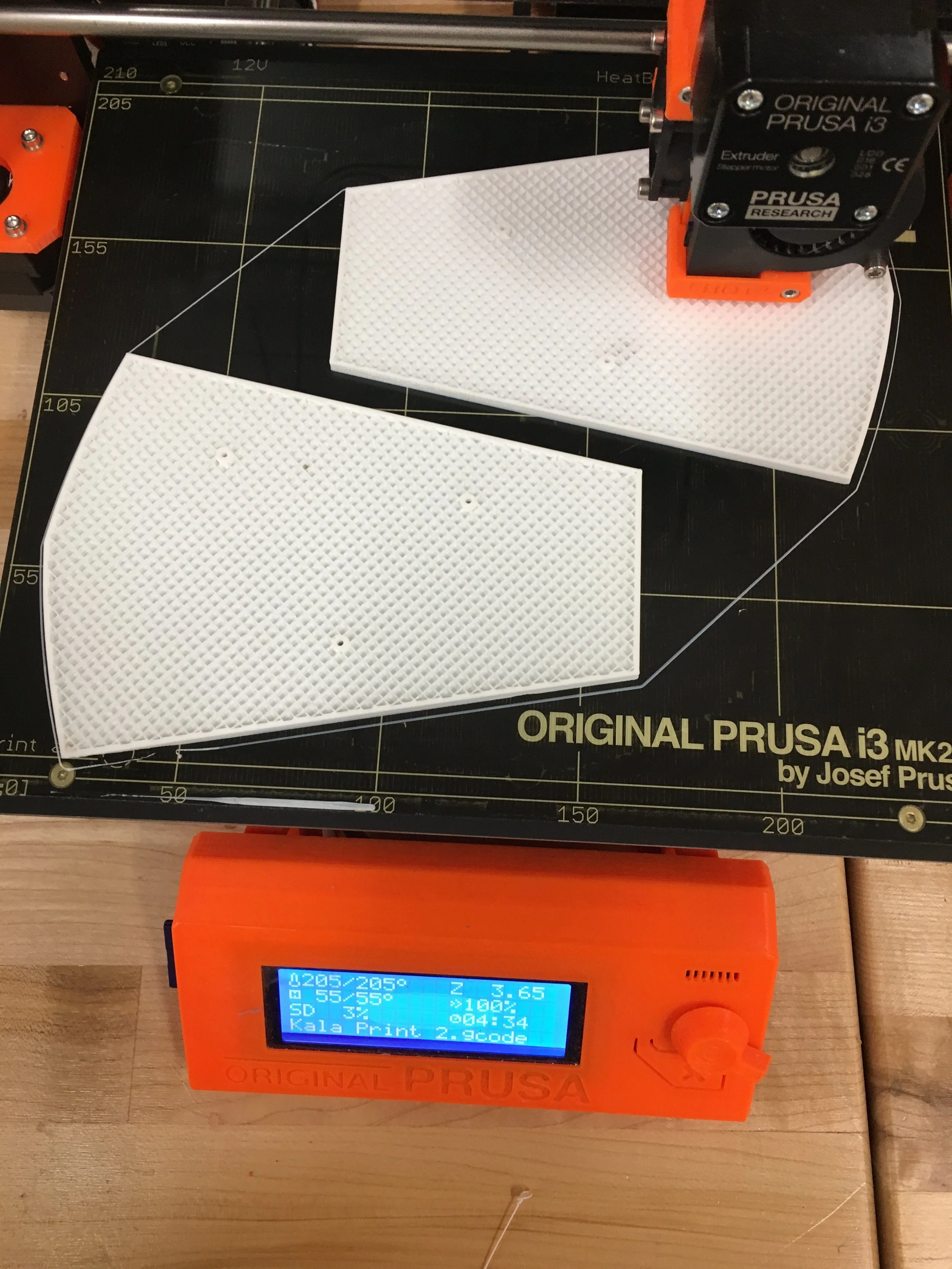
Working across mediums metal, wood, and architectural plaster extend what ceramics can do alone. A range of fabrication techniques are used alongside traditional hand-forming techniques to achieve precision in modular and architectural components including CNC and 3D printing- extending what ceramics can do, without replacing the handmade finish that defines the final work.
Botanicals
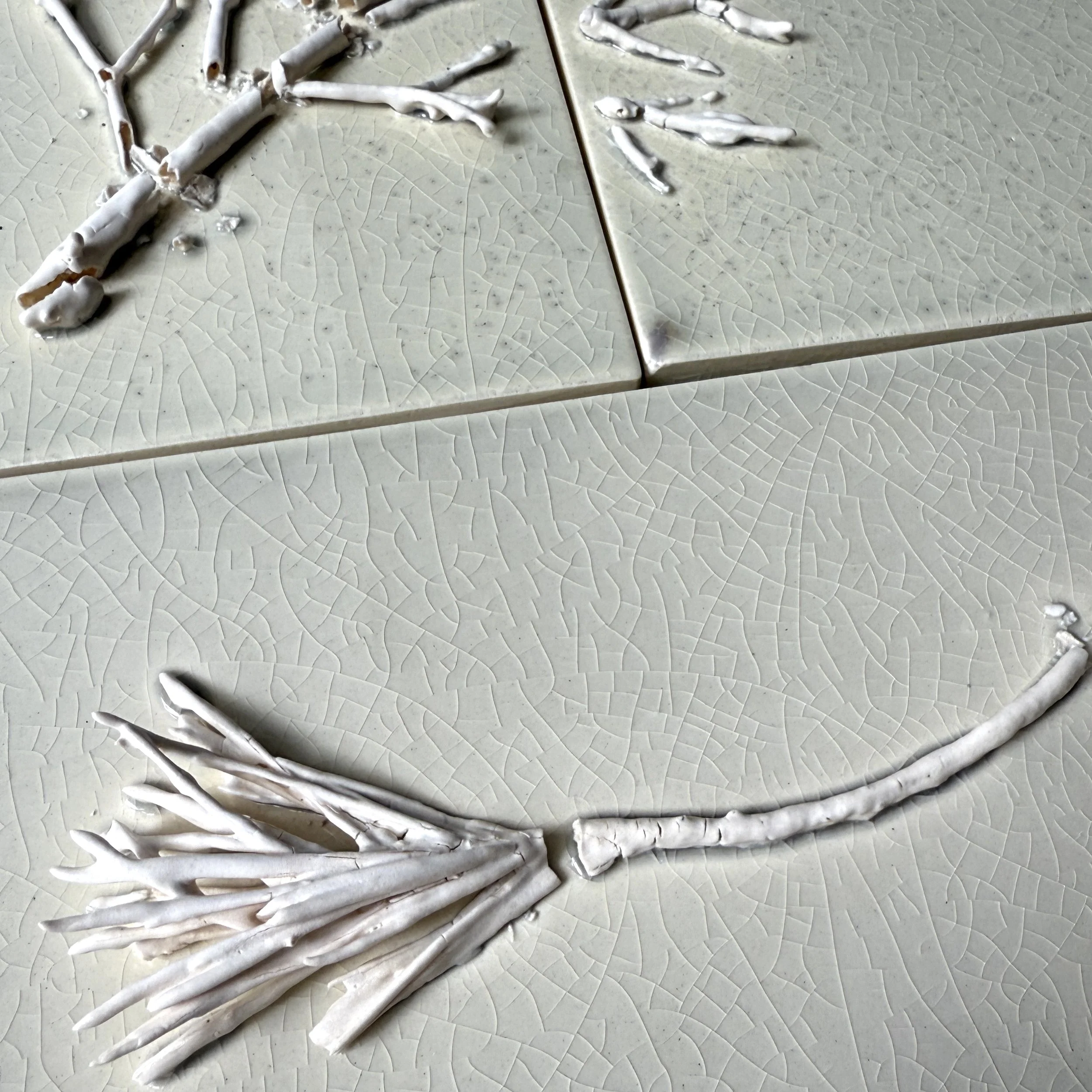
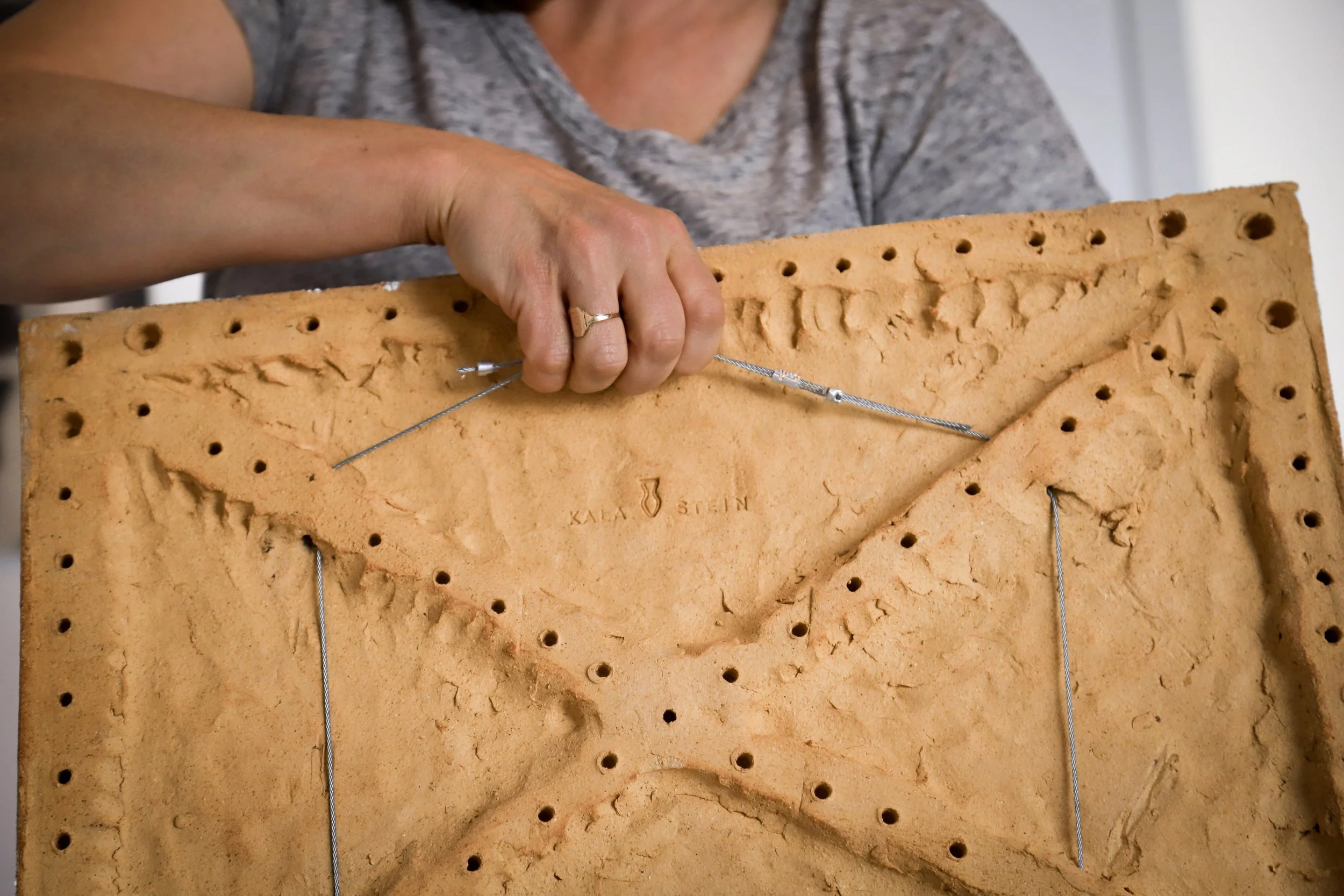
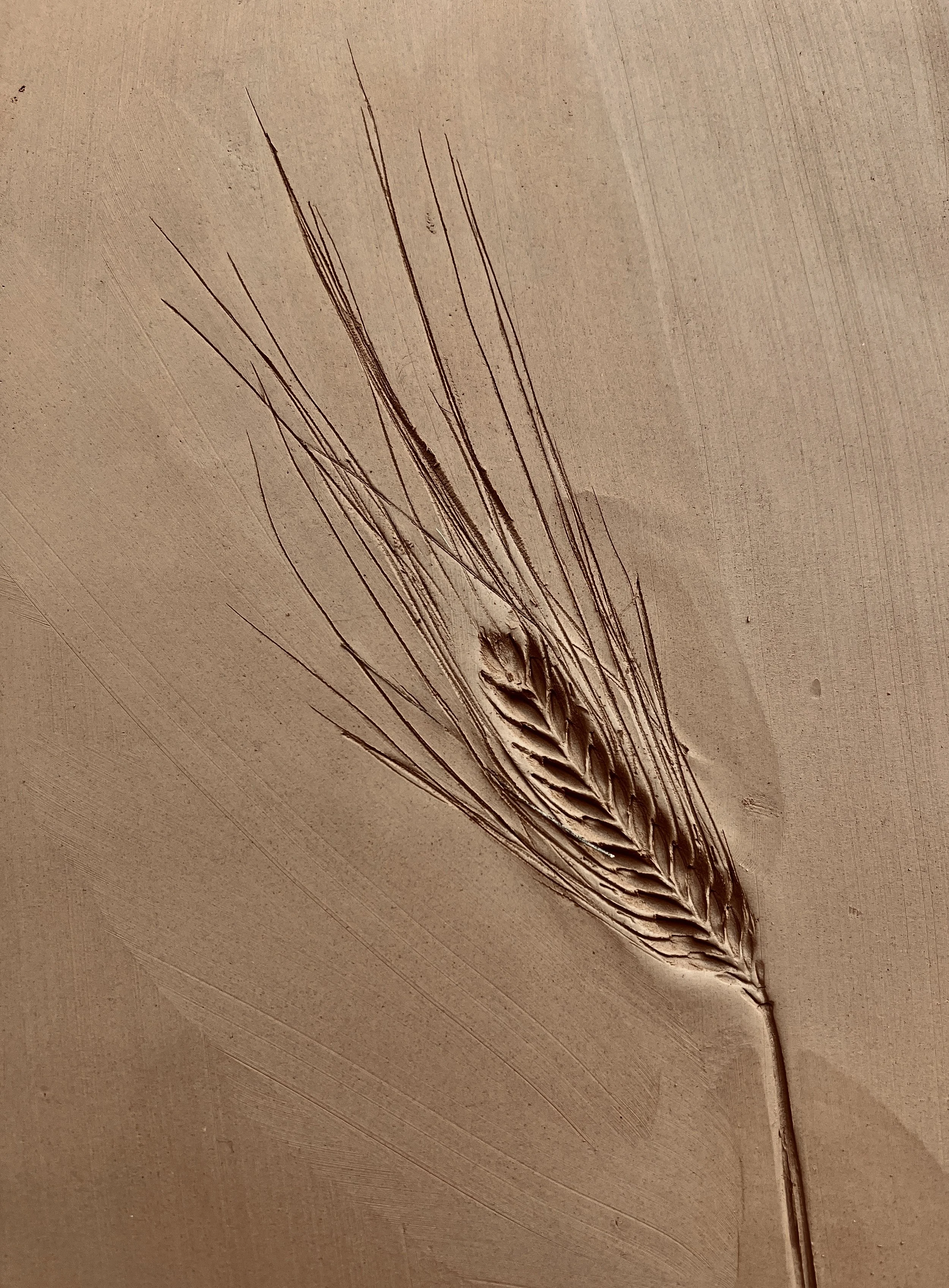
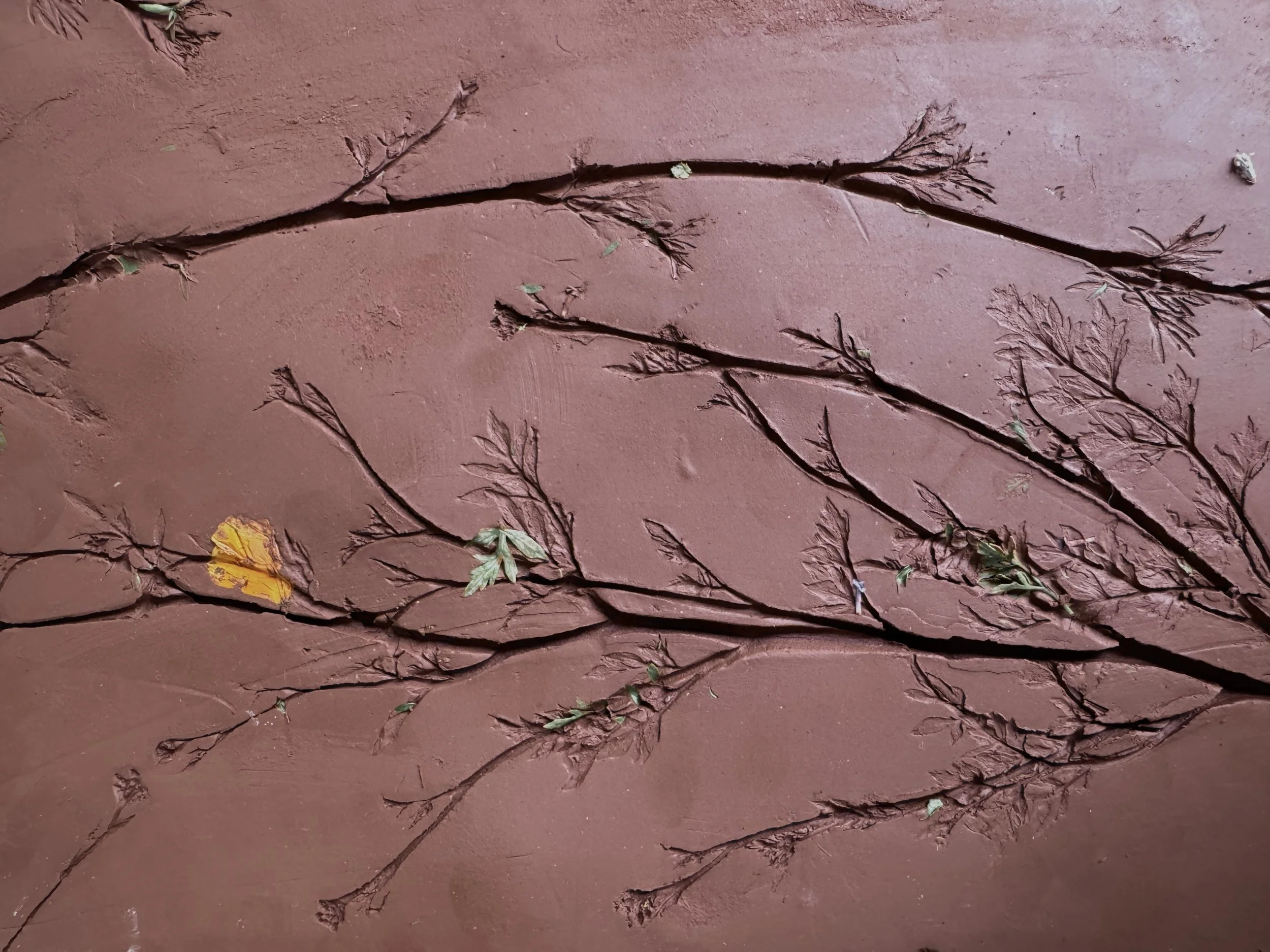
Embossing clay with foraged botanicals imbue the work with a specificity of place, time, and symbolism associated with plants. Embossing and casting techniques employs the clay as a fundamental record keeper, grounding Kala’s practice in a material led inquiry of the fragility, power, and impermanence of the natural world.
Earth-Sourced Materials
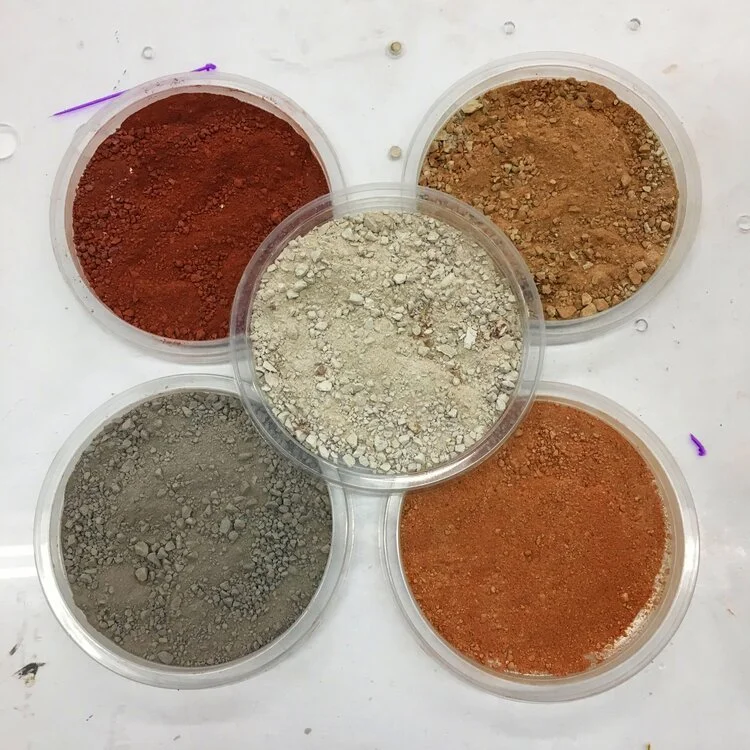
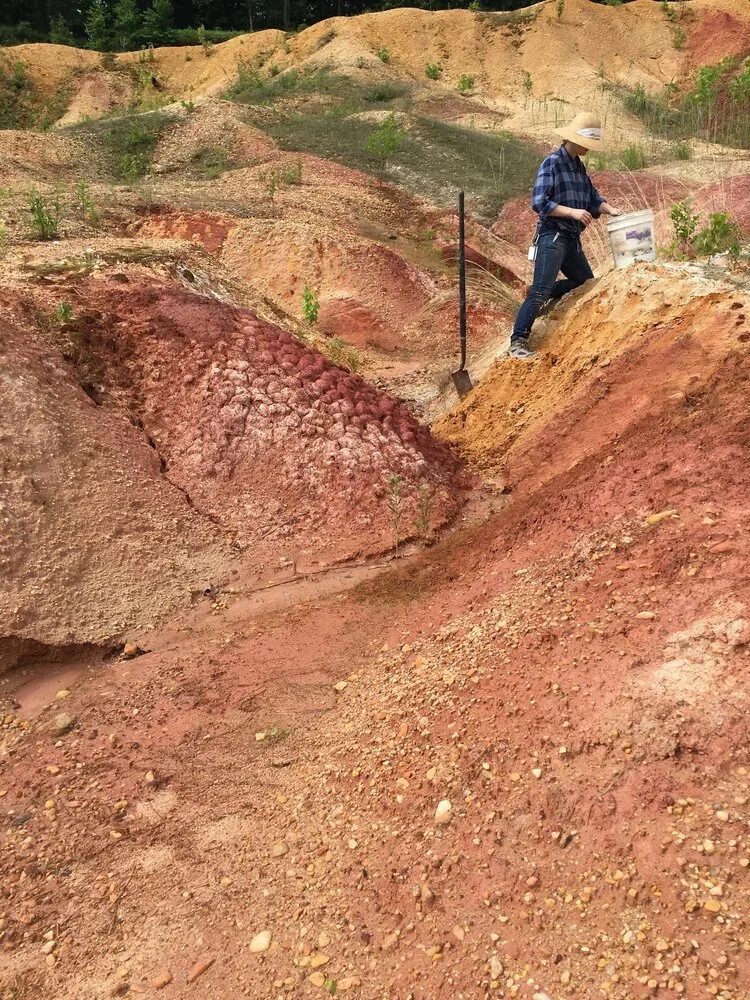
Raw materials, including clay, minerals, oxides, sand, and feldspars, are sourced directly from the earth. Kala collects sands from beaches and clay from the regions she works in. Elemental materials like clay and glaze bring in a wholistic and grounding energy for any built environment.
begin a conversation
I welcome inquiries for commissions, collaborations, and studio visits. Every project starts the same way: with curiosity, a site, and a conversation.