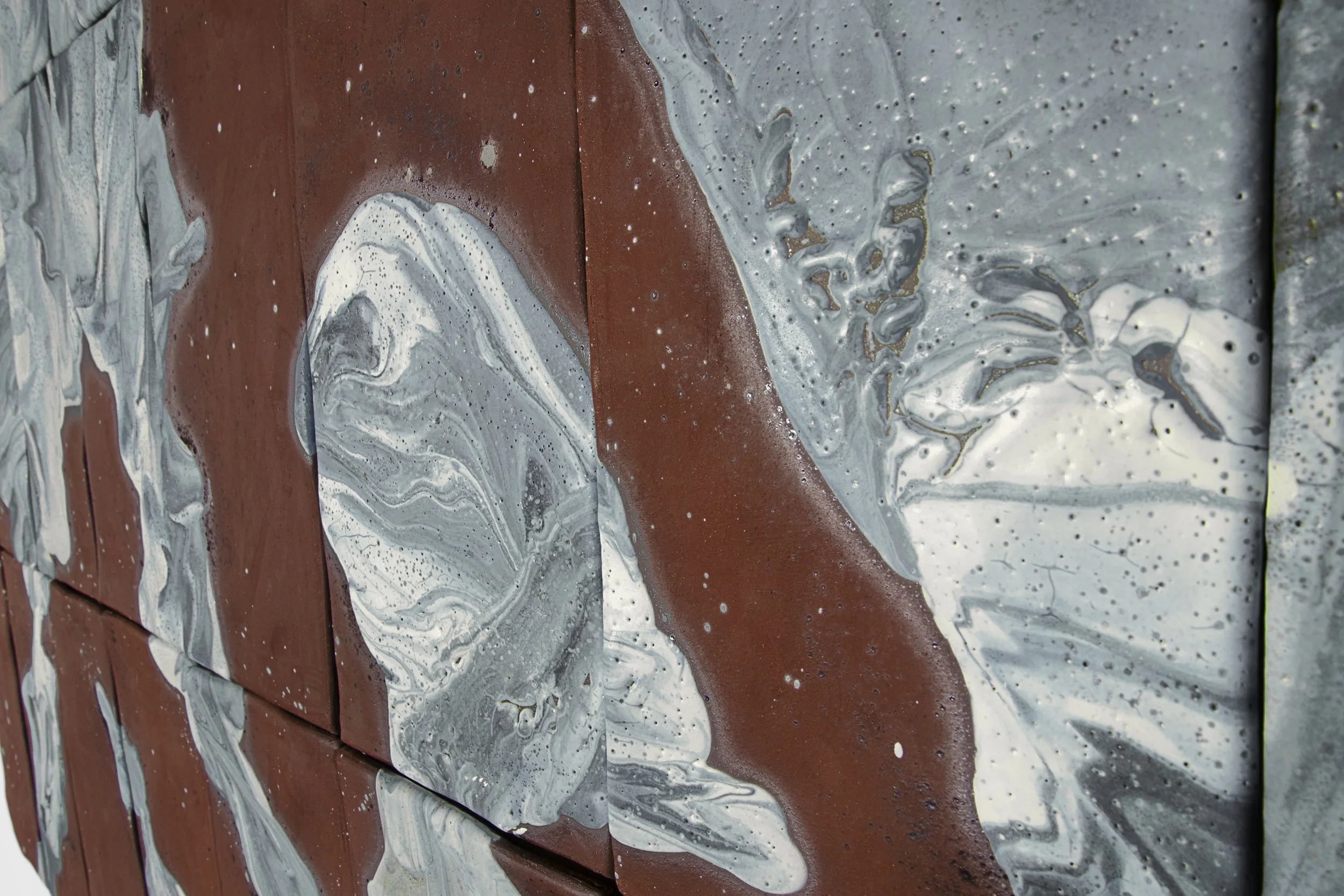
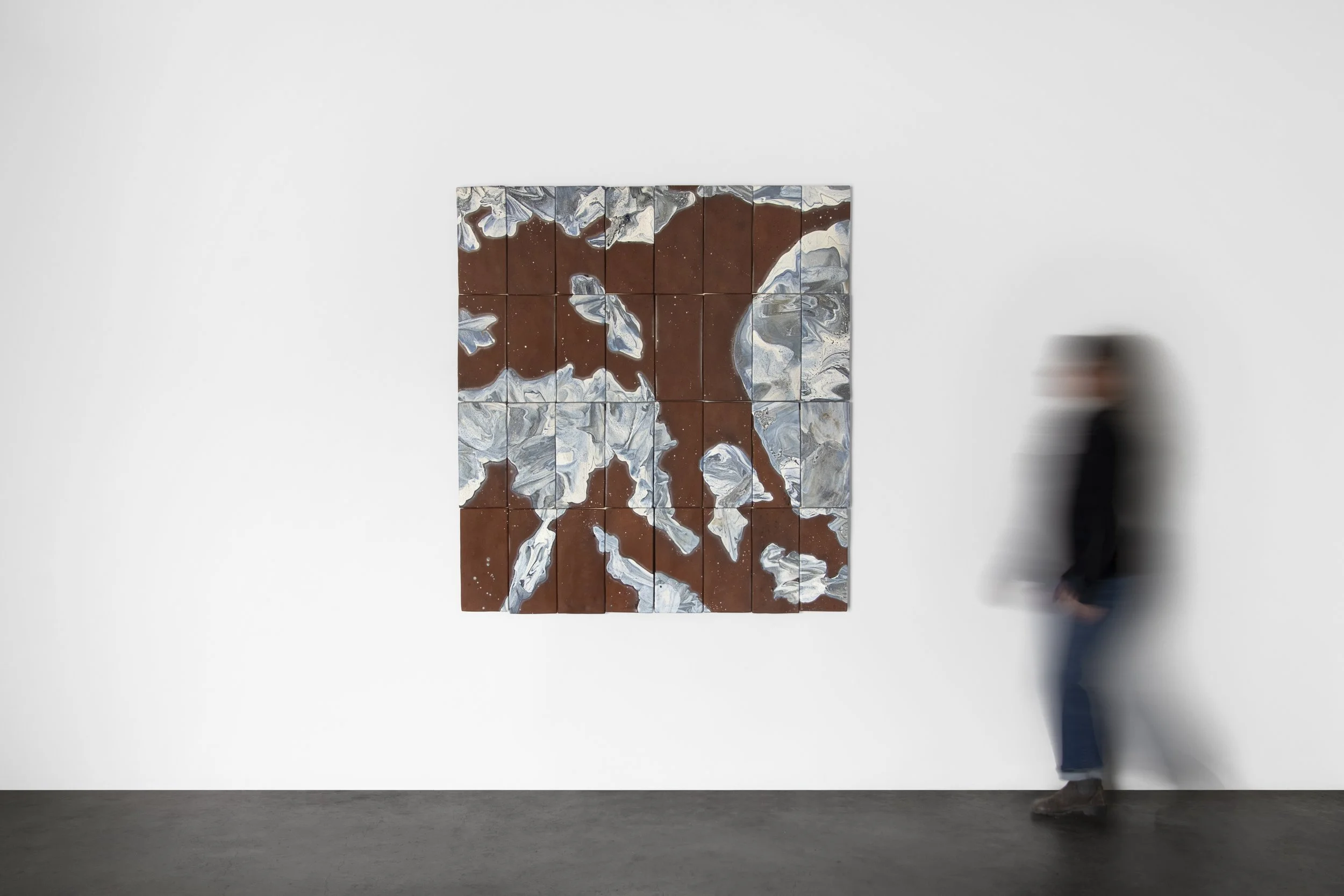
atmopsheric Series
bomb cyclone
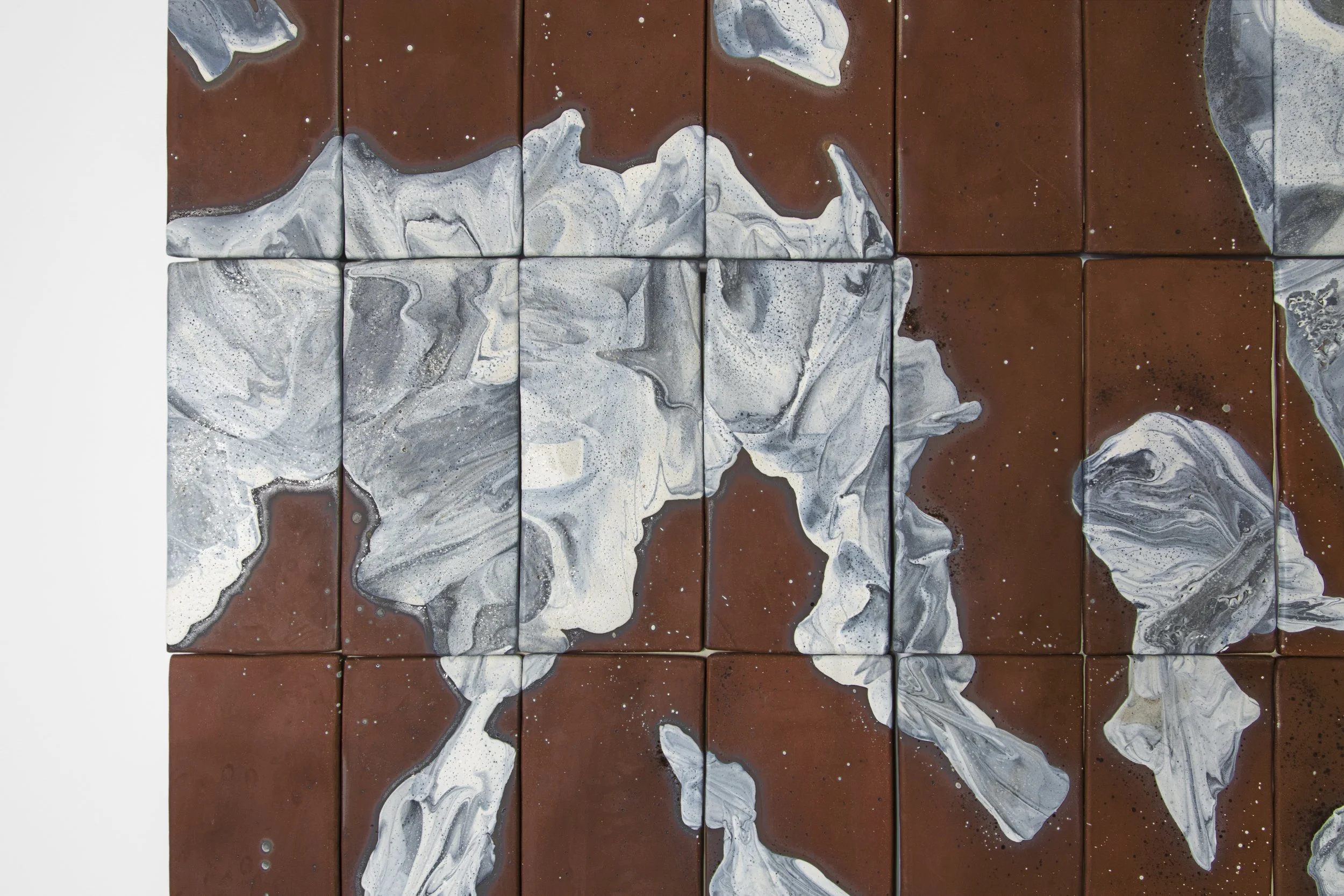
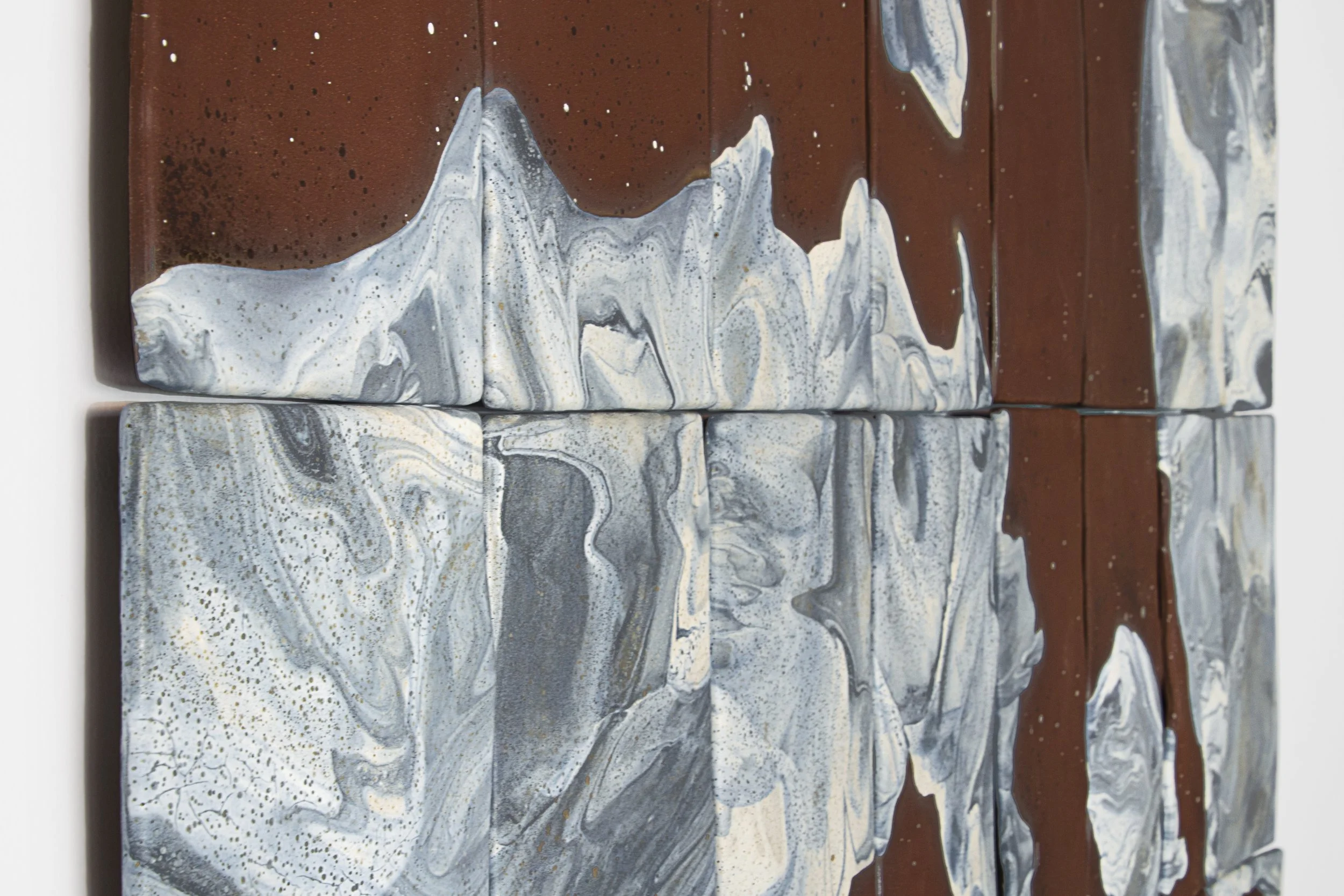
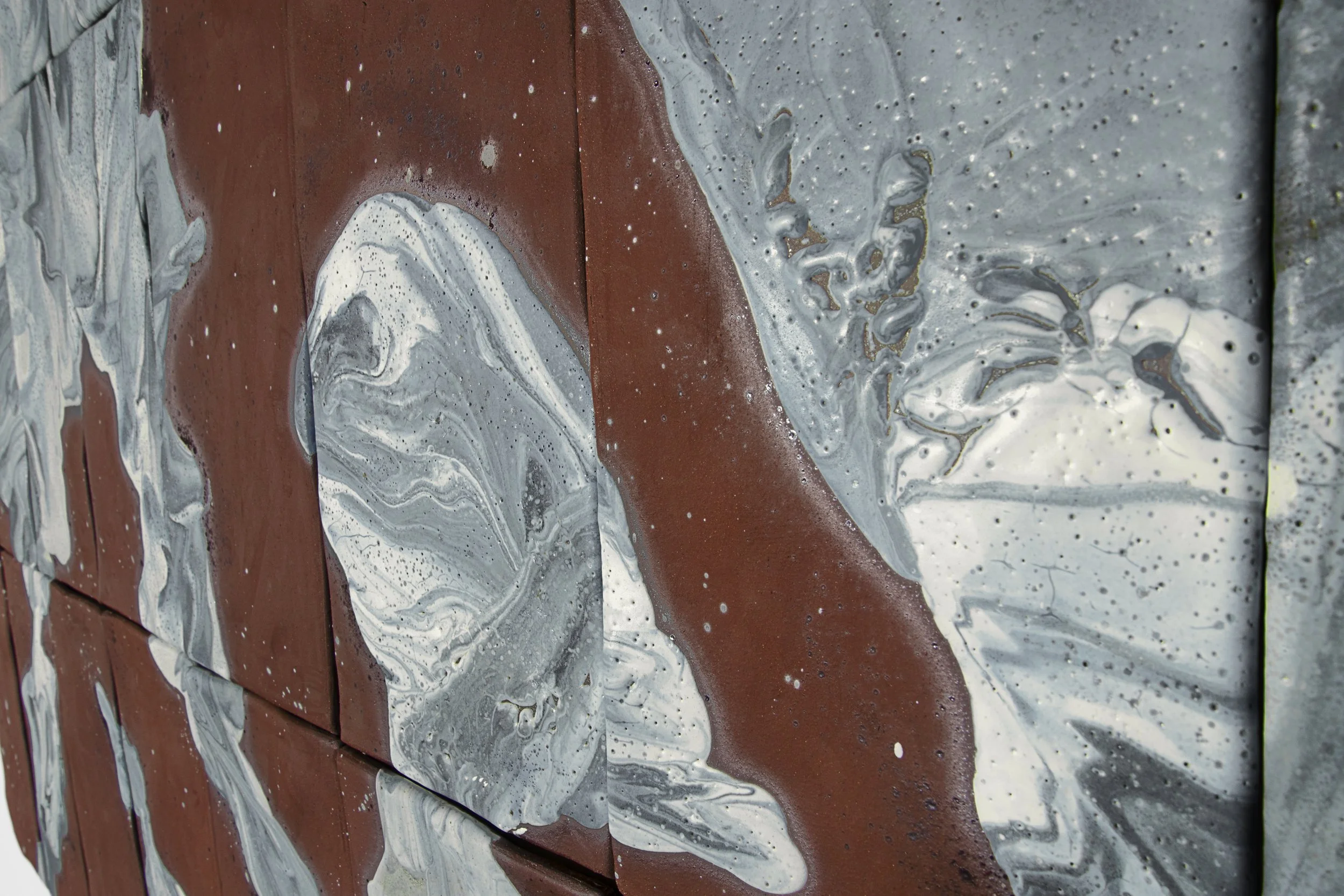
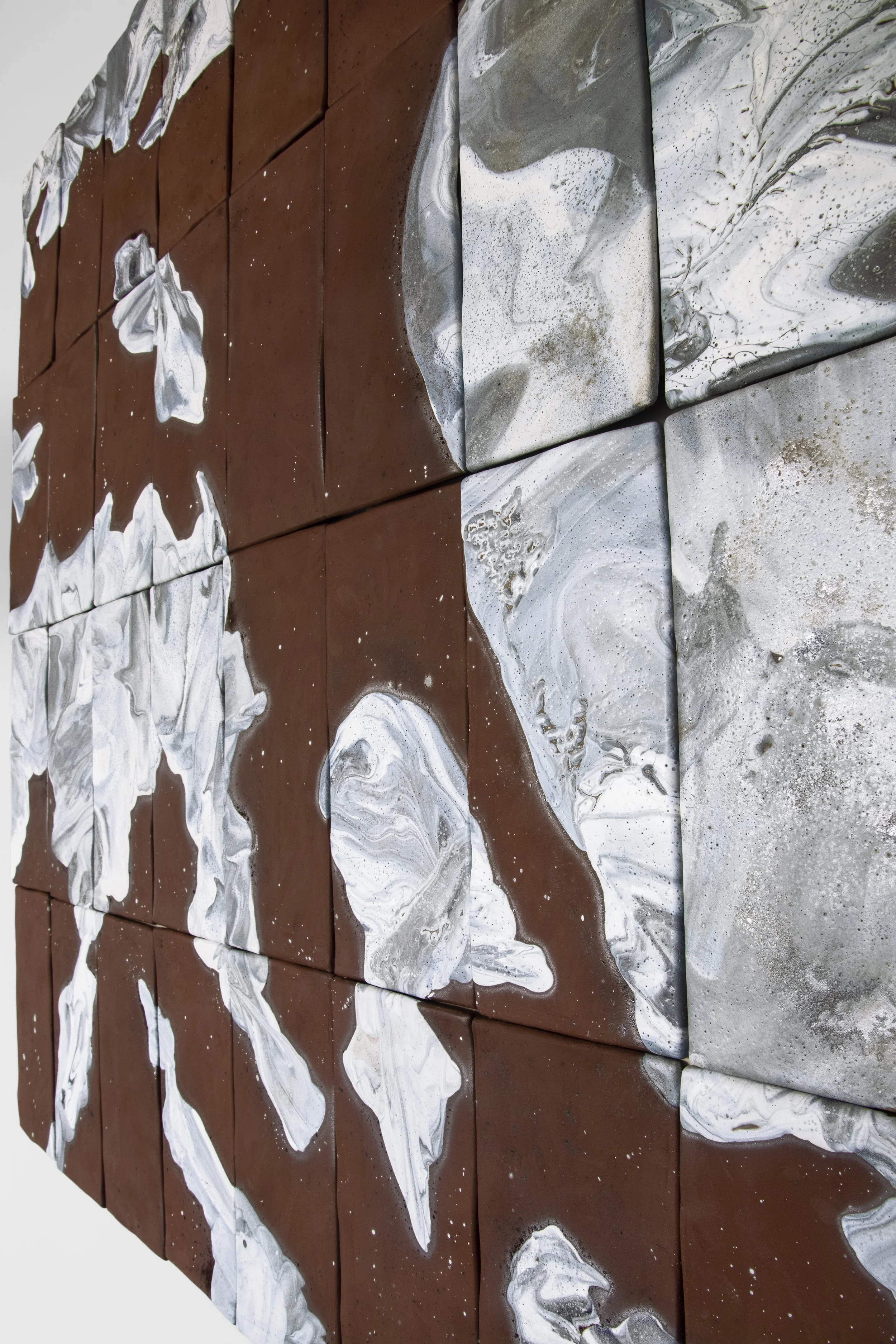
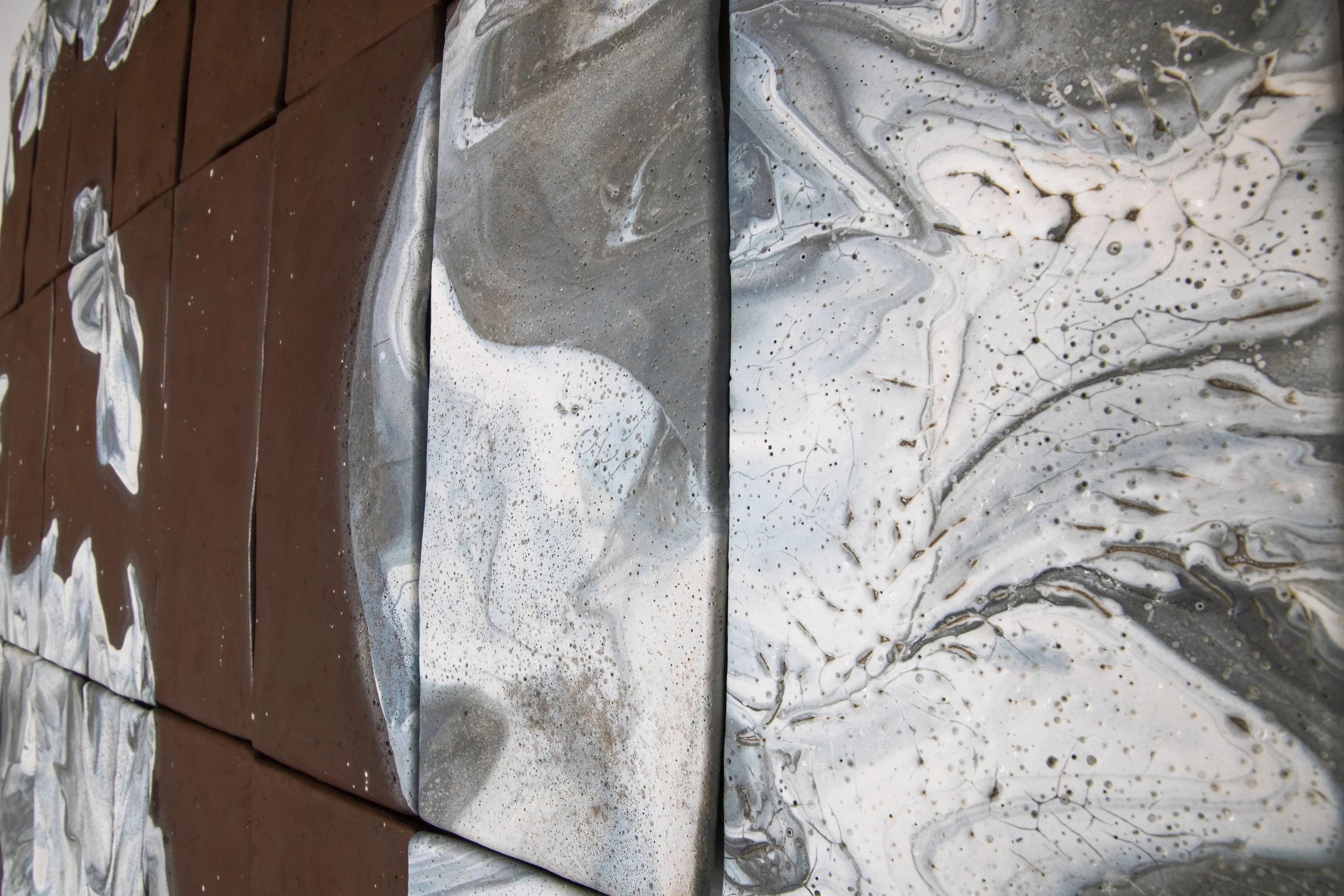
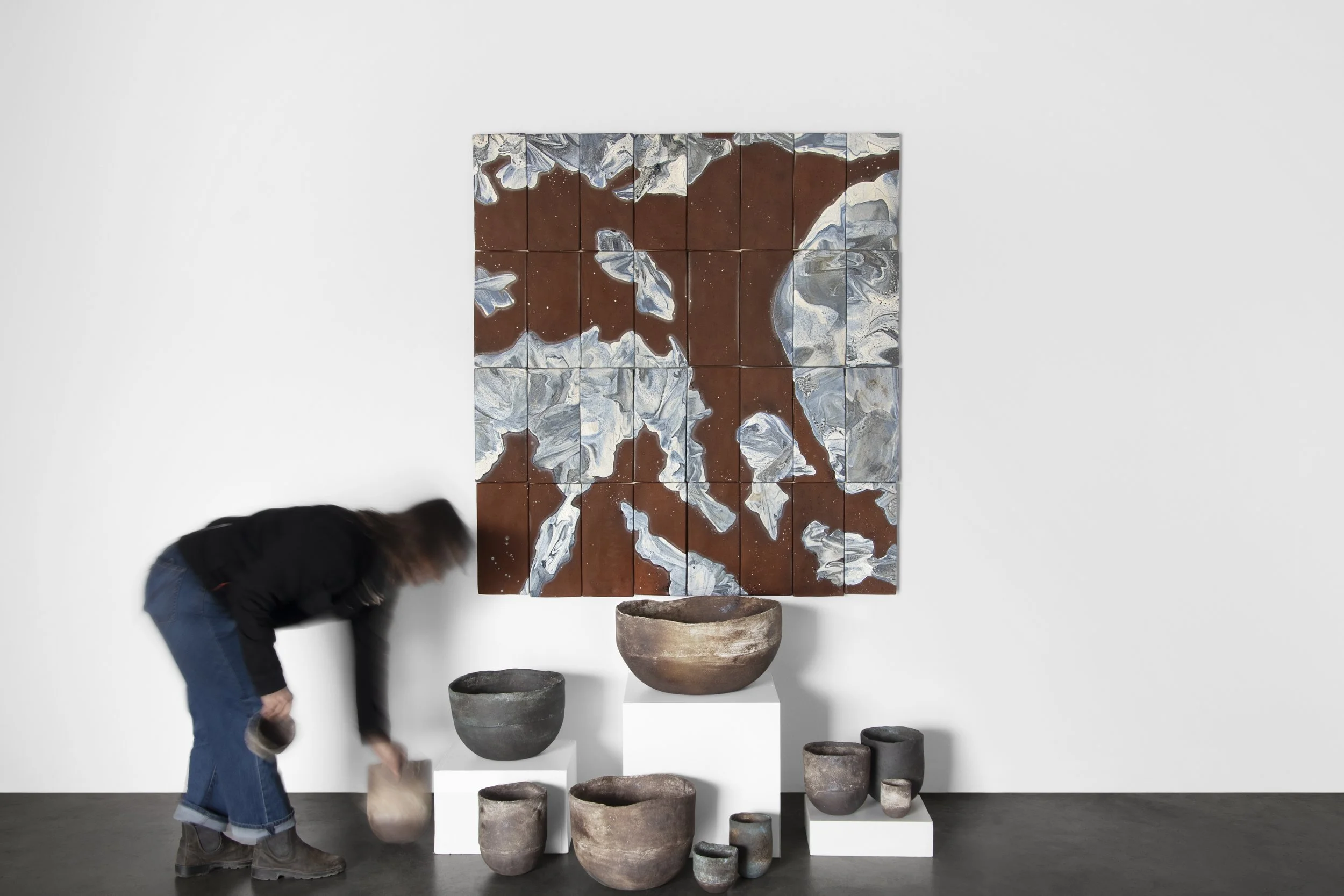
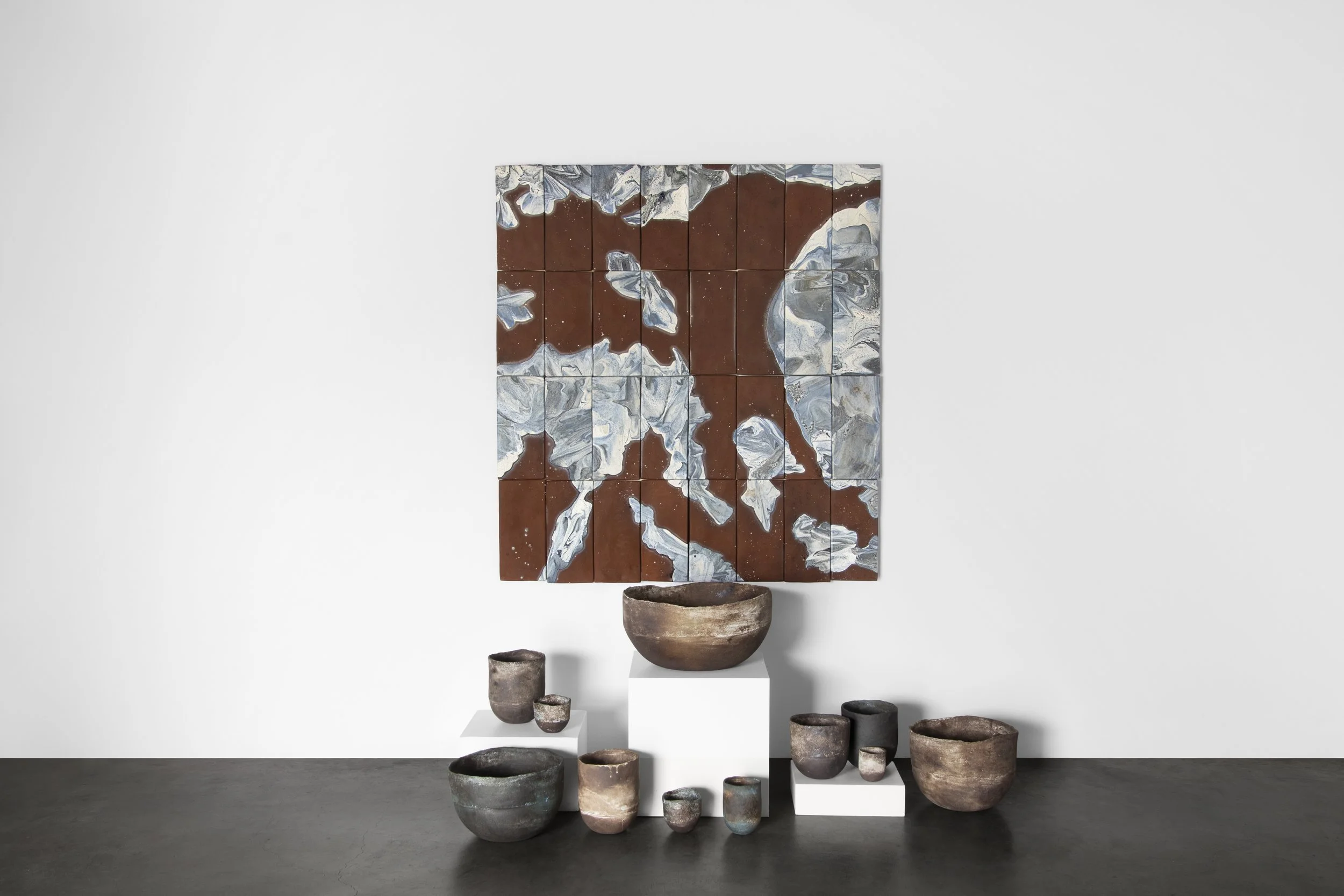
A ceramic and glaze interpretation of the historic ‘bomb cyclone’ that affected Palo Alto on January 4, 2023.
-
Commissioned for Rosewood Sandhill by Sweeney Co. Art Advisors. A ceramic and glaze interpretation of the historic ‘bomb cyclone’ that affected Palo Alto on January 4, 2023. This image was reworked from an image acquired of the January 4 weather pattern over the Pacific coast. The image was captured at 1:20 p.m. Pacific Standard Time by the Visible Infrared Imaging Radiometer Suite (VIIRS) on the NOAA-20 satellite. https://www.paloaltoonline.com/news/2023/01/04/palo-alto-storm-watch-track-the-impact-of-the-jan-4-atmospheric-river-event/
-
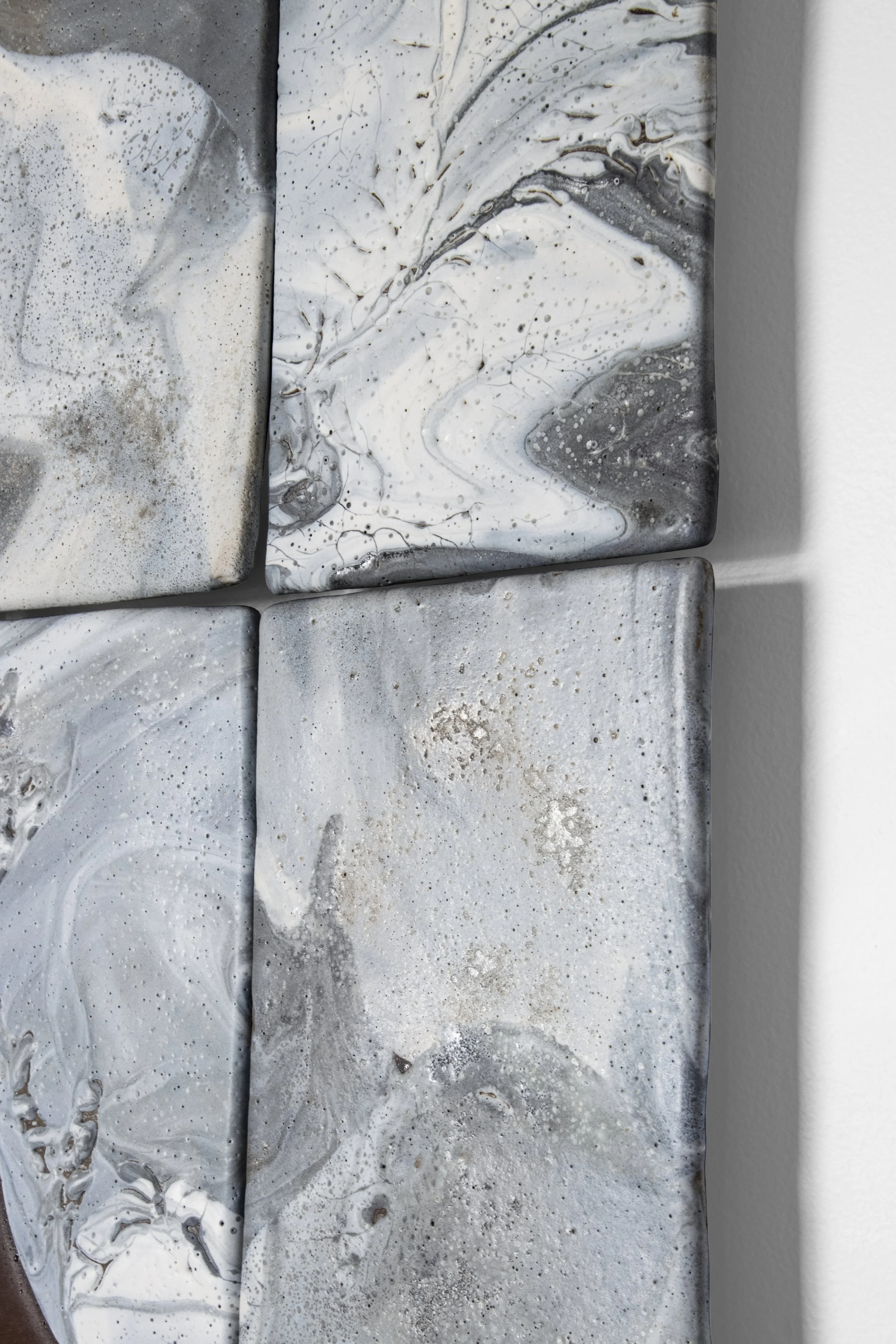
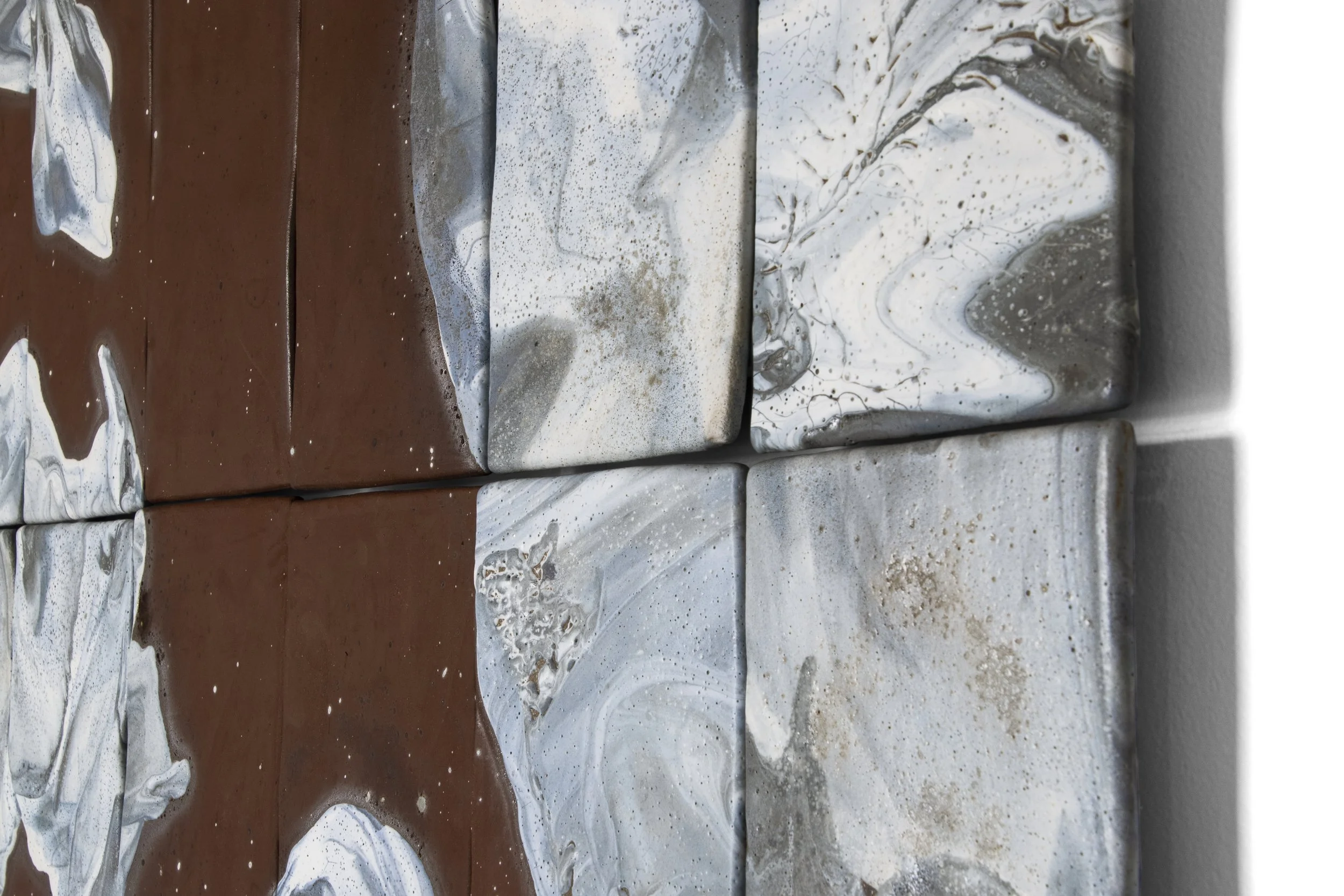
Handmade tiles, recycled and custom glaze overlay the terracotta clay to represent the land and the storm.
The undulating surface of the tile and grid formation references a well-used navigation map. It is a memorial to a specific moment in time, a collective experience, of severe historic weather.
-
54.75 w ” x 59.5 h ” x 1” d
(139 cm x 151 cm x 2.5 cm)
2024
Botanical Urn Series
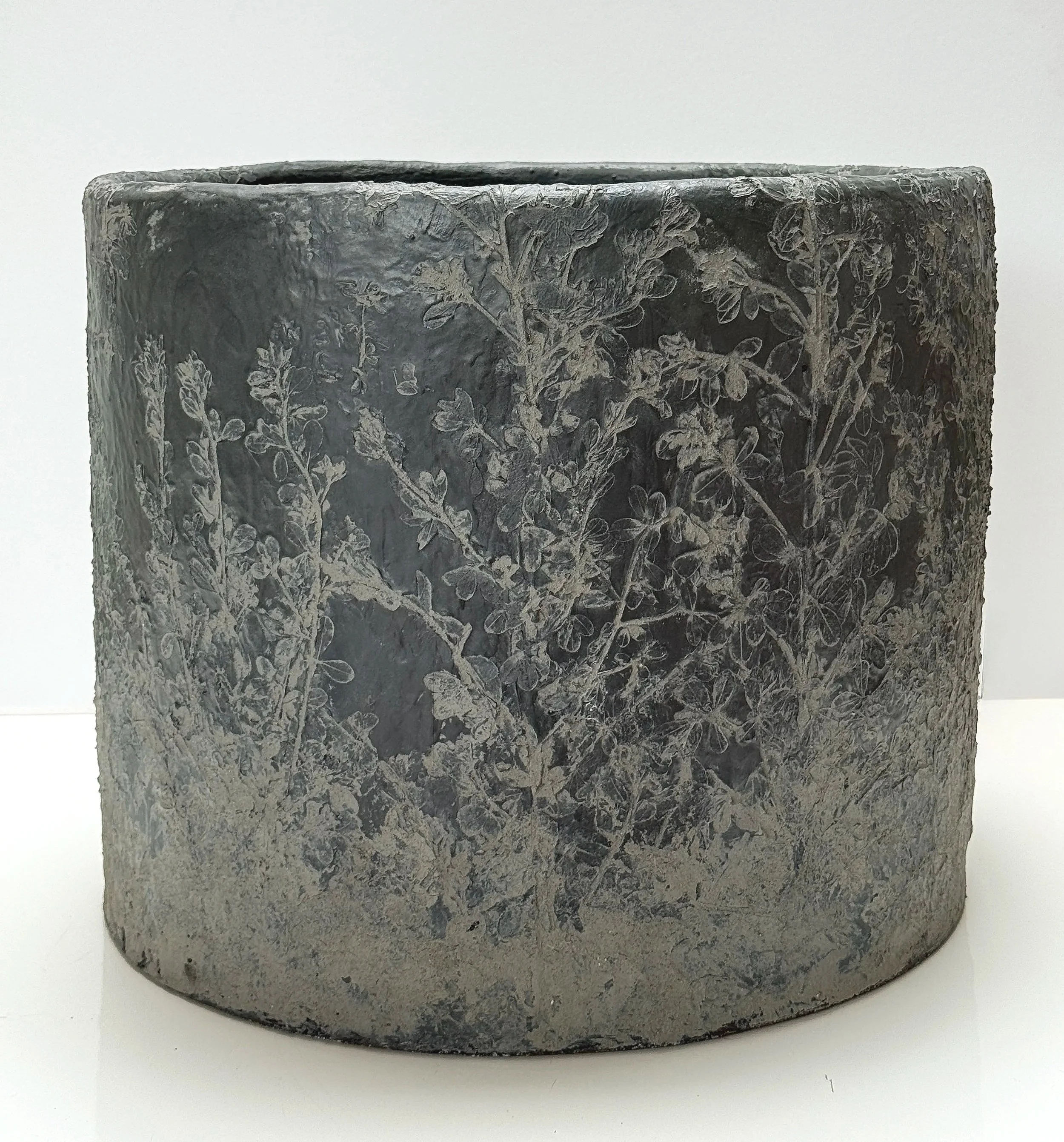
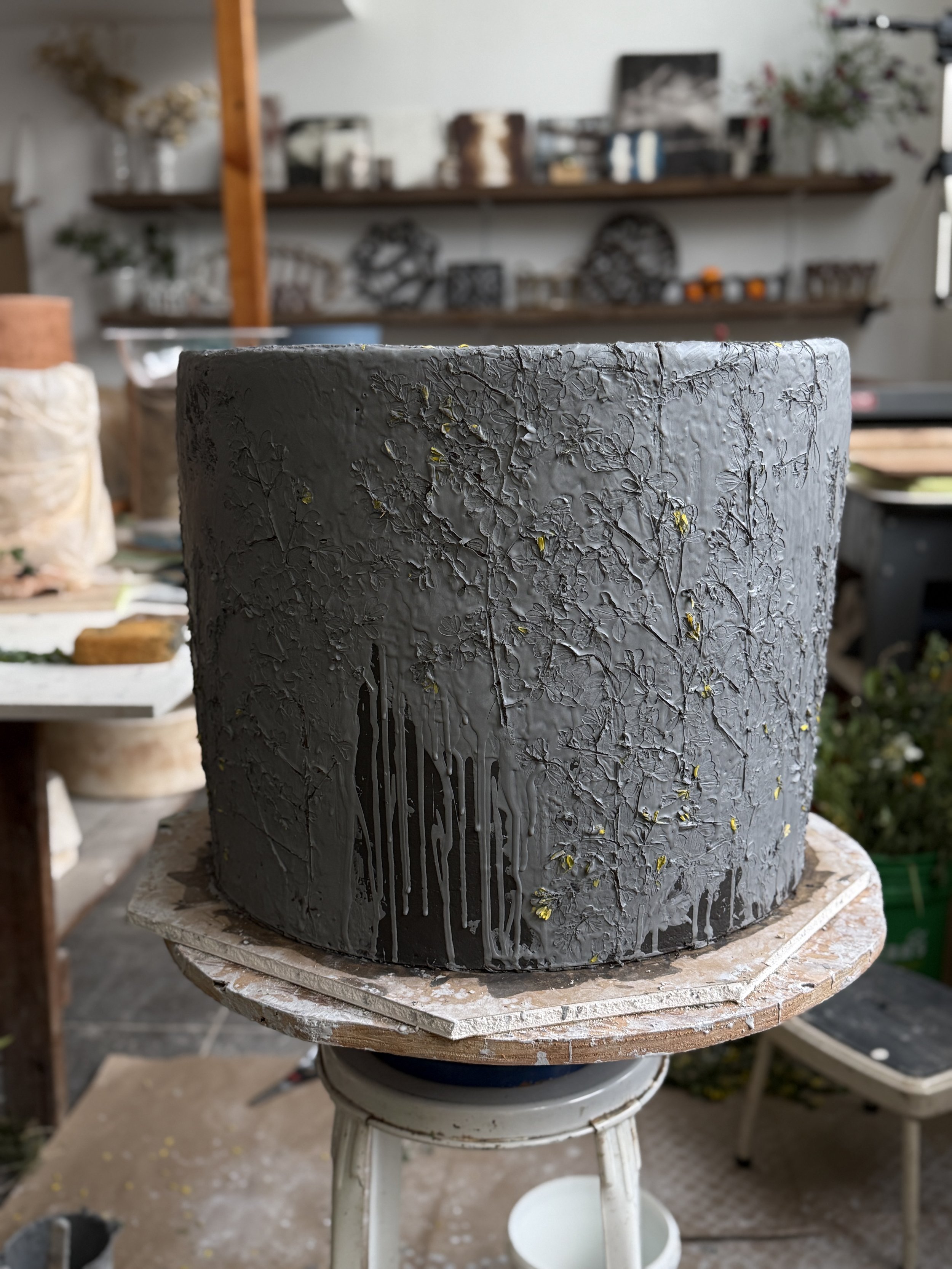
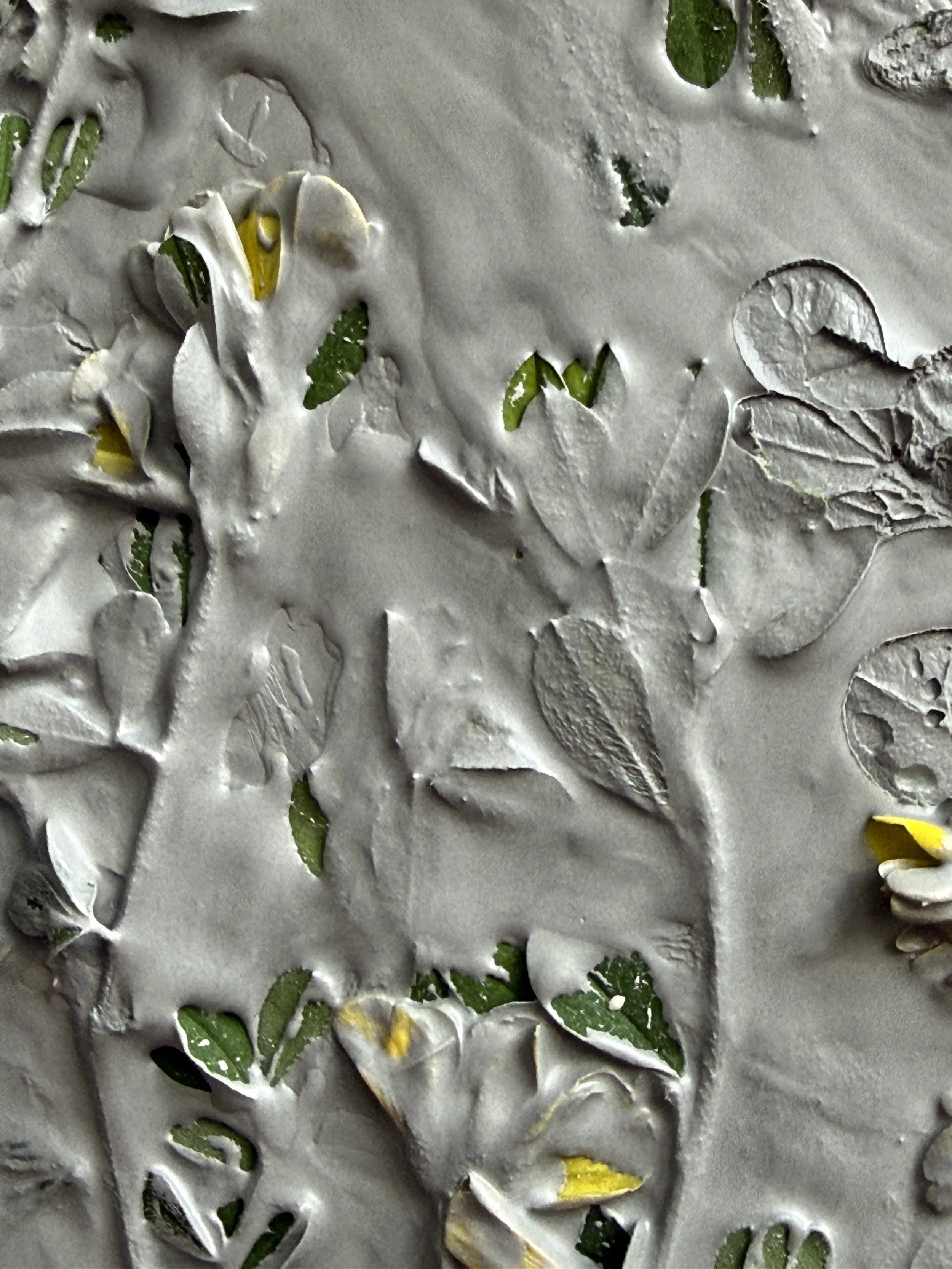
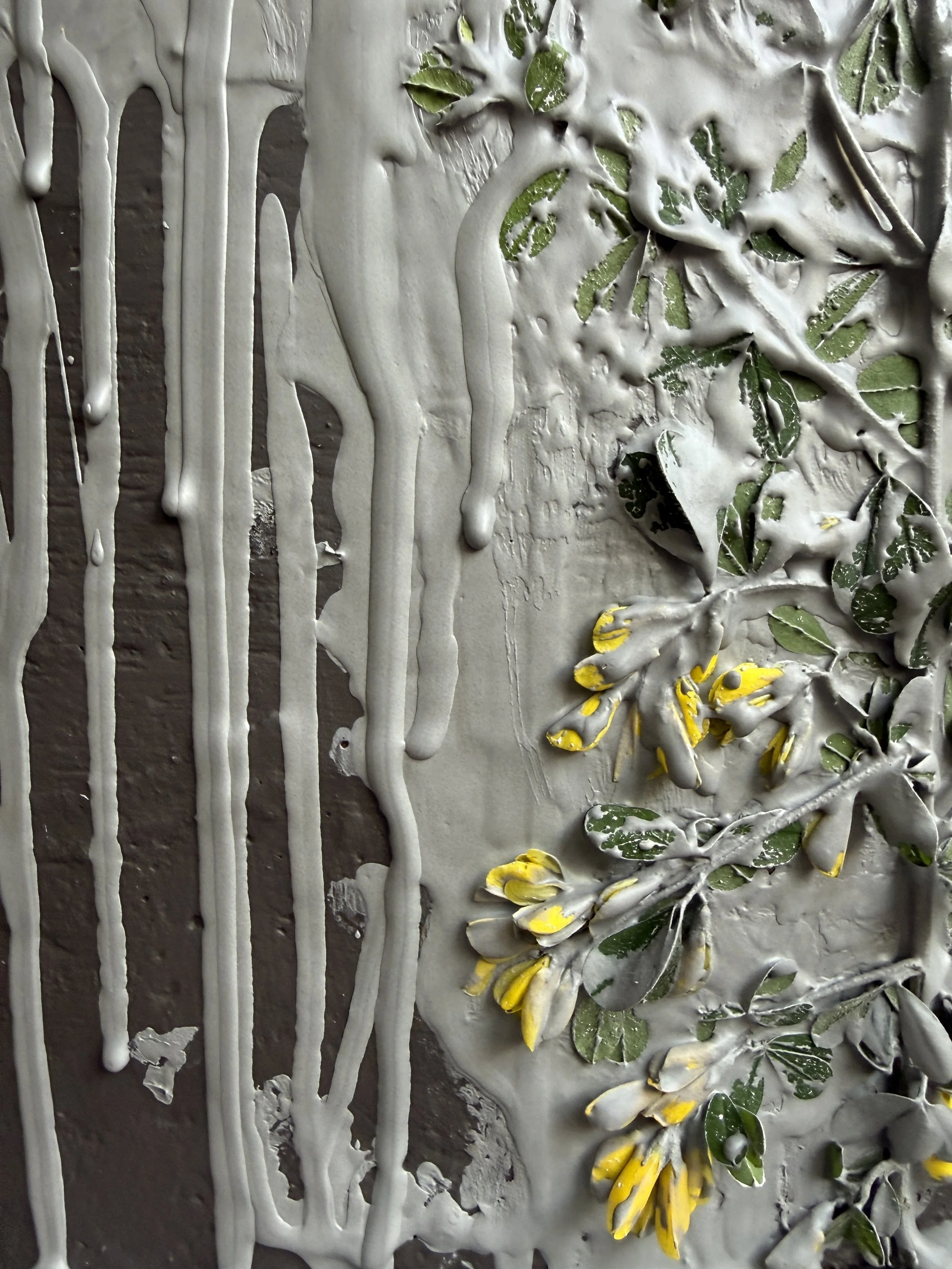
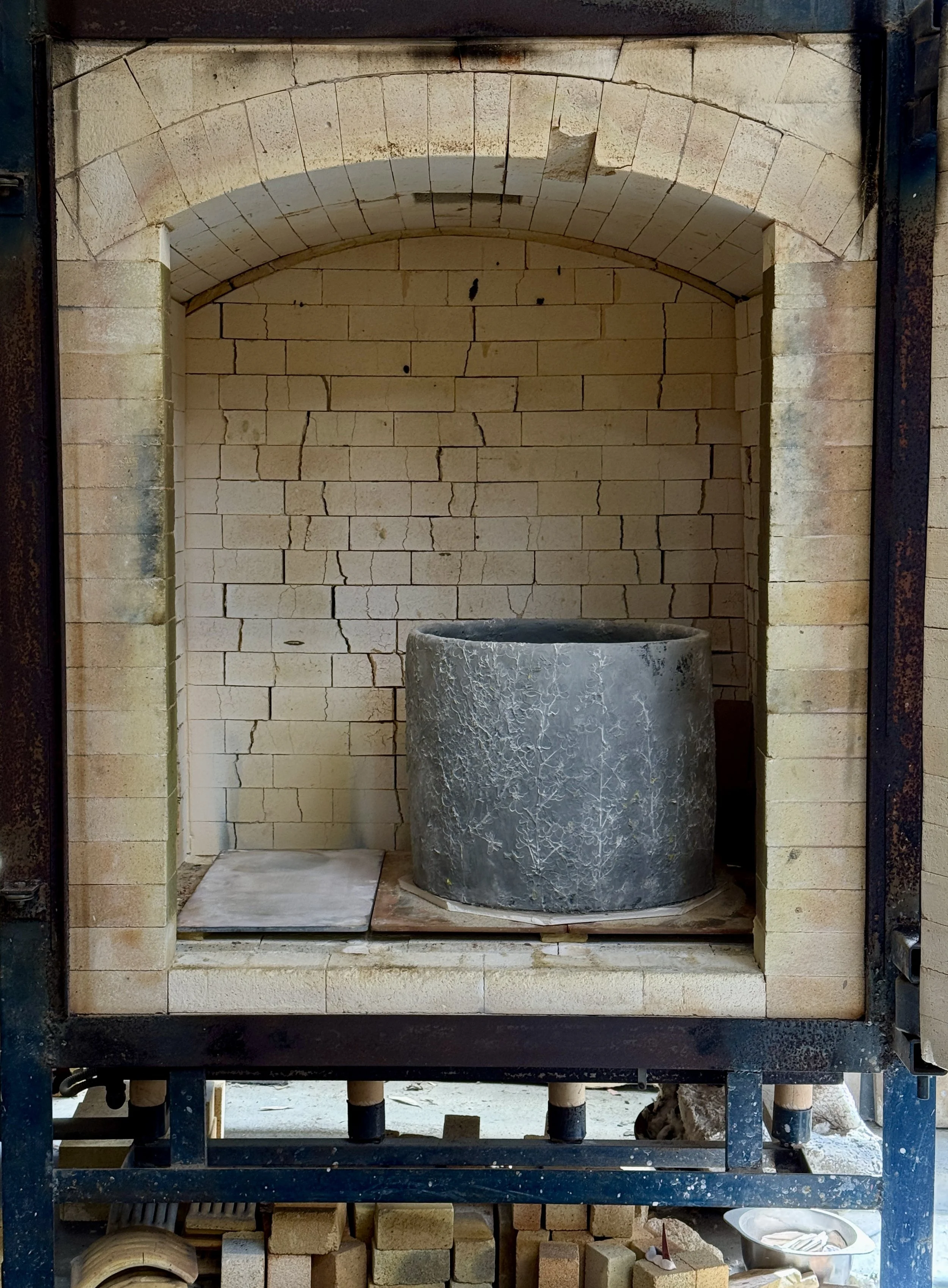
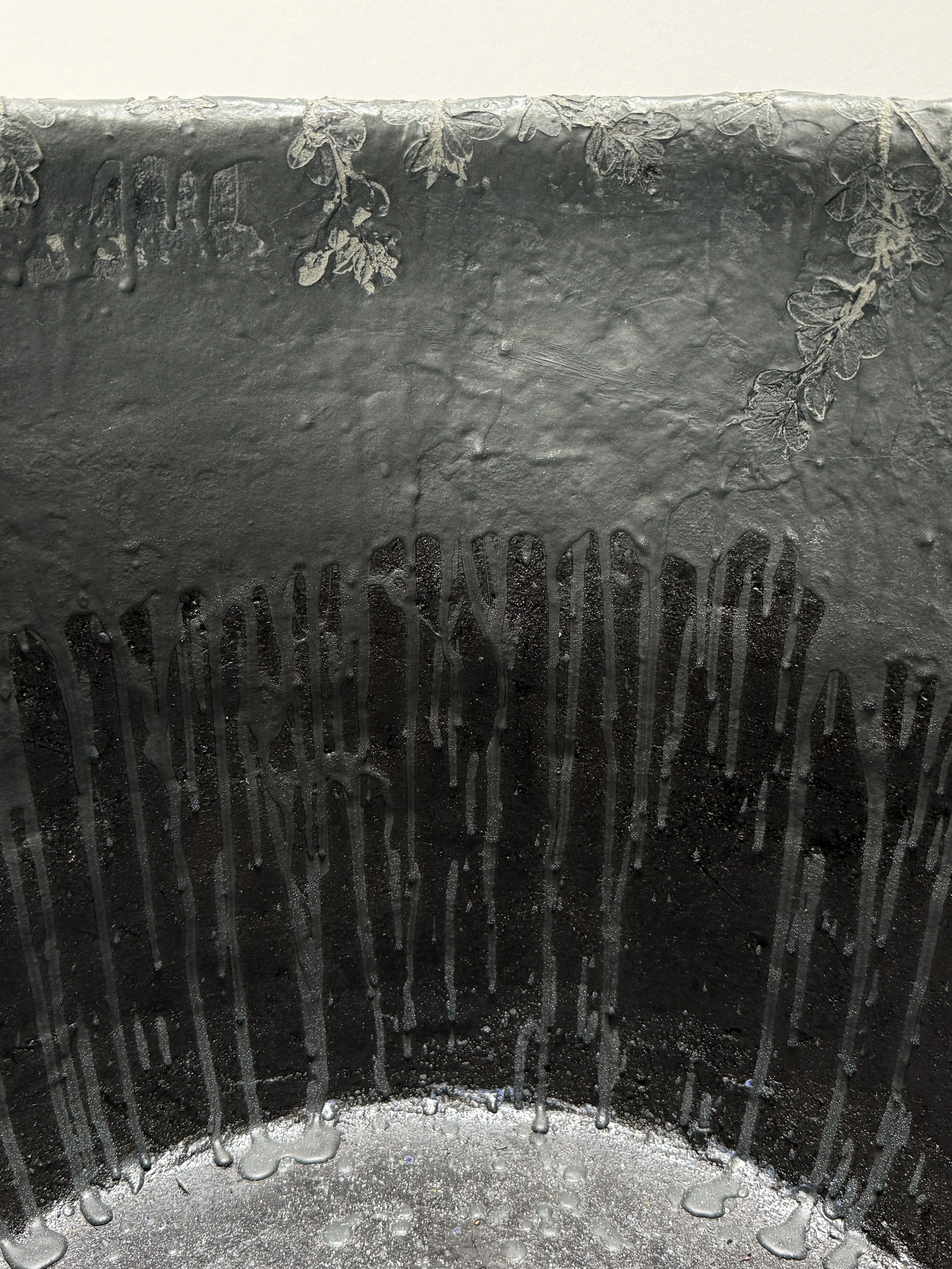
Invasive: Scotch Broom
Exploring the ecological impact of invasive species in order to examine specificity of place and complex environmental histories embedded within our local landscapes.
-
The Botanical Series explores and celebrates specific ecosystems, drawing from the specificity of place through direct impressions of native plant life and layered ceramic surfaces. These works honor the symbolism of plants both in contemporary contexts and ancient cultures- translating their forms into tactile compositions that reflect resilience, interconnectedness, and the living language of the landscape.
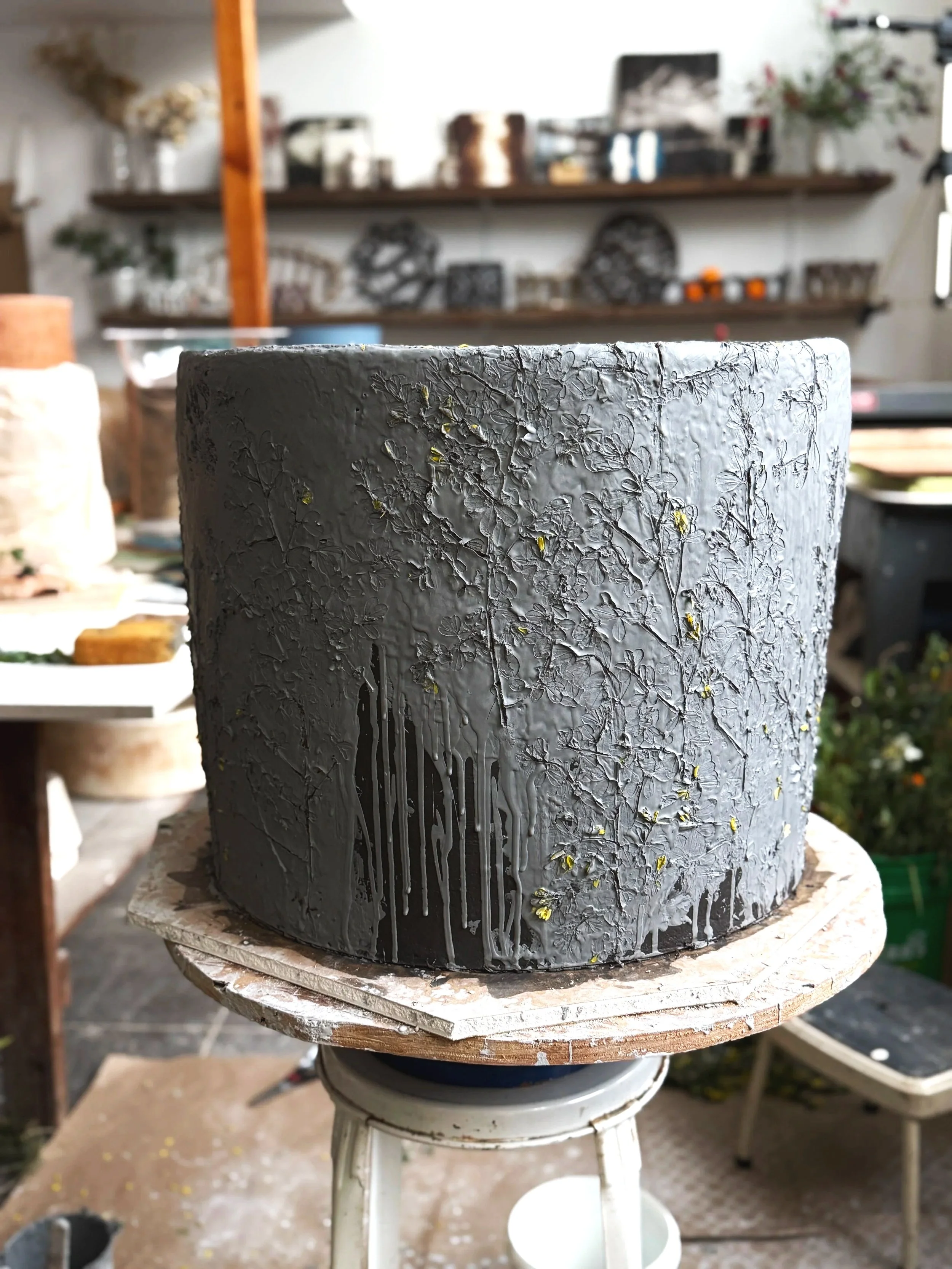
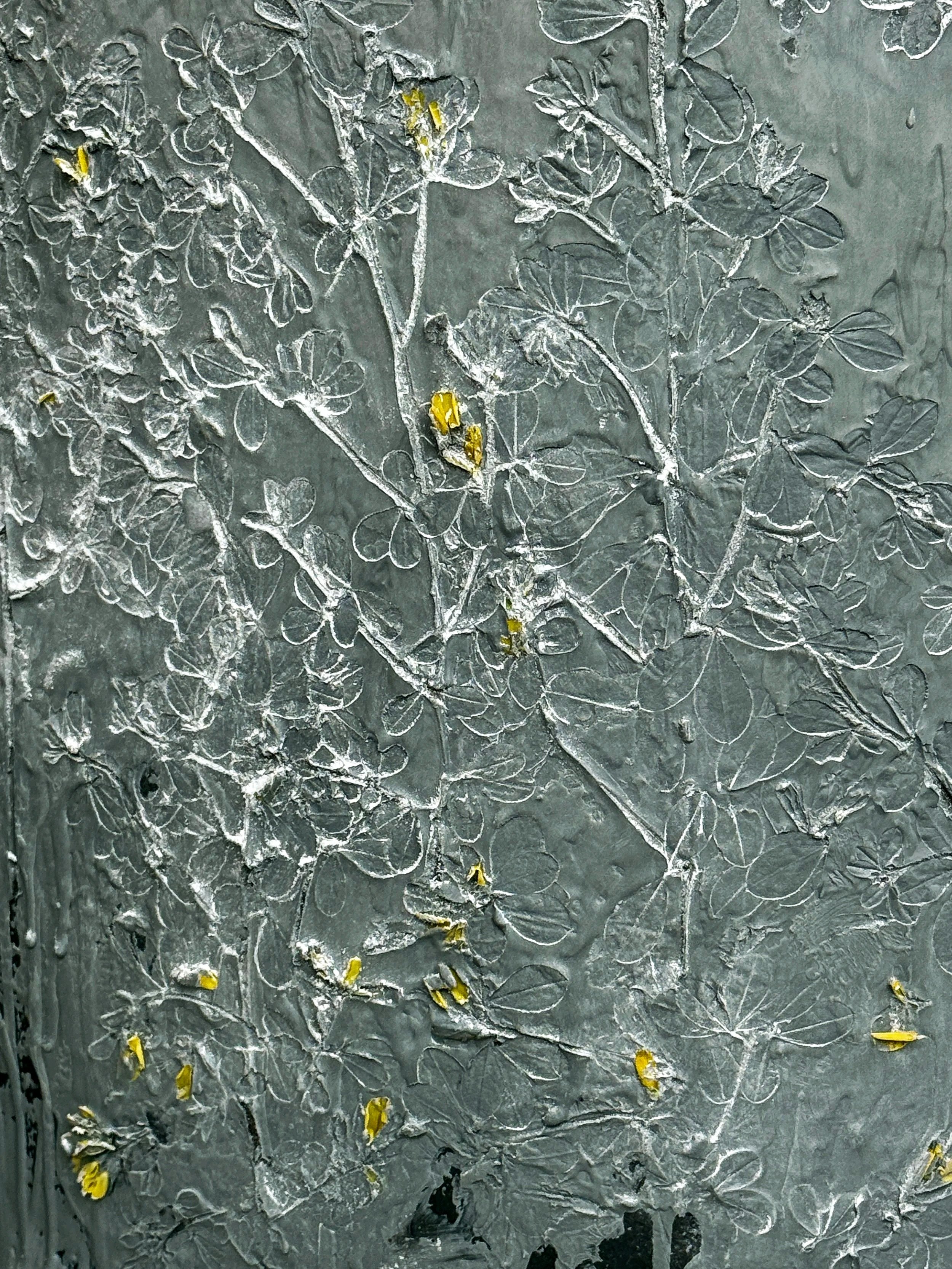
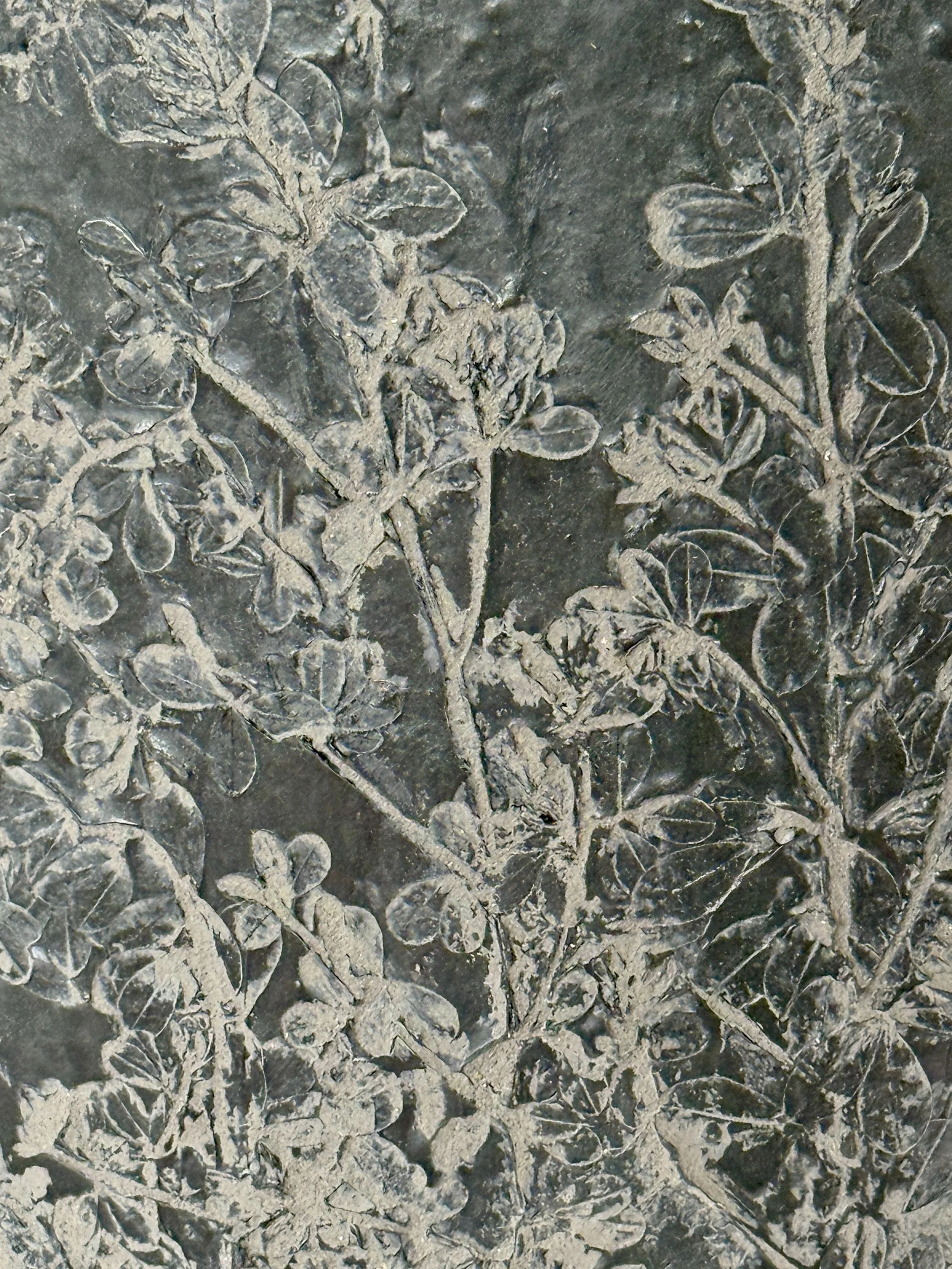
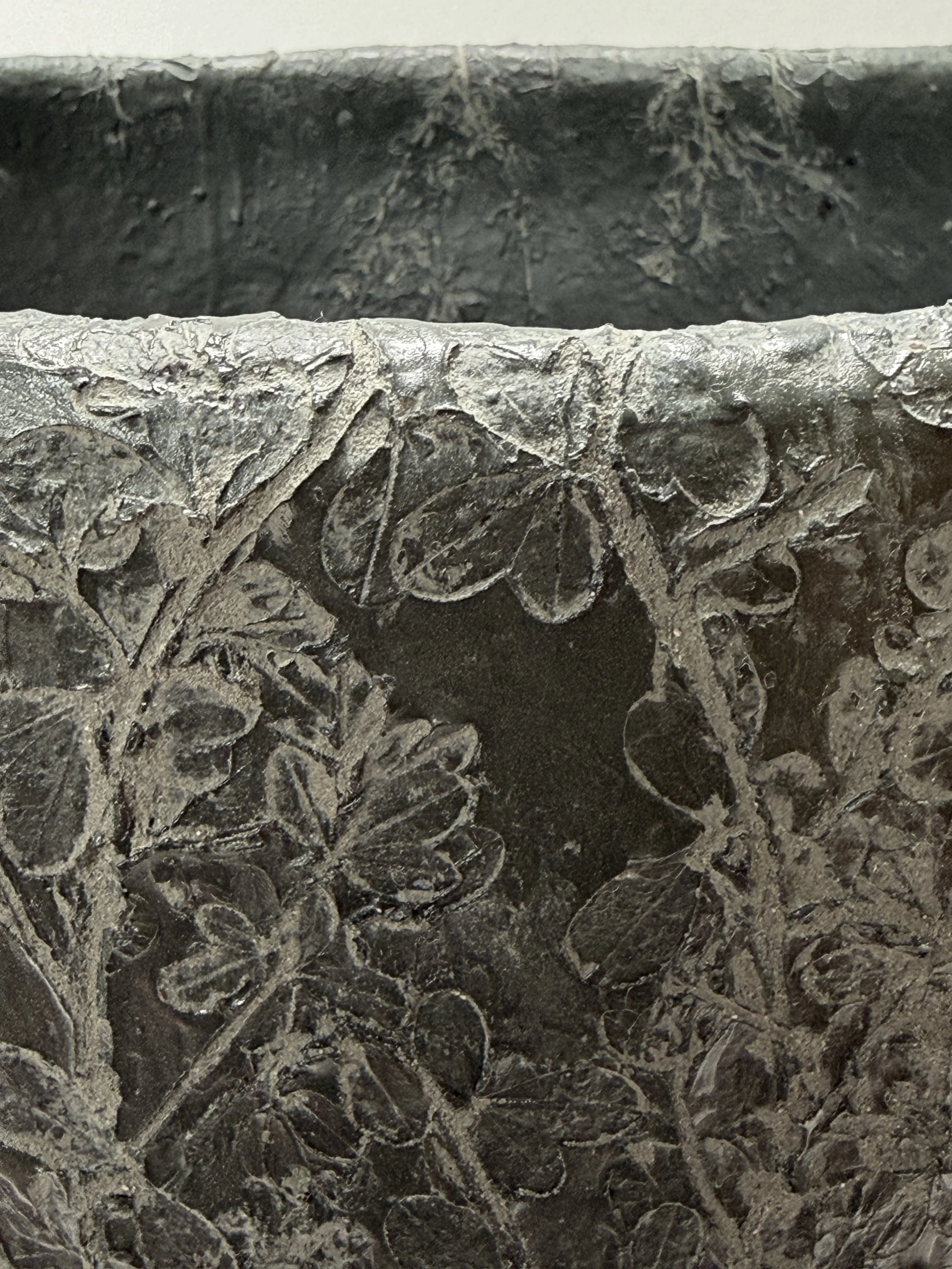
The Botanical Urn Series expands to include native, invasive, and cultivated plant species, using each as both material and message. Pressed and embedded directly onto the exterior of handmade ceramic urns these plants create a layered record of ecological presence to reveal the tensions between what belongs, what disrupts, and what is human-introduced. In this context, the urn becomes a powerful symbolic form: historically tied to containment, memory, and mortality, it holds not only the idea of human life, but also the fragility and transience of entire ecosystems.
Tea Tray Assemblages: Readymade tea trays available as unglazed blanks in Jingdezhen were cut, sanded, and assembled to transcend the autonomous object; referencing Chinese characters.
WaterWare: Visual interpretations portraying environmental issues regarding freshwater are expressed through images of Lake Ontario. Kala’s photograph was made into image transfers using ceramic inks, cut, and reassembled before firing onto the glazed surface.
Tea Ware: Tea cups, designed and carved by Kala were casted in the local porcelain and paired with ready made tea trays.
Decal Bricolage: Commercial decals were sourced and deconstructed. Readymade platters were resurfaced with improvisational bricolage and a gold plating process (PVD).
Archiving an Abandoned Factory: An abandoned porcelain bottle factory was a source of fascination and place of exploration. Kala sifted through thousands of found molds and made charcoal rubbings of the faces before they erode to nothing. The remaining molds in the abandoned factory are gravestones, a metaphor for the laborers now gone and the cease of production in this specific location.
-
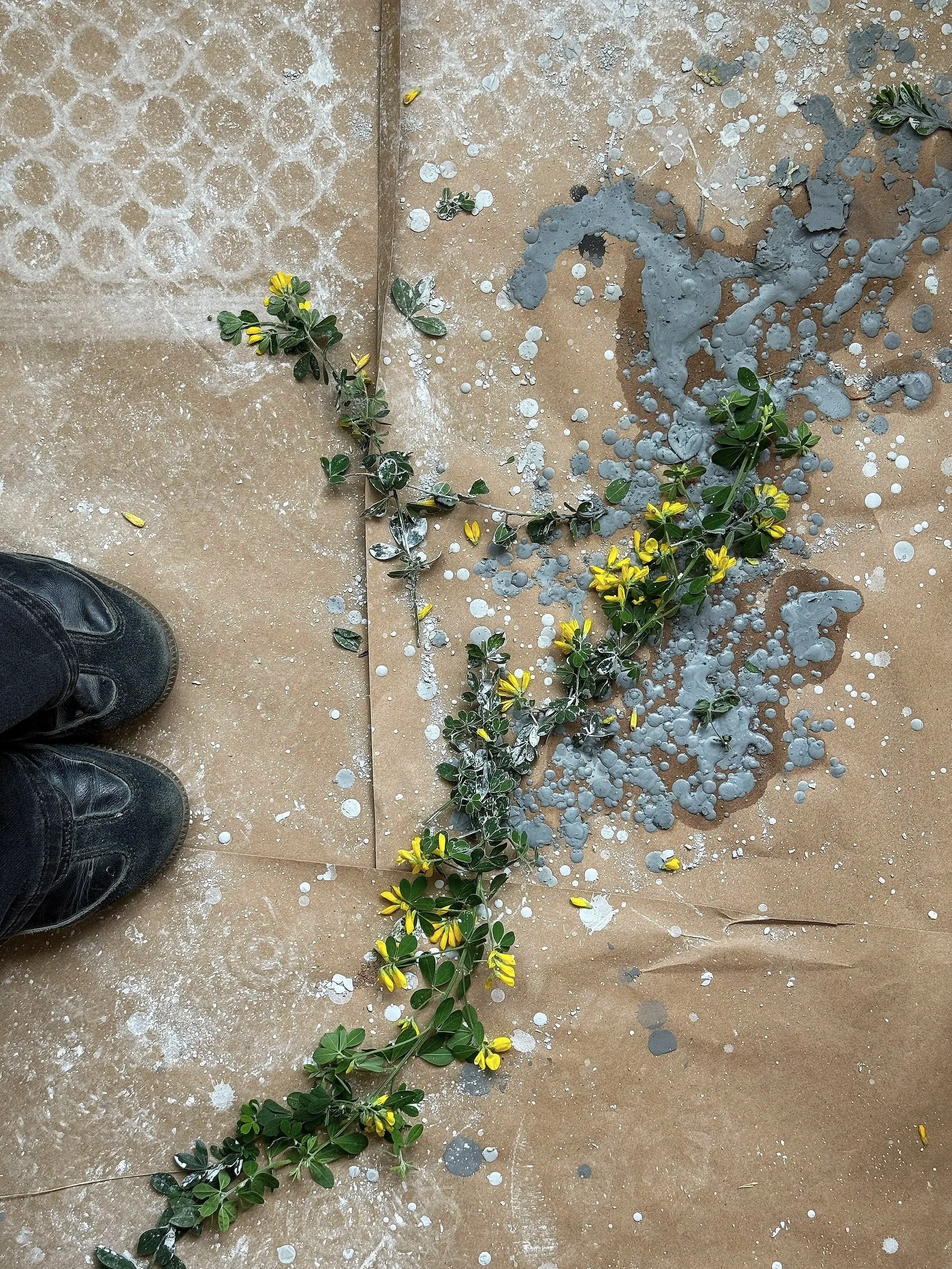
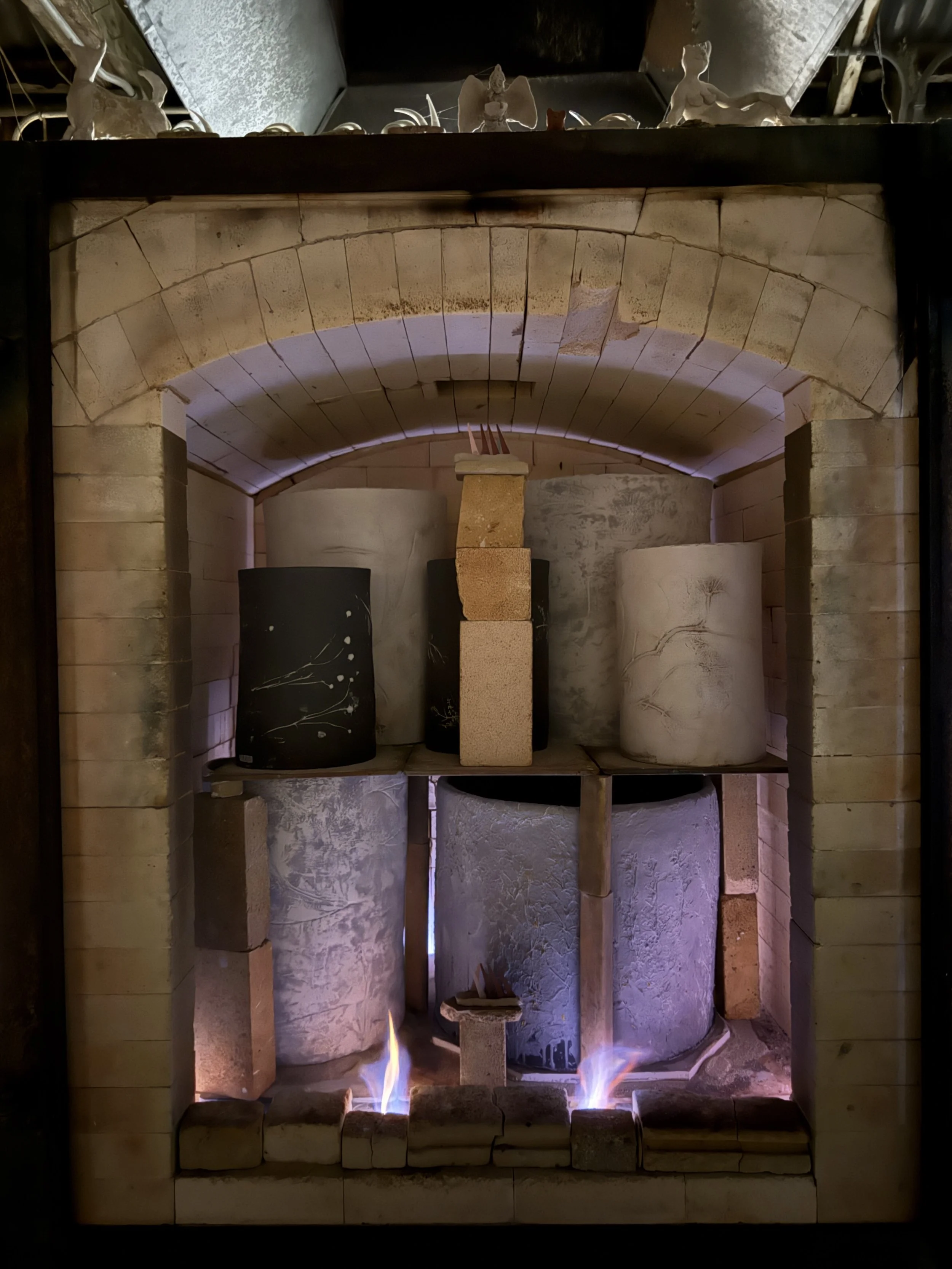
Foraging botanicals and embedding them into clay captures the immediacy of the present; the kiln functions as an instrument of fossilization and makes the present permanent as a geological archive. This process draws on the ancient tradition of cuneiform, where clay tablets served as a ledger for human transactions, acting as both a system of writing and an earth-based cultural record.
The urns are handbuilt using stoneware clay, coated in glaze and slip and once fired in a gas kiln. Layers of wet slip create a fine juicy muck to capture the intricacies of botanicals. Layers of pigments, flux, and minerals are used to enhance the surface, highlighting details and textures of the impressions.
WaterWare: Visual interpretations portraying environmental issues regarding freshwater are expressed through images of Lake Ontario. Kala’s photograph was made into image transfers using ceramic inks, cut, and reassembled before firing onto the glazed surface.
Tea Ware: Tea cups, designed and carved by Kala were casted in the local porcelain and paired with ready made tea trays.
Decal Bricolage: Commercial decals were sourced and deconstructed. Readymade platters were resurfaced with improvisational bricolage and a gold plating process (PVD).
Archiving an Abandoned Factory: An abandoned porcelain bottle factory was a source of fascination and place of exploration. Kala sifted through thousands of found molds and made charcoal rubbings of the faces before they erode to nothing. The remaining molds in the abandoned factory are gravestones, a metaphor for the laborers now gone and the cease of production in this specific location.
-
Invasive Species Series: Eucalyptus (Eucalyptus globulus), Sonoma County, California, USA.
Collection Date: April 9, 2026
Elevation: 85 feet
38.29601817694661, -122.45724794971704
Stoneware, slip, botanicals19" x 19" x 18" (48.5 cm x 48.5cm x 45.7cm)
2026