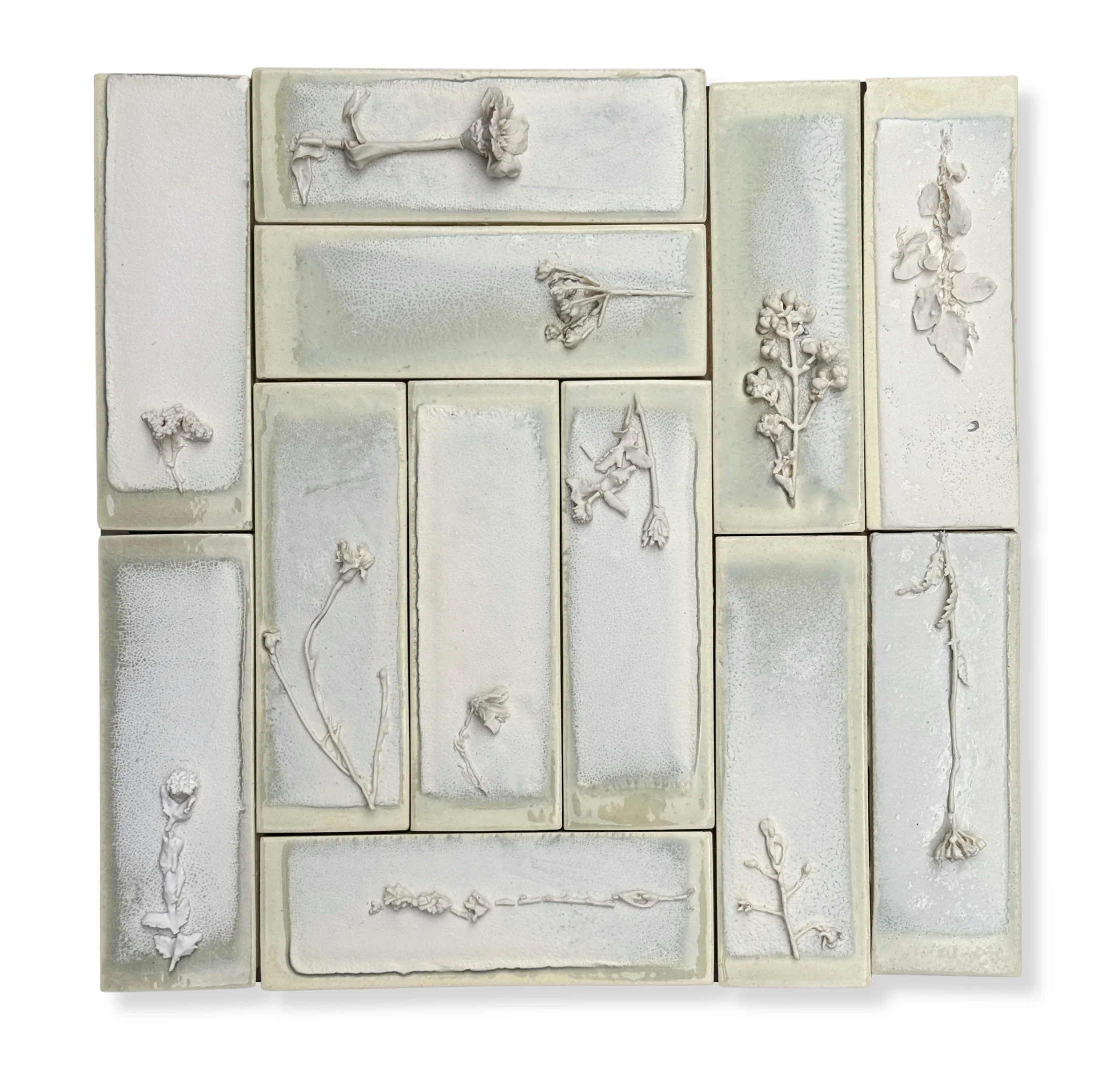
burn out series
wild: flora of gold lake
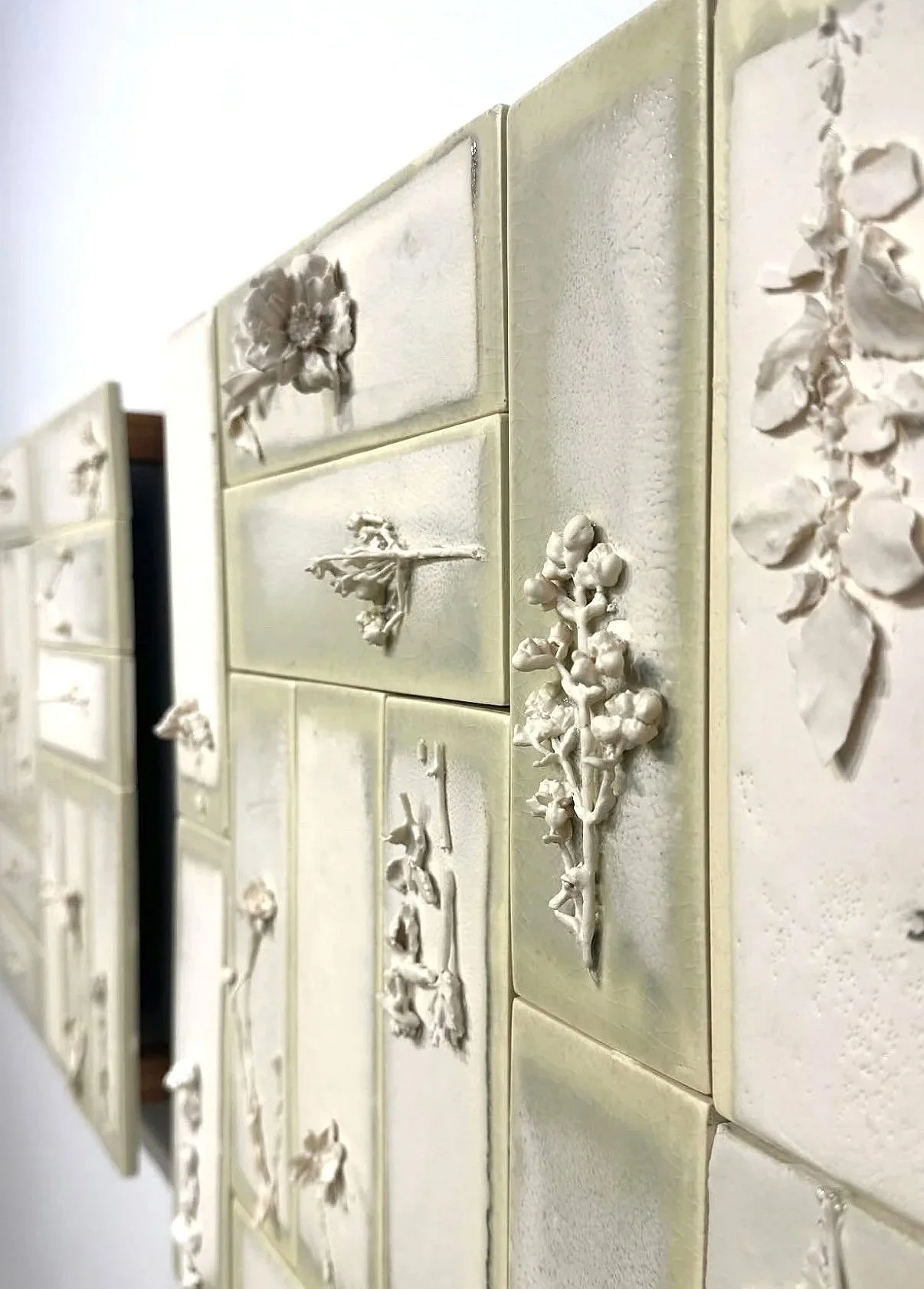
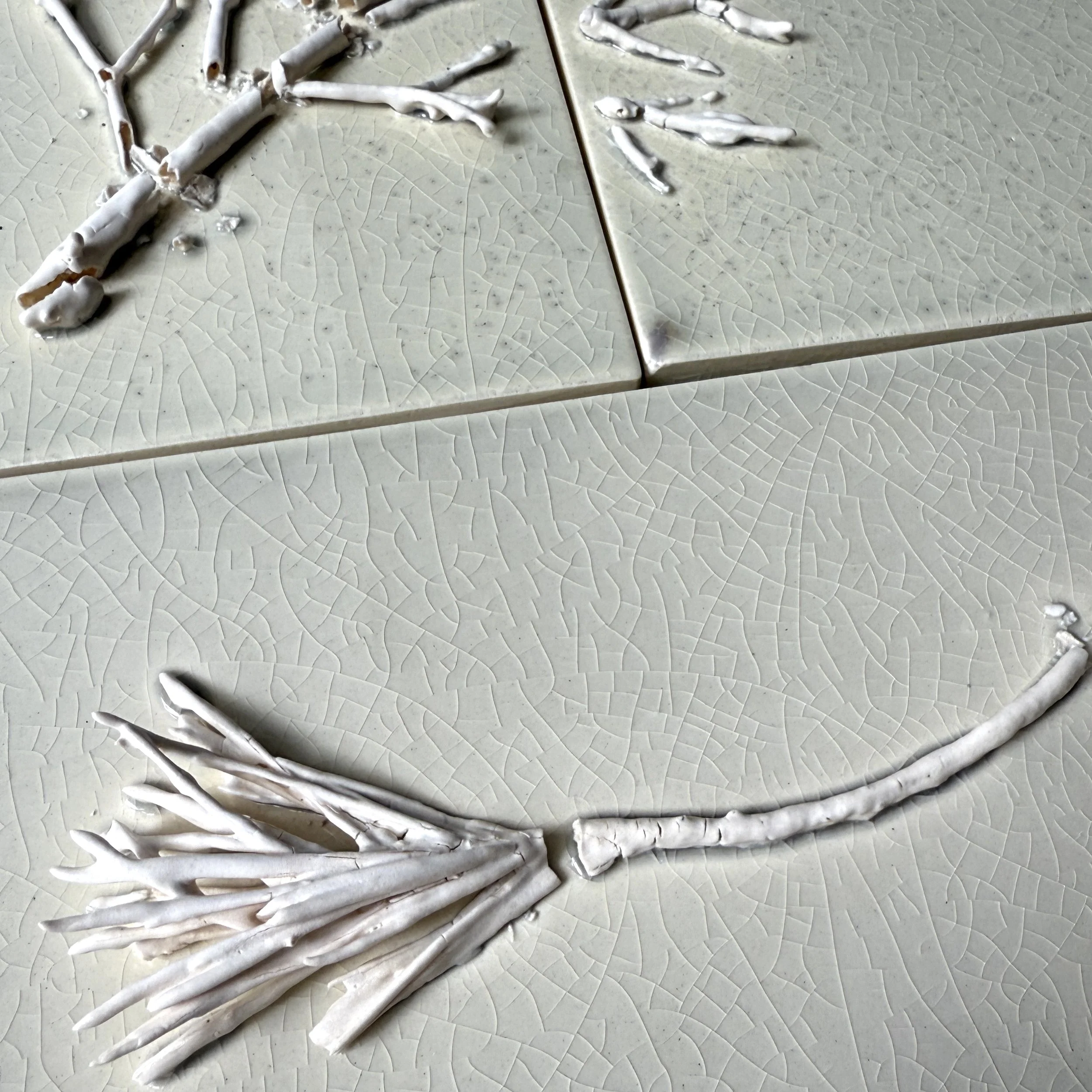
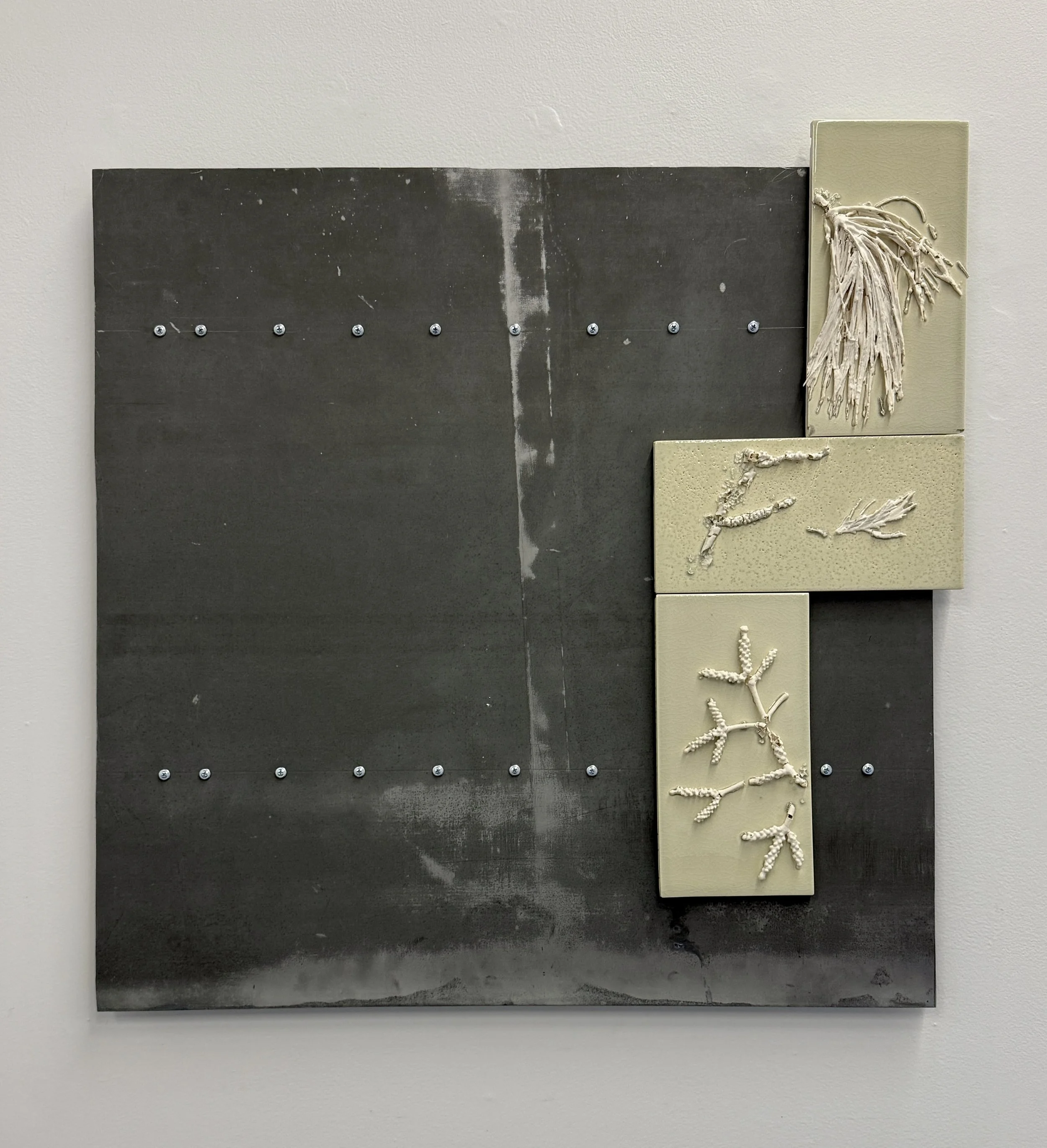
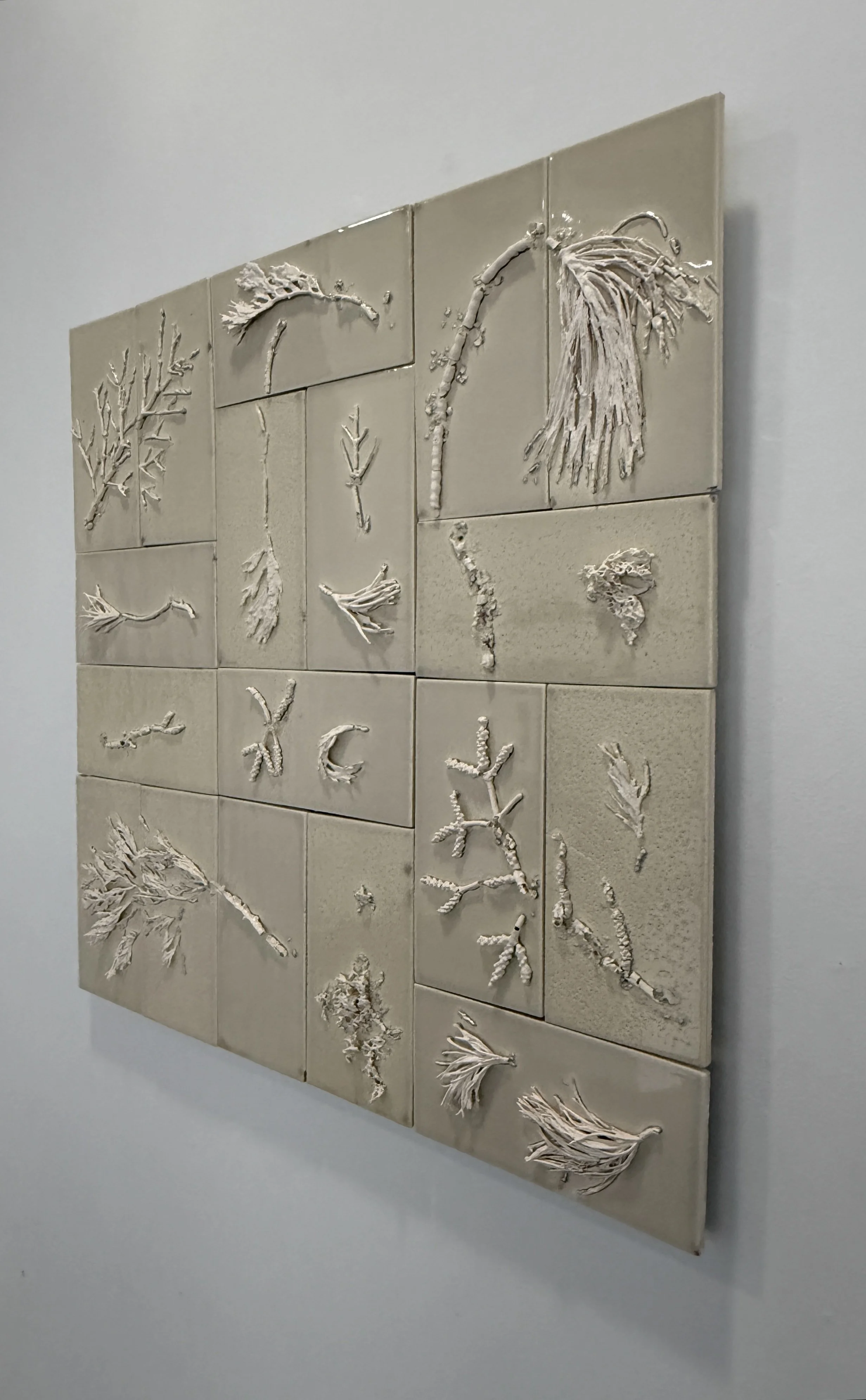
The work captures the ephemeral presence of flora, leaving behind a fragile, hollow monument to what once was- a practice that honors ecology and the plants within the artwork.
-
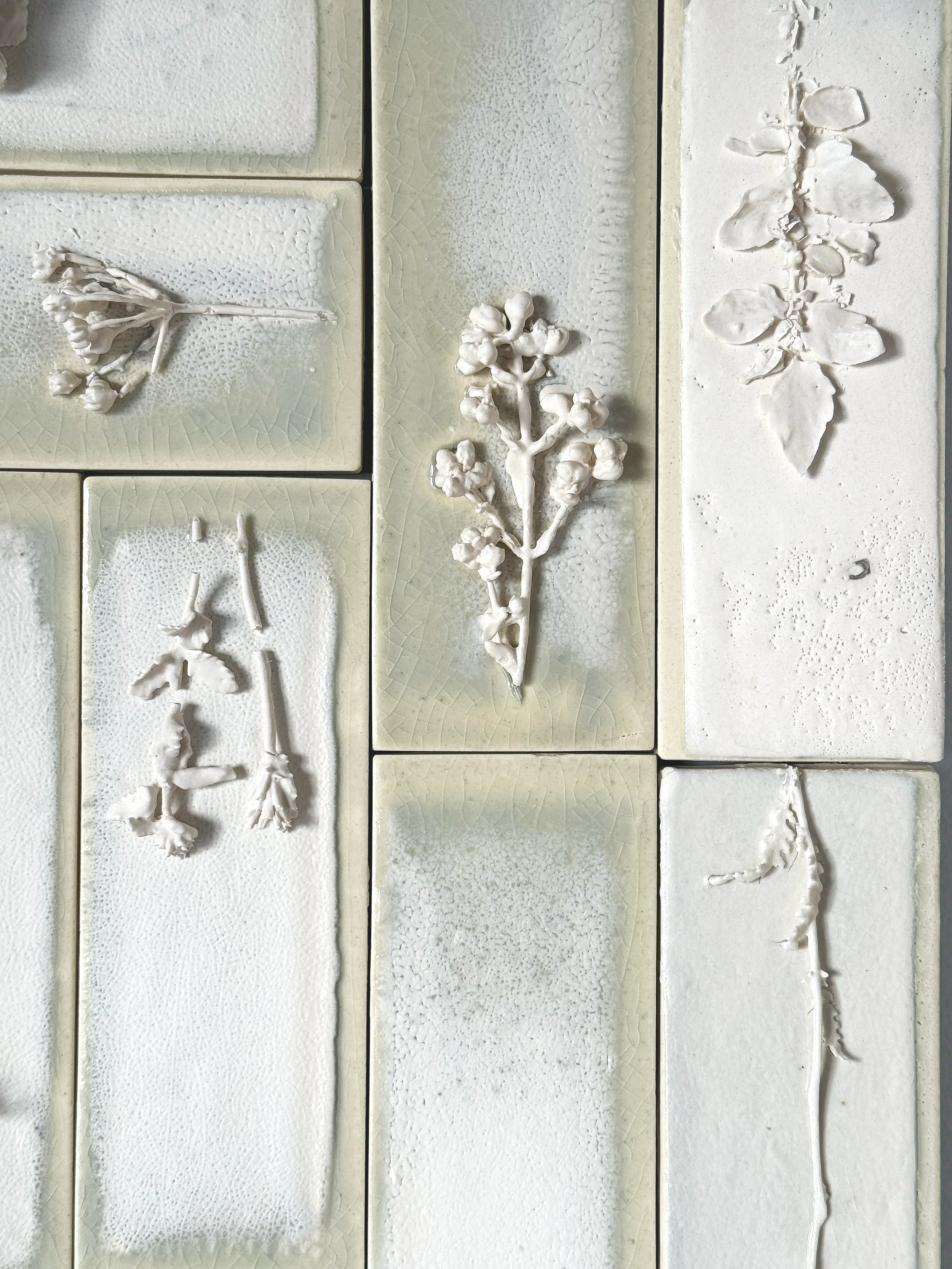
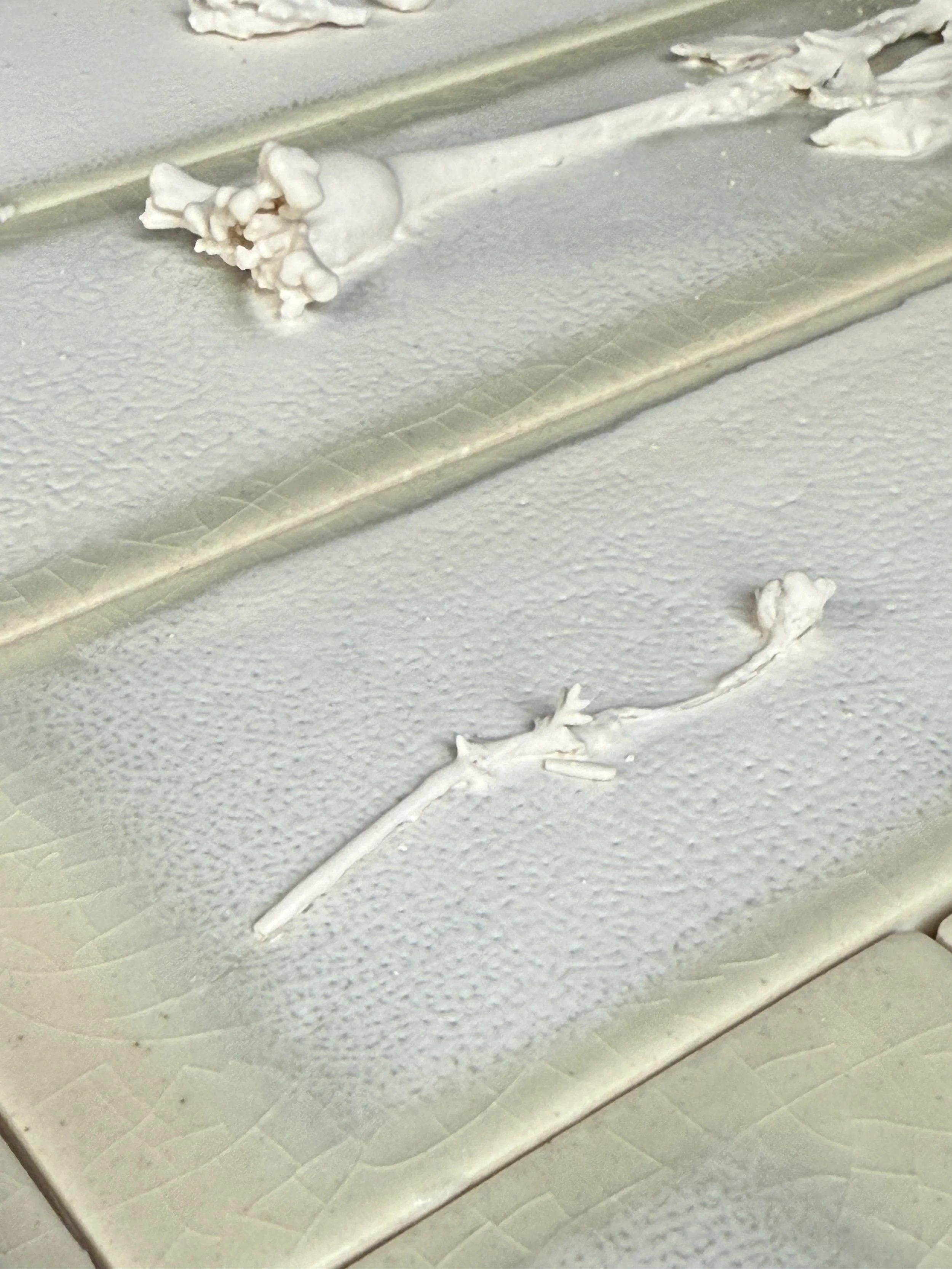
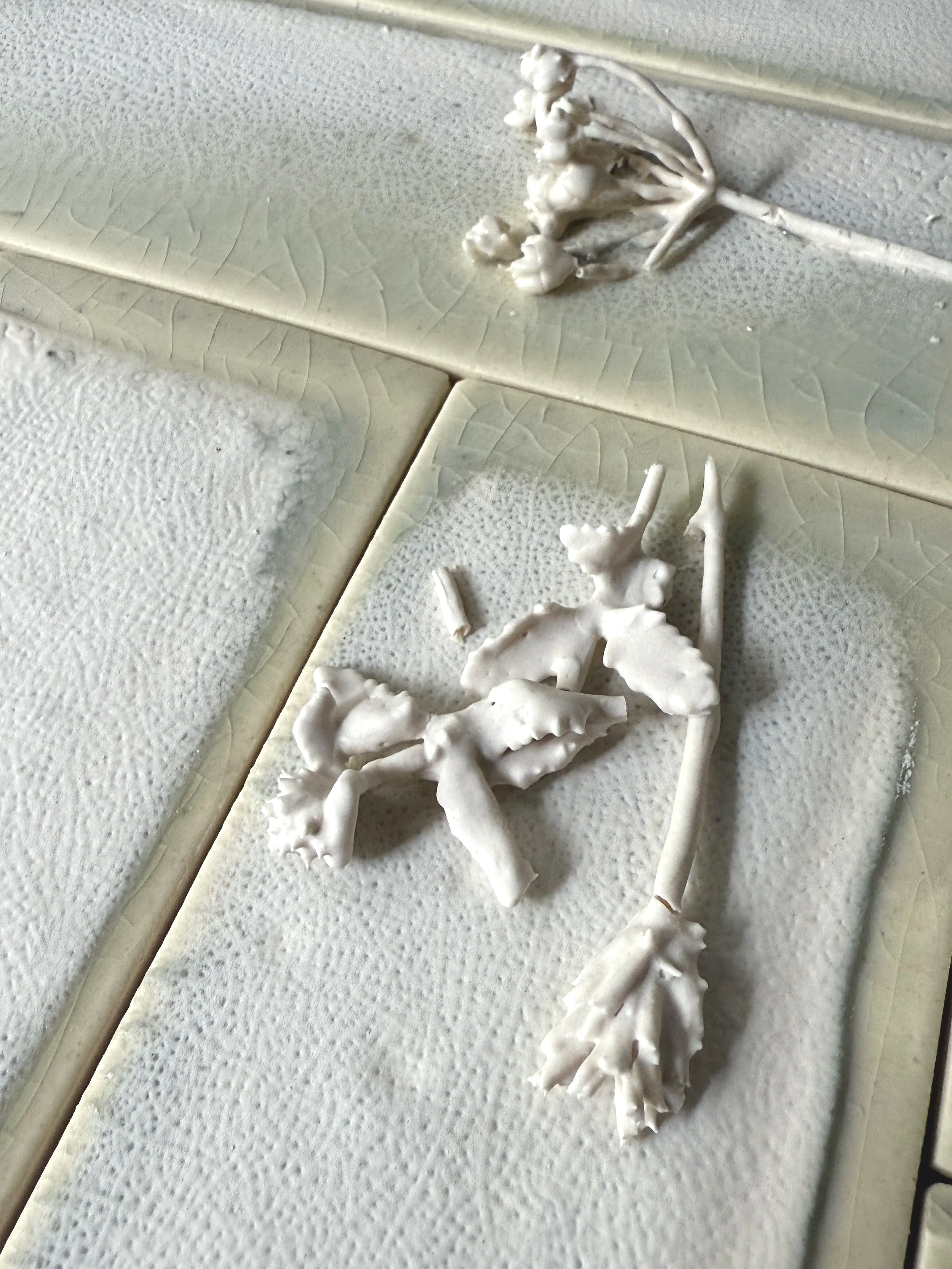
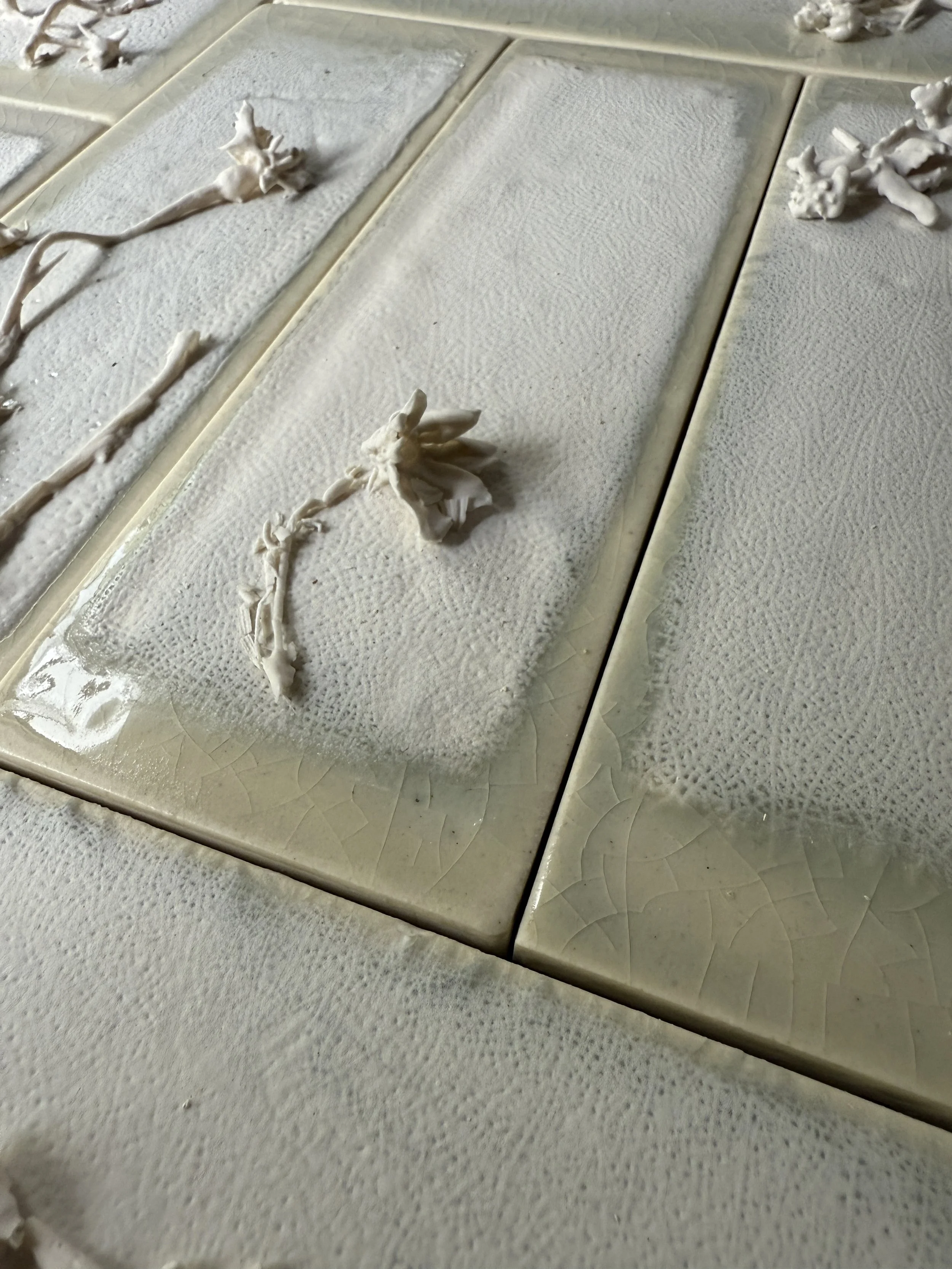
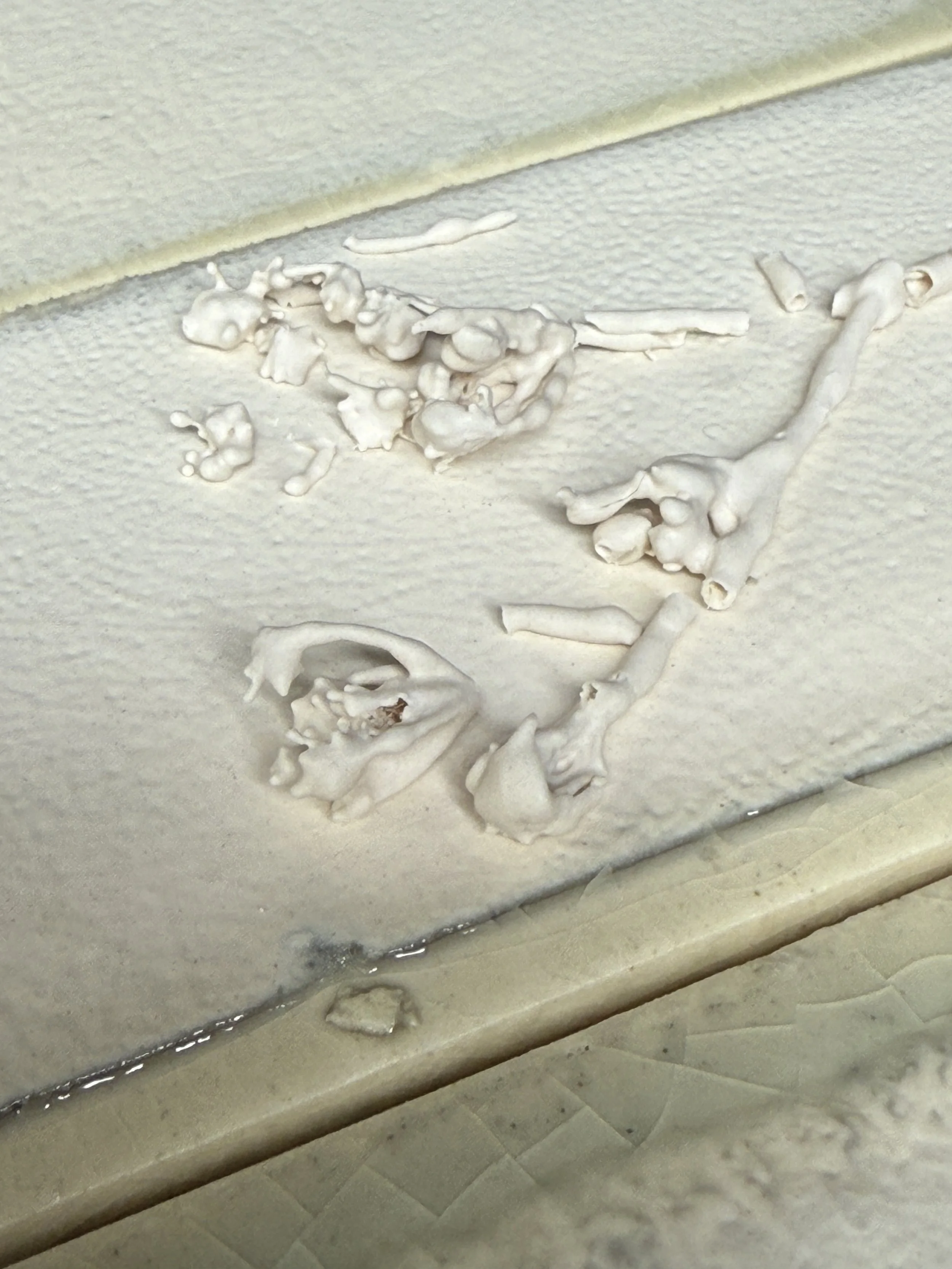
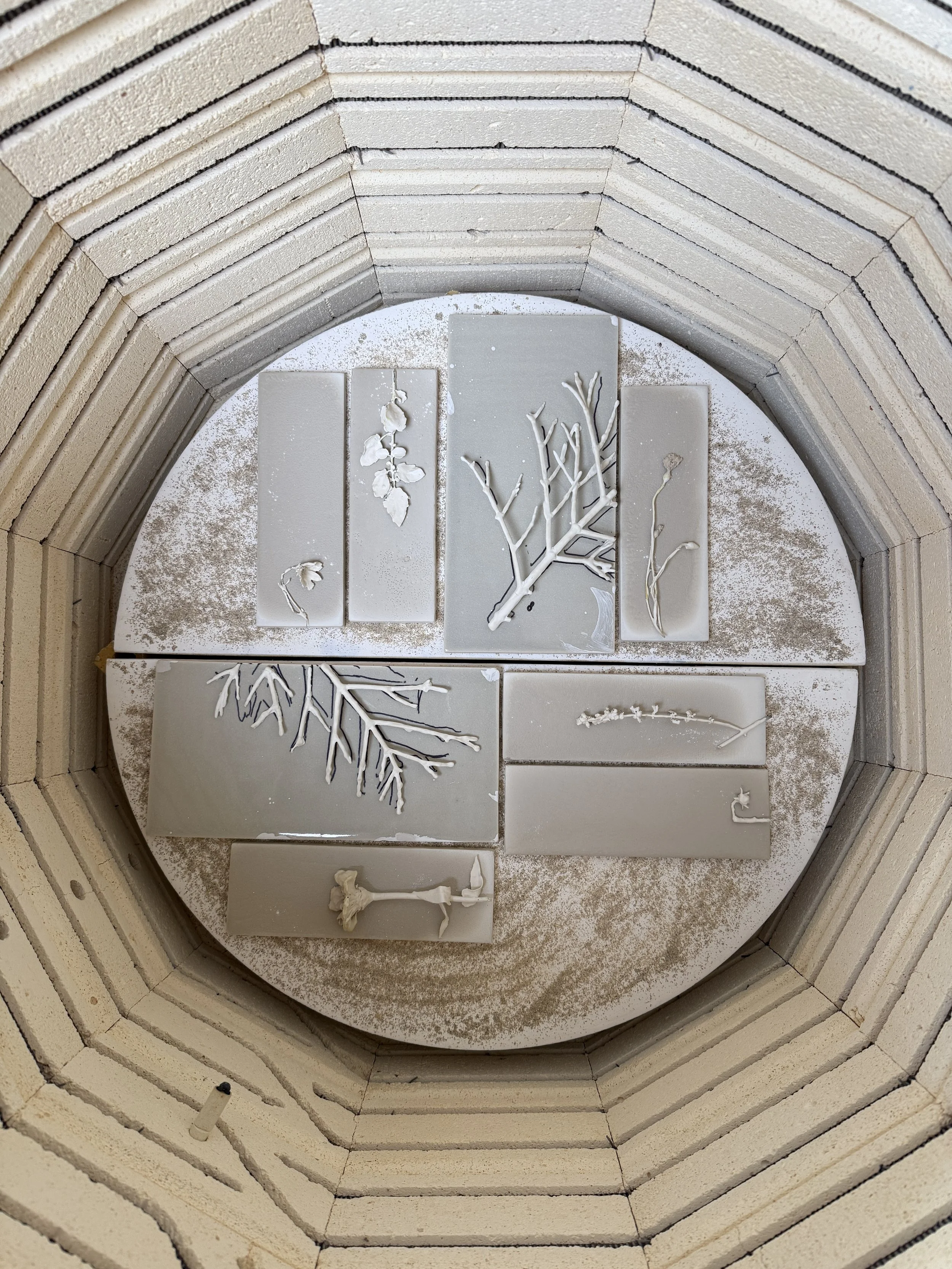
Working with post-industrial ceramic tile waste salvaged from dumpsters, and foraged plant detritus, I encase the plants in porcelain slip. In the firing process, the plants burn away, leaving fragile remnants fused onto the glazed ceramic panels.
This process embodies both destruction and preservation, reflecting the vulnerability of ecosystems and their capacity for resilience. Rooted in conservation, my studio practice prioritizes reuse, reclamation, and ecological responsibility. The resulting works function as contemporary fossils- artifacts that invite reflection on fragility, resilience, and humanity's relationship to the natural world.
-
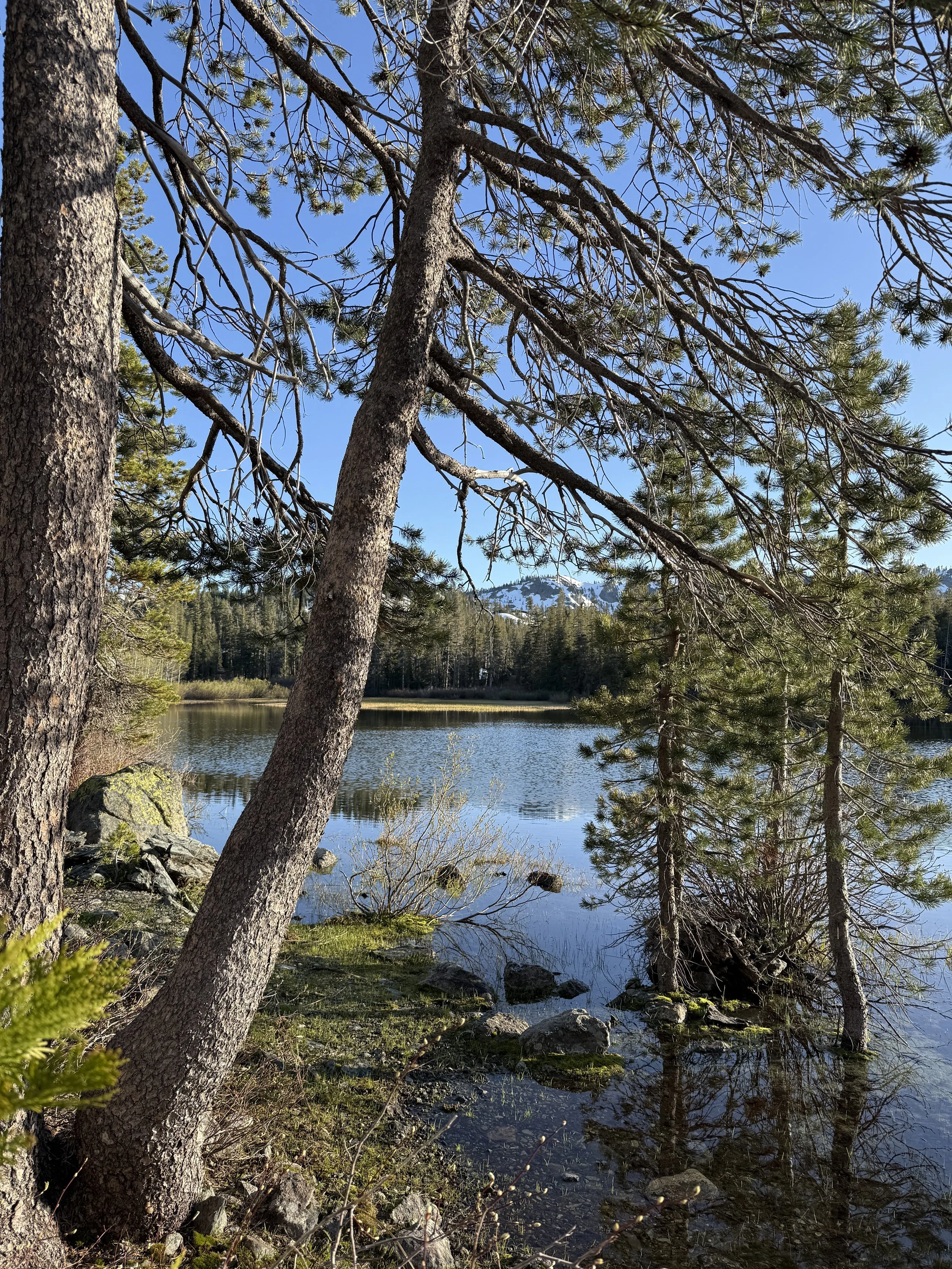
I meticulously document the coordinates, elevation, and collection date of each specimen, establishing an archive that honors the precise origin of the plants within the artwork.
In the studio, I submerge these blossoms, twigs, and leaves into porcelain slip, building a delicate ceramic shell through iterative layers. These encased specimens are then fired onto salvaged tiles. During the firing process, the organic matter burns away, while the glaze acts as a permanent, archival adhesive that bonds the porcelain plant structure to the tile. The resulting work captures the ephemeral presence of flora, leaving behind a fragile, hollow monument to what once was.
-
Flora of Gold Lake, Plumas County
California, USA
Collection Date: May 23, 2025
Elevation: 6,400 feet
Post-industrial tile waste, porcelain slip, flux
35" x 35" x 1.5"
(89 cm x 89 cm x 3.8 cm}
57 pounds when assembled, z-bar aluminum cleat hardware
2025
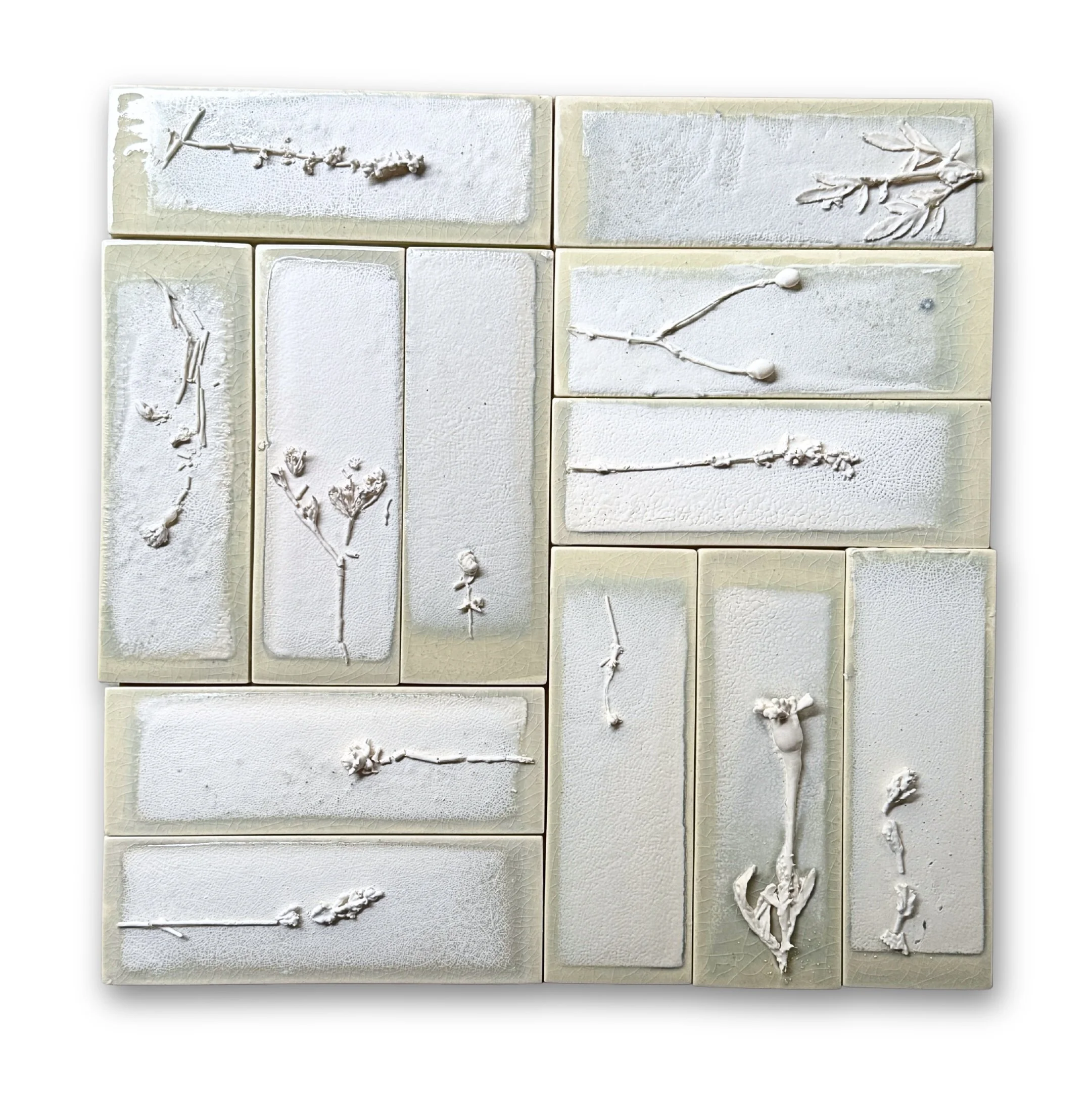
burn out series
cultivated: Quail Run
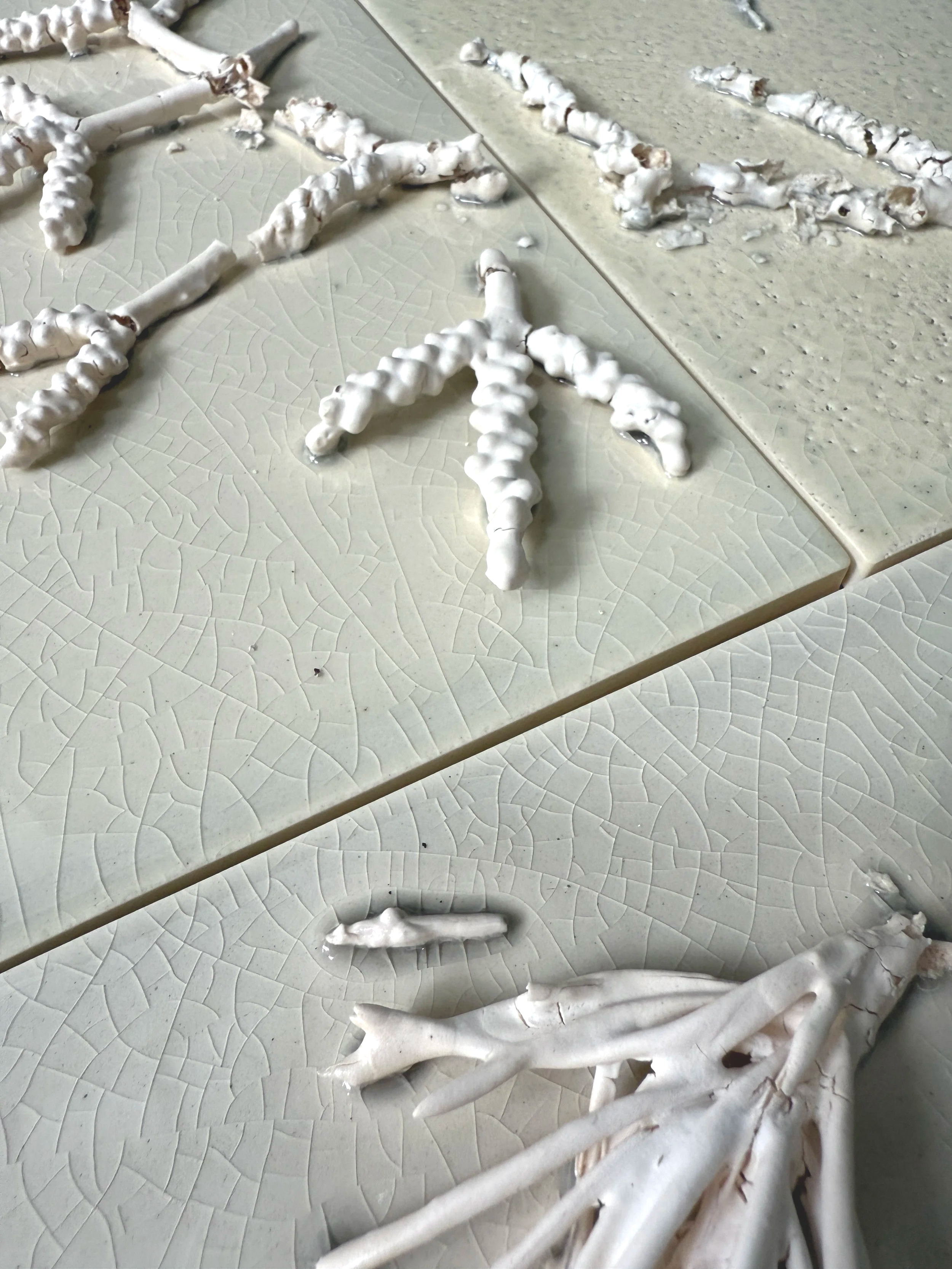
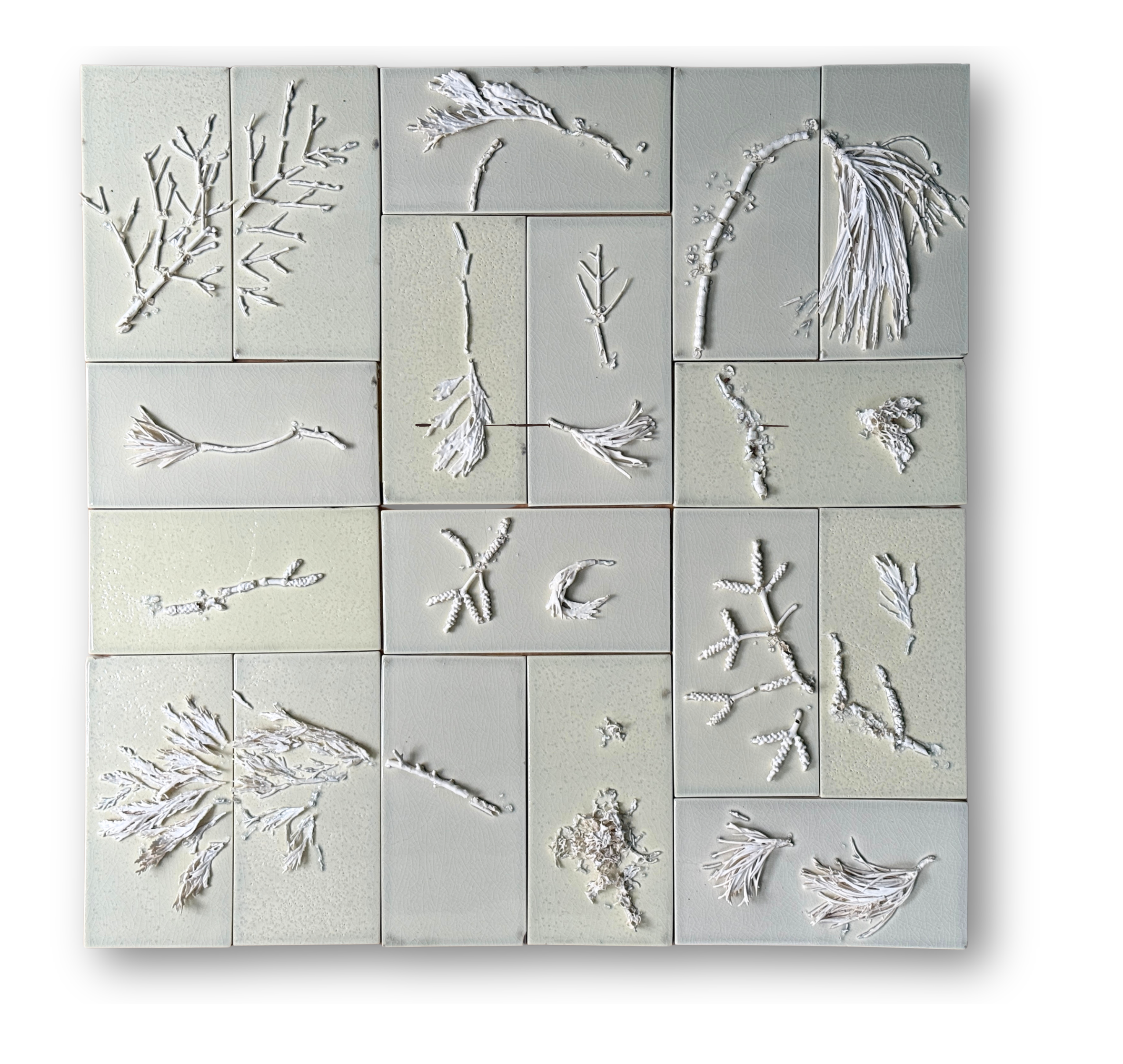
The work captures the ephemeral presence of flora, leaving behind a fragile, hollow monument to what once was- a practice that honors ecology and the plants within the artwork.
-
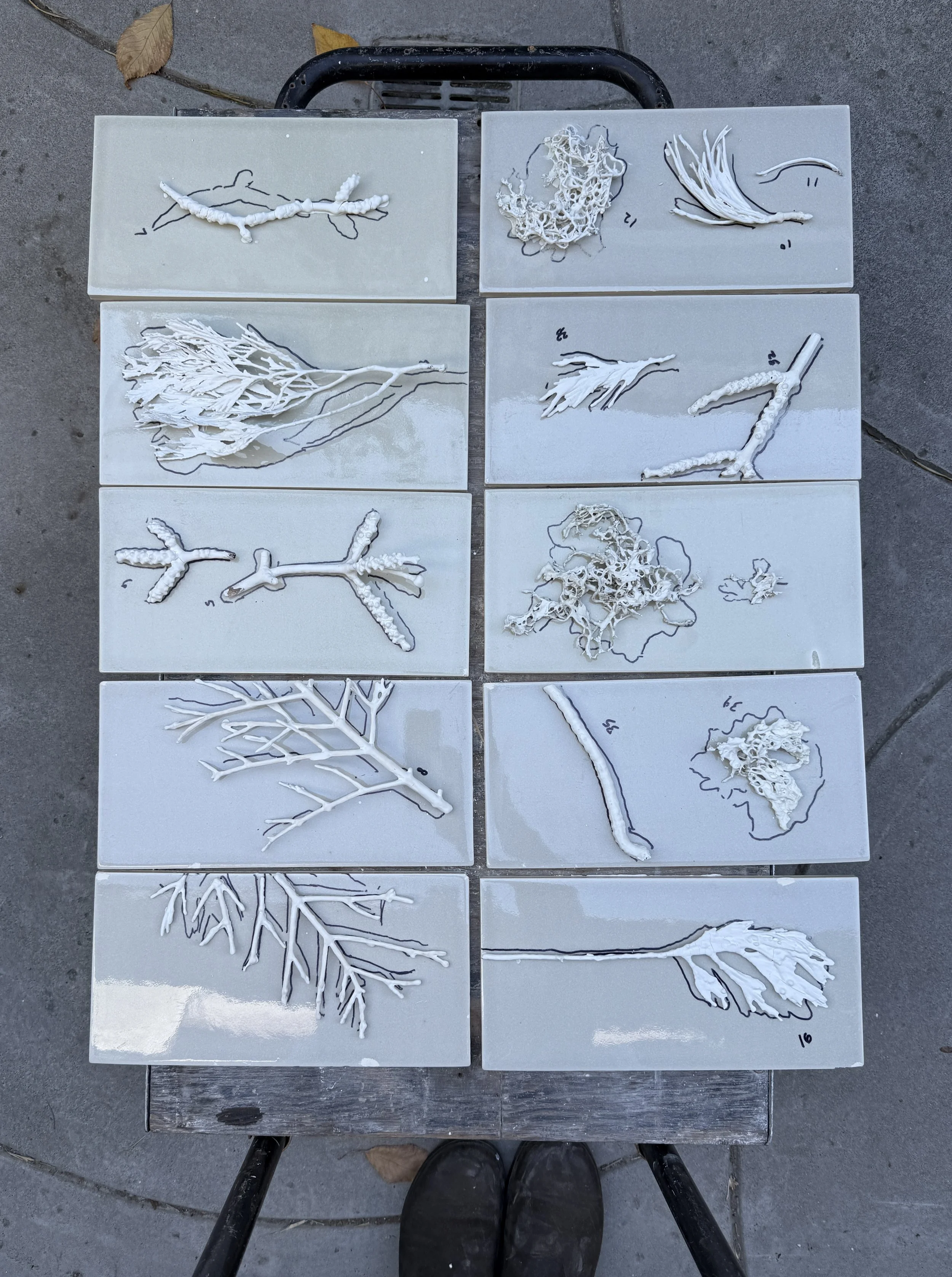
Working with post-industrial ceramic tile waste salvaged from dumpsters, and foraged plant detritus, I encase the plants in porcelain slip. In the firing process, the plants burn away, leaving fragile remnants fused onto the glazed ceramic panels.
This process embodies both destruction and preservation, reflecting the vulnerability of ecosystems and their capacity for resilience. Rooted in conservation, my studio practice prioritizes reuse, reclamation, and ecological responsibility. The resulting works function as contemporary fossils- artifacts that invite reflection on fragility, resilience, and humanity's relationship to the natural world.
-
I meticulously document the coordinates, elevation, and collection date of each specimen, establishing an archive that honors the precise origin of the plants within the artwork.
In the studio, I submerge these blossoms, twigs, and leaves into porcelain slip, building a delicate ceramic shell through iterative layers. These encased specimens are then fired onto salvaged tiles. During the firing process, the organic matter burns away, while the glaze acts as a permanent, archival adhesive that bonds the porcelain plant structure to the tile. The resulting work captures the ephemeral presence of flora, leaving behind a fragile, hollow monument to what once was.
-
Cultivated Series: Flora of Quail Run, Sonoma County, California, USA
Collection Date: September 27, 2025
Elevation: 85 feet
38.28334142490044, -122.43250838305447
Post Industrial Waste Tile, Porcelain Slip, Sonoma County flora
18" x 18" x 1" (45.7 cm x 45.7 cm x 2.5 cm)
2025